Winter Season in Gaza Starts With Heavy Rain: What Was It Like the First Rain for Displaced Families After Two Years of Israeli Genocide?
Gaza (QNN)- Displaced Palestinian families in Gaza woke up to find water flooding their tents, after heavy rainfall left their shelters and belongings soaked. It is now the third winter they have endured since the start of the two-year Israeli genocide.
Videos and photos circulating on social media show displaced families’ tents flooded by rain on Friday and Saturday, with mattresses, blankets, and personal belongings soaked.
People were also seen taking shelter from the rain with little clothing to protect them. Videos showed the displaced trying to remove large amounts of water from their tents with buckets.
Officials in Gaza have received “hundreds of pleas for help,” Mahmoud Basal, the spokesperson for Gaza Civil Defense on Friday, said “but the resources are nonexistent.”
“Entire shelter centers have seen water levels rise to more than 10 centimeters (3.94 inches). Mattresses are soaked, blankets are drenched and there are no options left, because every option has been destroyed by Israel,” he said.
Medical Aid for Palestinians (MAP)’s Communications Officer in Gaza Mai Elawawda described Friday as “one of the hardest days in Gaza since the ceasefire.”
“Early this morning, heavy rain flooded the tents of displaced families, along with the few belongings they still have. Most of these families are surviving in completely worn-out tents that have travelled with them through two years of nonstop Israeli attacks and forced displacement. Frayed under the sun, these tents are now collapsing with the first signs of winter,” Elawawda said in a statement.
Videos showed two main hospitals in Gaza City flooded with rainwater.
“It was one of the coldest nights, with heavy rain and strong winds. It was unbearable. Where is the blind world that can see us and help us?” Mariam Abu Asr told Quds News Network from her dilapidated tent in the Sheikh Redwan neighborhood in central Gaza City.
She continued, “For two consecutive days and nights, we woke up to rain flooding our tent. My children tremble from the cold. We have no clothes, and not enough blankets.”
Nadeen Saeed said, “I hugged my one-year-old baby all night to keep him warm. We shared a single blanket. We were both trembling, and I cried from the pain.”
Three Winters Without Shelter: Gaza’s Families Face the Cold Again as Israel Blocks Tents
The Civil Defense in Gaza has also warned residents, especially the displaced, to take necessary precautions against potential destruction from the storm.
The Palestinian Meteorological Department issued warnings of flash floods in low-lying areas and valleys across the Gaza Strip and the occupied West Bank, with strong winds, heavy rain, and thunderstorms expected over the coming days.
In the Gaza Strip, families displaced by Israel’s two-year genocide find themselves confronting a relentless, freezing reality: three winters in a row without adequate shelter. As winter approaches once more, the urgency of the situation is palpable, cold nights, battered tents and flood-prone areas.
Farah Ashour, a 19-year-old resident of Gaza’s Tel al-Hawa, goes to bed each night with the sky above her, not a roof to shelter her.
“What if an Israeli bomb fell on me now, despite the ceasefire? They [Israeli forces] are wicked,” she told Quds News Network, reflecting on her daily fears.
She added, “Winter is coming soon. Local weather reports warn of rain and storms… and no one cares about our miserable situation.”
Farah’s family is one of thousands of families who have been displaced from their homes by Israel’s genocide and now live in makeshift shelters. Many of these are tarpaulins and tents, insufficient protection against wind, rain, and dropping temperatures.
Lives in the Lurch: Winter After Winter
For families like the Ashour, the choice is stark: shelter in their destroyed home or sleep in the street.
“My family of 10, my parents, my four sisters and my two brothers, and my aunt all live now together under one fragile shelter. The situation was already unbearable, but the winds made it even worse,” Farah said.
“Last winter, the flooding and strong winds ripped our tent in southern Gaza apart, leaving us out in the open.”
One Month into Ceasefire: No Tents Allowed
According to the UN agency for Palestinian refugees, UNRWA, nearly all of the Gaza Strip’s residents have been displaced.
Following the start of the ceasefire, many families tried to return to their homes, most to find only rubble. However, according to the UN Satellite Centre, around 81% of all structures are damaged.
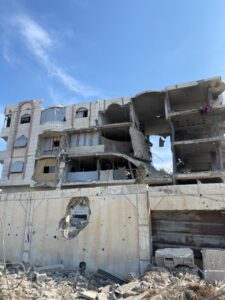
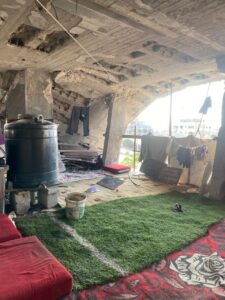
For Farah’s family, they decided to take shelter on the second floor of their destroyed house. Their home had been bombed by Israel at least two times and further damaged by booby-trapped robots detonated nearby during Israel’s latest invasion of Gaza City.
“There is also an unexploded rocket on the upper floors,” she said, noting that it poses a serious risk to their lives. “But we have no choice.”
Farah Ashour’s destroyed house in Gaza City after it was targeted at least two times by Israeli forces. (Provided)
As the ceasefire enters its second month, humanitarian agencies say that far too little aid is reaching Gaza, as hunger persists with winter approaching and old tents start to fray.
For Farah’s family, they decided to take shelter on the second floor of their destroyed house. (Provided)
The Norwegian Refugee Council (NRC), which hosts the Shelter Cluster that coordinates the humanitarian shelter response and identifies priority needs for displaced families, said last week that Israeli restrictions continue to block the entry of lifesaving shelter materials.
The NRC noted that since the ceasefire took effect on 10 October, Israel has rejected 23 requests from nine aid agencies to bring in urgently needed shelter supplies such as tents, sealing and framing kits, bedding, kitchen sets, and blankets, amounting to nearly 4,000 pallets.
“We have a very short chance to protect families from the winter rains and cold,” said Angelita Caredda, Middle East and North Africa Regional Director for the NRC.
“More than three weeks into the ceasefire, Gaza should be receiving a surge of shelter materials, but only a fraction of what is needed has entered. The international community must act now to secure swift and unimpeded access.”
According to the humanitarian coordination body, nearly 1.5 million people already required tents and other emergency shelter materials and more than 282,000 housing units have been damaged or destroyed across Gaza, leaving families without protection, privacy, or adequate shelter as temperatures drop.
The Gaza Municipality has also warned that the humanitarian situation in the city could deteriorate sharply with the arrival of winter rains.
In a Sunday statement, the municipality said any rainfall could worsen the suffering of hundreds of thousands of displaced people living outdoors or in damaged tents, noting that 93 percent of tents have either collapsed or become uninhabitable after nearly two years of war.
Officials cautioned that without an immediate delivery of relief supplies, fuel, and repair equipment, the already fragile sanitation and water systems could completely fail once heavy rains begin, heightening risks of flooding, disease outbreaks, and contamination.
“The tragedy of Gaza’s residents may worsen significantly in the coming weeks unless urgent international intervention is mobilised,” the municipality said, urging humanitarian organisations to act swiftly to prevent a larger catastrophe threatening civilian lives and public health.
UNRWA said 61 million tonnes of debris now cover Gaza and entire neighbourhoods have been erased. It said families were searching the ruins for shelter.
On Monday, the Gaza Rights Center (GRC) confirmed that 74% of the tents currently housing displaced Palestinians are unfit for living.
UK-based charity Muslims In Need (MIN)) told Quds News Network that they are unable to deliver shelters, including tents, to the Palestinian enclave because Israeli occupation authorities have rejected many requests from other humanitarian groups, claiming that the organisations submitting them are “not authorised to deliver humanitarian aid to Gaza.”
“Almost everyone in Gaza City is now living in tents—or, in many cases, literally on the streets without any shelter,” said a representative from MIN’s Gaza office.
He added, “Many people are asking us to provide them with tents before winter, but we simply cannot afford them,” noting that the conditions are miserable and life there is almost unbearable.”
Who Gets Hit Hardest?
“What will keep us warm tonight?” Aya Sada told Quds News Network. Aya’s family has been living in a makeshift displacement camp near the sea in Deir al-Balah, central Gaza.
While all displaced people in Gaza face stark risks, certain groups bear disproportionate burdens., including children, infants and elders.
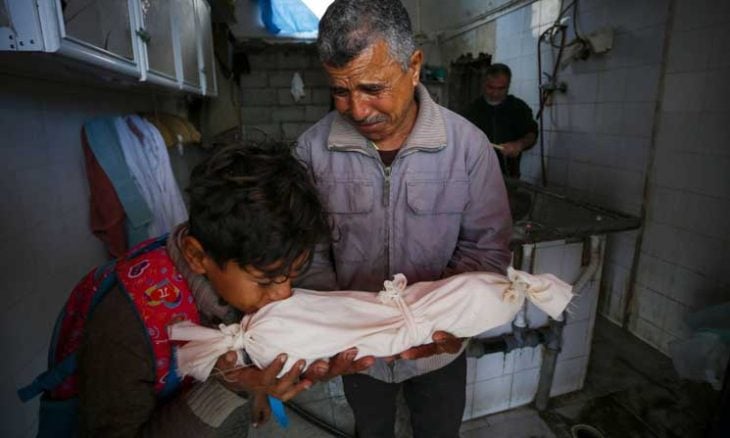
Last winter, several children froze to death amid a harsh cold snap in Gaza, where a lack of heating was compounded by Israel’s blockade preventing shelter from entering the enclave.
“This winter, as fewer buildings remain standing, many Palestinians are forced to live in tents and makeshift shelters that provide considerably less protection against cold wind and rain,” Aya added.
“But even the tents are dilapidated after two years of Israeli assault.”
Last week, Amjad al-Shawa, director of the Palestinian NGO Network, which liaises with the UN, said: “We are entering winter very soon, which means rainwater and flooding are expected, and there is a high risk of disease outbreaks due to the hundreds of tons of waste near residential areas.”
Aya said, “People in Gaza hate winter. Most families share one blanket throughout the entire winter. This is the reality.”
The “Board of Peace” signals a new governance architecture for post-genocide Gaza, one that shifts management from local frameworks to an internationally led structure with clear political, security, and economic mandates.
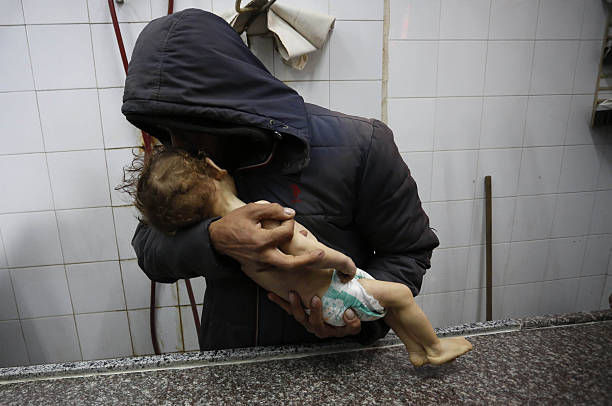
In Gaza, winter kills quietly. Babies shiver, stop breathing, and die in tents too cold to survive. These deaths are not accidents; they are preventable tragedies unfolding in slow motion. How does it feel like dying from cold?
At least seven infants have died this winter in Gaza. Displaced babies freeze in soaked tents as Israel’s blockade blocks essential aid.
This is how Israel is freezing Gaza’s babies to death.