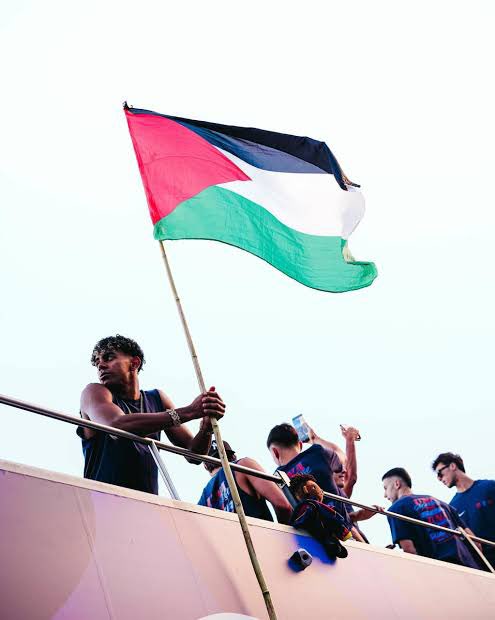
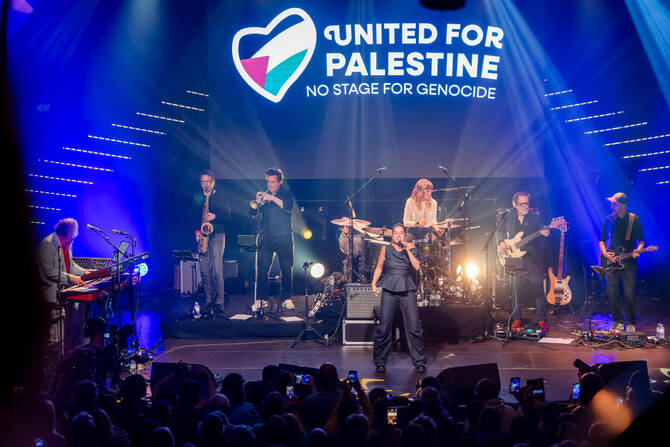
Brussels (QNN)- Protests against Israel’s participation in the Eurovision Song Contest intensified across Europe this week as Palestinian musicians and activists organized alternative concerts condemning the Israeli genocide in Gaza and calling on organizers to expel Israel from the European competition.

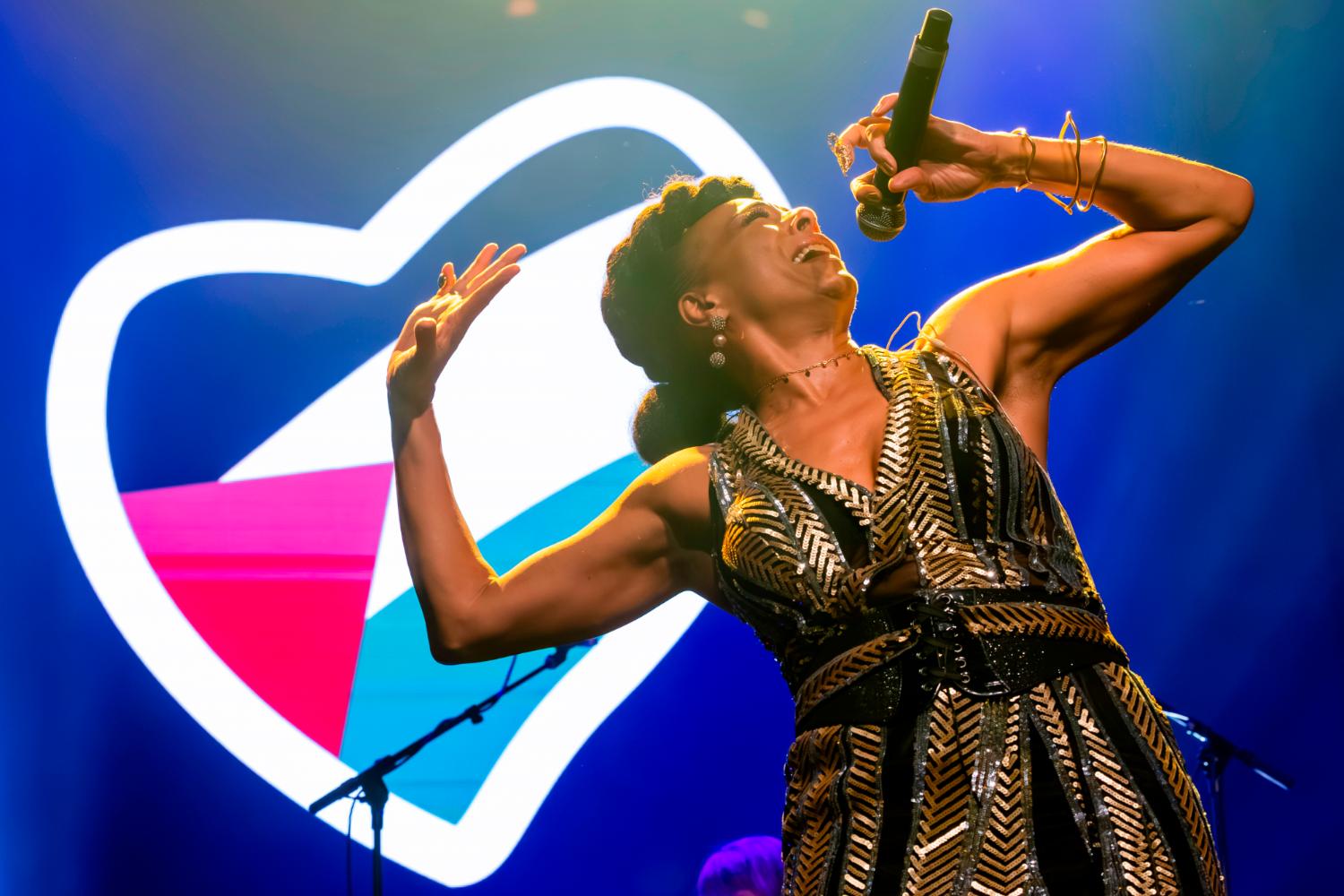
Inside a historic concert hall in Brussels on Tuesday night, Palestinian singer-songwriter Bashar Murad performed an emotional rendition of Nina Simone’s classic song “I Wish I Knew How It Would Feel to Be Free” in both English and Arabic. The audience erupted in applause after the performance, which became one of the defining moments of the “United for Palestine” concert.
The event formed part of a wider protest movement against Eurovision, which celebrates its 70th anniversary this year under the slogan “United by Music.” Critics say the slogan clashes with Israel’s ongoing genocide against the Palestinian people.
Five countries (Spain, Ireland, the Netherlands, Slovenia, and Iceland) boycotted this year’s contest over Israel’s participation. Meanwhile, performers from 35 countries continue competing in the annual European music event hosted this year in Vienna amid extremely low viewership.
Alternative concerts and broadcasts have spread across several European cities this week. Organizers in Belgium said similar solidarity events are taking place in Austria, Germany, Italy, Slovenia, and Spain.
Murad said the growing movement aims to pressure Eurovision organizers to return to the competition’s original message of unity and inclusion.
“It’s always amazing to be in the same room with people who believe in the same things as you and people who believe that we can’t just let the show go on,” Murad said.
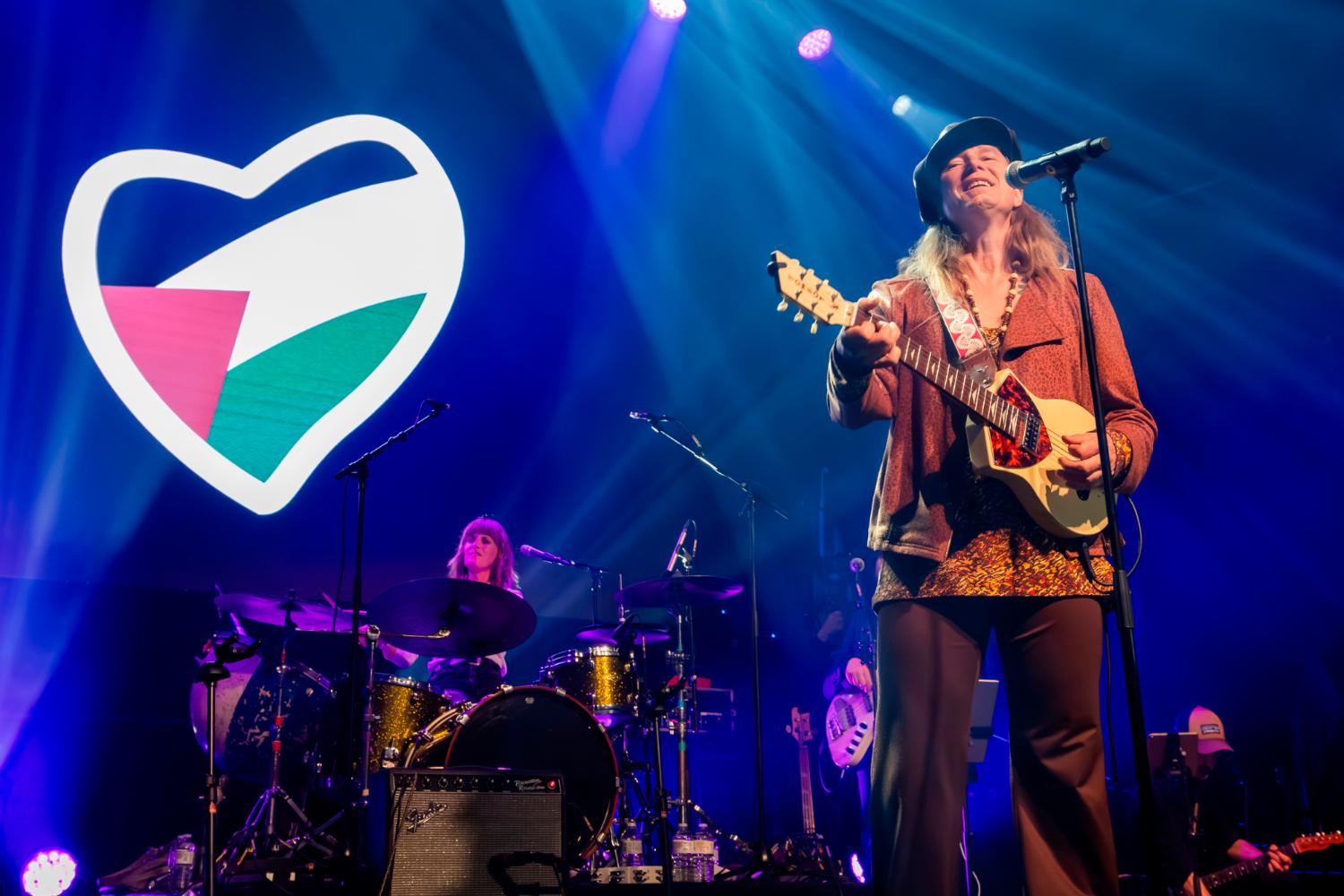
Murad nearly represented Iceland at Eurovision in 2024. His family also has a long connection to Palestinian music and cultural activism. His father helped found the influential Palestinian music group Sabreen. In 2007, his parents unsuccessfully petitioned the Geneva-based European Broadcasting Union to allow Palestine to participate in Eurovision.
Israel joined Eurovision in 1973 and has won the contest four times. A recent investigation by the New York Times revealed how Israel uses the contest as a soft power tool to whitewash its crimes and advance its narrative.
Human rights organizations continue increasing pressure on Eurovision organizers. Agnès Callamard, the secretary general of Amnesty International, said Eurovision should remove Israel from the competition just as it excluded Russia after its invasion of Ukraine in 2022.
“Songs and sequins must not be allowed to drown out or distract from Israel’s atrocities or Palestinian suffering,” Callamard said.
Public anger over the genocide has triggered large demonstrations across Europe in recent months. Several European Union politicians have also discussed possible sanctions against Israel.
“We have to create an alternative because the participation of Israel is problematic,” said Katrien De Ruysscher, founder of the activist group SOS Gaza, which organized the Brussels event alongside rights organization 11.11.11.
Last year’s Eurovision events in Malmo and Basel also faced major pro-Palestinian demonstrations. Protesters demanded Israel’s removal from the contest and accused the Israeli government of violating Eurovision voting rules by mobilizing support for its contestant.
Meanwhile, Spanish public broadcaster plans to air alternative programming on Saturday night instead of focusing fully on Eurovision coverage. The special program, titled “La Casa de la Música,” will celebrate Spain’s musical legacy and feature veteran artists alongside emerging performers, including winners of the Benidorm Fest who would normally appear at Eurovision.
Murad said the alternative concerts seek to challenge Eurovision’s direction and force organizers to reconsider the contest’s values.
“A lot of people in the world feel that the competition has lost its meaning,” he said.
Source: AP