Gaza (QNN)- Israel has threatened to resume its genocide in Gaza despite ongoing daily attacks and repeated violations of the US-backed ceasefire. Meanwhile, Israeli forces continue to expand the areas they occupy across the war-ravaged Strip. Palestinian officials say both Israel and the United States have rejected a proposal jointly submitted by Palestinian factions following the latest round of negotiations over Gaza’s future.
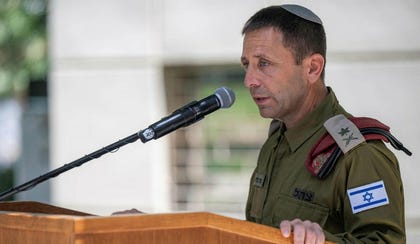
A senior official in the Israeli military’s General Staff told Channel 15 that an additional round of war was “almost inevitable”, citing the refusal of Palestinian factions to surrender its weapons and the alleged “failure” of the International Stabilization Force, a multinational body deployed under the recent truce framework to oversee security and manage the ceasefire’s implementation.
Israel’s Army Radio and several reports, including from Haaretz, Reuters, The Guardian and the UN, reported that on the ground, the military has steadily been expanding the areas it controls in the besieged enclave. By gradually pushing the ceasefire-established “Yellow Line” westwards, Israeli forces have expanded their territorial control to 59 percent of the Strip, regularizing their occupation through daily violations of the ceasefire and moving additional forces from the Lebanese front into Gaza and the occupied West Bank.
In Cairo, mediators are applying intense pressure on Palestinian factions to accept a new framework pushed by Nikolay Mladenov, the high representative for the United States-backed Board of Peace.
Abdul Jabbar Said, a member of the Hamas political bureau, told the Palestinian website Ultra Palestine that Mladenov has tried to enforce a roadmap that would require the complete disarmament of Hamas within 281 days over five stages. The plan, which builds on United States President Donald Trump’s 20-point vision plan, strictly conditions humanitarian aid, reconstruction and the opening of crossings into Gaza on the phased handover of weapons. Analysts and Palestinian officials have previously said that this framework is designed to enforce the complete “political surrender” of the resistance groups.
Analysts noted the strategy aims to turn the newly formed National Committee for the Administration of Gaza (NGAC), a technocratic body established to govern civilian affairs and oversee reconstruction in the enclave, into a proxy security arm for the occupation.
Said confirmed to Ultra Palestine that a unified front of Palestinian factions — including Hamas, Palestinian Islamic Jihad and the Popular Front for the Liberation of Palestine — has universally rejected the disarmament prerequisite. Instead, the groups insisted on the full implementation of the first phase of the ceasefire, which Israel has repeatedly violated by continuing to attack the strip, killing hundreds and blocking the agreed-upon entry of 600 aid trucks daily.
Also, a senior Palestinian source with knowledge of the talks told Middle East Eye that the Palestinian proposal called for negotiations over the disarmament of Hamas and other groups to be tied to the granting of political rights for the Palestinian people "within the national framework", as well as to commitments that the people of Gaza would no longer be killed.
Disagreements have deepened between the US and Israel on one side and Palestinian factions on the other after a series of meetings in Cairo and Istanbul in recent weeks. The central point of contention is the US and Israel’s insistence that Hamas and other resistance groups disarm before a technocratic government is established in Gaza.
On Friday, Palestinian representatives handed their proposal to Egypt and Turkey, which have been mediating the talks.
On Saturday, the "mediators and the Americans both refused the Palestinian factions' paper and passed threatening messages from the Americans to the Palestinian negotiating team", the senior Palestinian source said.
Palestinian factions insist that disarmament cannot come before a political resolution that includes Palestinian statehood, while Israel and the US have framed it as a prerequisite for any durable ceasefire.
After the US-Israeli rejection of the paper, Israeli media reported that the security cabinet is scheduled to meet on Sunday to discuss renewing the war in Gaza.
“Hamas is not standing by the agreement on disarmament. We are holding discussions with mediators,” an Israeli official told the Kan public broadcaster on Saturday evening.
In March, Nickolay Mladenov held weeks of talks with Hamas leaders and gave the group until 11 April to begin gradually handing over its weapons.
However, Palestinian negotiators say statehood and self-determination must coincide with security arrangements, adding that continued Israeli violations have undermined confidence in the ceasefire process. These include ongoing military operations and delays in implementing agreed humanitarian measures.
The death toll in Gaza has surpassed 72,000 people, with thousands missing and presumed to be buried under rubble.
The developments follow warnings from Israeli military analyst Amos Harel, writing in Haaretz, that ICC-wanted Prime Minister Benjamin Netanyahu may seek to resume the genocide to secure electoral gains ahead of upcoming general elections.
Harel wrote that "the repeated recent leaks about Hamas’s growing strength in Gaza, followed by political statements, are not a coincidence - the government is preparing to launch a new attack on the Strip".
He added that if Trump maintains a halt to assault in Iran and Lebanon, Netanyahu may aim to "keep the flame of war burning on other fronts, especially with general elections approaching next October".