Occupied Palestine (Quds News Network)- On April 17 each year, Palestinian Prisoners’ Day is observed to highlight the plight of thousands of Palestinian men, women, and children held in Israeli prisons.
This year’s commemoration comes amid concerns over an Israeli death penalty law targeting Palestinian detainees, legislation that rights groups say violates international law and is inherently discriminatory. The United Nations has also warned that it could amount to a “war crime.”
While the world was calling for the release of Israeli captives held in Gaza for over two years, about 10,000 Palestinian hostages are now being held in Israeli prisons, according to the prisoners’ rights group, including children, women, and journalists, amid reports of torture and medical negligence.
According to the latest update issued by Palestinian prisoners’ advocacy groups in early April, from October 2023, when Israel launched its assault on Gaza, to this date, the number of Palestinian hostages doubled, rising from 5,000 to more than 9,600.
Of those in detention:
- 84 women
- 342 children
- 3,532 under administrative detention
- 119 are serving life sentences.
According to the Palestinian Commission of Detainees and Ex-Detainees Affairs and the Palestinian Prisoner's Society (PPS), since 1967, Israeli forces have detained an estimated one million Palestinians, or approximately 20 percent of the Palestinian population. Statistically, this means one out of every five Palestinians has been imprisoned at some point in their life.
Here's everything you need to know.
Administrative Detention
The groups said they have documented a “dangerous increase” in the number of Palestinians held under administrative detention in Israeli prisons.
The latest figure of administrative detainees as of the beginning of January stands at 3,385 people, which the monitor said is the highest number recorded since this type of detention began being used on a wide scale.
Israel routinely uses administrative detention and has, over the years, placed thousands of Palestinians behind bars for periods ranging from several months to several years, without charging them, without telling them what they are accused of, and without disclosing the alleged evidence to them or their lawyers.
According to Israeli newspaper Haaretz, Western states rarely employ administrative detention and in some countries, the practice does not exist at all.
Israeli occupation authorities use it mainly in the West Bank against Palestinians “while its use against Israeli citizens, particularly Jewish ones, is rarely employed.”
More than one-third (3,532) of the 9,600 Palestinians detained by Israel as of early this month were being held under administrative detention.
Silent Death
According to the Palestinian Prisoner advocacy groups, 89 known detainees have died in Israeli prisons since the start of the Israeli genocide in Gaza. Among them are at least 51 detainees from Gaza and a child, the highest number in history.
Since 1967, a total of 326 Palestinians have died in Israeli occupation prisons. The groups said the identities of many martyrs among Gaza’s detainees remain undisclosed, as the Israeli occupation continues to conceal them, making this the “bloodiest stage in the history of the prisoner movement.”
Of those, Israel continues to withhold the bodies of over 95 detainees, including those who died since the start of the Israeli assault, 89.
According to a recent released report by Physicians for Human Rights–Israel (PHRI), based on data obtained from the Israeli army and Israel Prison Service (IPS), 98 Palestinians have died in Israeli prisons and military detention centers since October 2023, in many cases seemingly as a direct result of torture, medical neglect, and food deprivation by soldiers and prison officers. Of those detained from Gaza, who make up the majority, less than one-third were classified by the Israeli army itself as militants, meaning Israel was responsible for the deaths of dozens of Palestinian civilians in custody.
Additionally, dozens of detainees from Gaza remain forcibly disappeared, with no confirmed information on their fate. Israeli occupation authorities have been accused of torturing Palestinian detainees.
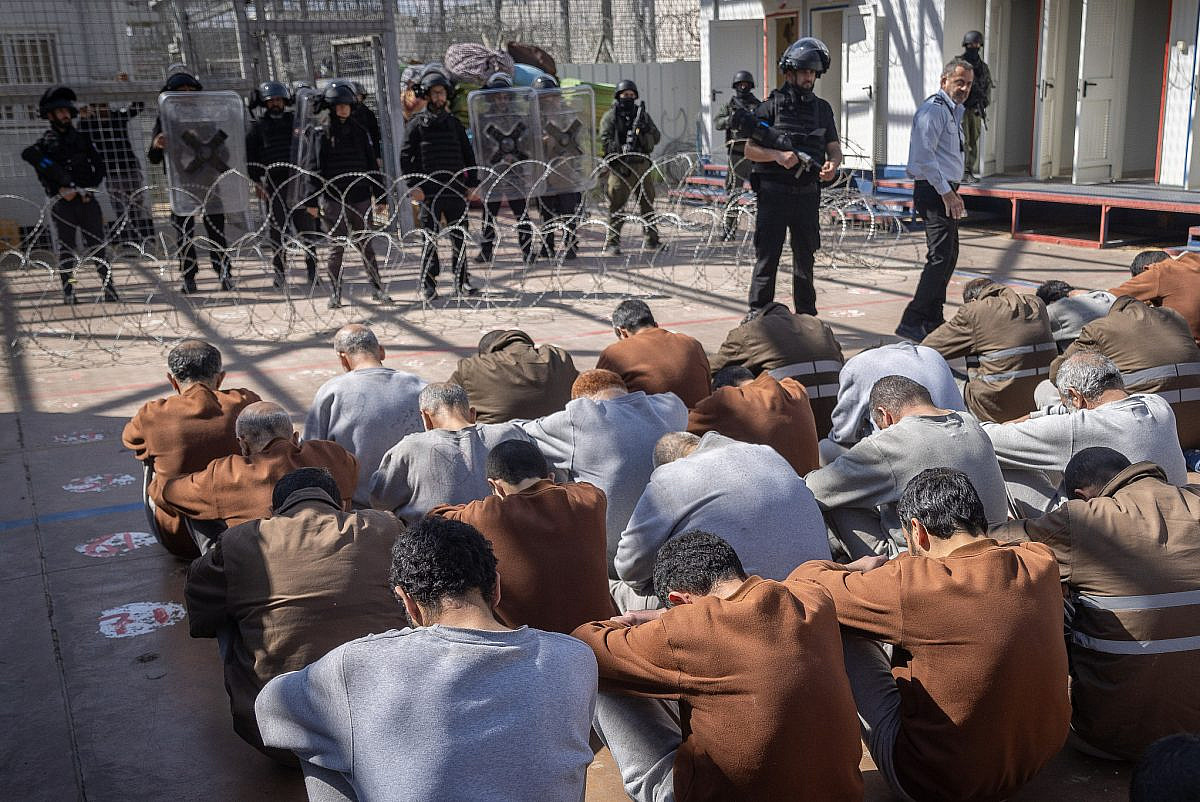
This includes being handcuffed and shackled 24 hours a day, seven days a week, even while sleeping, eating, and using the restroom.
Testimonies also describe regular beatings by guards, extreme overcrowding, humiliation, and inadequate hygiene. An Israeli reserve soldier exposed lately shocking abuses at Israel’s infamous Sde Teiman military base, describing it as a “sadistic torture site” where dozens of Palestinian detainees from Gaza died under brutal conditions.
The soldier described Sde Teiman as a place where “people enter alive and leave in body bags.”
He said the death of detainees was no longer surprising. “The real surprise,” he added, “is if someone survives.” He stated that Israeli occupation authorities oversee systematic abuse.
According to his account, Palestinian detainees suffered starvation, untreated war wounds, and denial of basic hygiene needs. “Some urinated and defecated on themselves because they weren’t allowed to use the bathroom,” he said.
In August 2024, the Israeli rights group B’Tselem said Israeli occupation authorities systematically abusing Palestinians in “torture camps”, subjecting them to severe violence and sexual assault.
https://x.com/rudi46772946/status/2016262582089470457?s=46&t=t_-JFgpXqgMIkVsuBfWELw
Its report, titled “Welcome to Hell”, is based on 55 testimonies from former Palestinian detainees. The overwhelming majority of these detainees were held without trial.
Many prisoners from Gaza have been subjected to forced disappearance and held incommunicado under inhumane conditions, creating an environment where extrajudicial killings can occur without oversight or accountability.
In addition to torture, the Palestine Center for Prisoners Studies documented over 30 deaths resulting from medical negligence. Israel is reported to routinely deny prisoners access to basic medical care, holding them in unsanitary, disease-ridden conditions and delaying or outright refusing necessary treatment for extended periods. In many cases, prisoners are only transferred to hospitals when they are on the brink of death.
https://x.com/walidmahmodrouk/status/2016427916654002569?s=46&t=t_-JFgpXqgMIkVsuBfWELw
“Unlawful Combatants”
The Israeli occupation forces have abducted more than 2000 known Gazans during the genocide, a number that is likely even higher, and are holding them in indefinite incommunicado detention, without charge or trial, under the Unlawful Combatants Law, in clear violation of international law.
There are currently 1,237 detainees classified as “unlawful combatants”, the highest recorded since the start of the genocide, the advocacy groups said. This figure does not include all Gazan hostages abducted during the genocide and currently held in detention camps run by the Israeli army.
The groups noted that this classification also applies to Arab detainees from Lebanon and Syria.
According to Amnesty International, citing former detainees, during their incommunicado detention, which in some cases amounted to enforced disappearance, Israeli military, intelligence and police forces subjected them to torture and other cruel, inhuman or degrading treatment.
The Unlawful Combatants Law grants the Israeli military sweeping powers to detain anyone from Gaza that they suspect of engaging in operations against Israel or allegedly posing a threat to state security for indefinitely renewable periods without having to produce evidence to substantiate the claims.
“Our documentation illustrates how the Israeli authorities are using the Unlawful Combatants Law to arbitrarily round up Palestinian civilians from Gaza and toss them into a virtual black hole for prolonged periods without producing any evidence that they pose a security threat and without minimum due process. Israeli authorities must immediately repeal this law and release those arbitrarily detained under it,” Amnesty International said.
Israeli forces abducted the detainees from locations across Gaza including Gaza City, Jabalia, Beit Lahiya and Khan Younis. The detainees were rounded up at schools housing internally displaced families, during raids on homes, hospitals, and newly installed checkpoints. They were then moved to Israel.
Those detained included doctors taken into custody at hospitals for refusing to abandon their patients; mothers separated from their infants while trying to cross the so-called “safe corridor” from northern Gaza to the south; human rights defenders, UN workers, journalists and other civilians.
One of the most well-known cases is that of Dr. Hussam Abu Safiya, the Director of Kamal Adwan Hospital in northern Gaza, who has been imprisoned by Israeli forces since December 2024, sparking growing fears that he may not “make it out alive.”
His family is also concerned for his physical and mental health. Israeli forces kidnapped Dr. Abu Safiya after storming Kamal Adwan Hospital. Soldiers forced him out at gunpoint, destroying the hospital and putting it out of service. Surrounded by bomb-struck buildings, Abu Safiya walked down the middle of a road strewn with debris, his white medical coat standing out against the rubble as he made his way toward Israeli tanks.
The Israeli military claimed in January 2025 that Abu Safiya had been involved “in terrorist activities” and held “a rank” in Hamas that it said had made the Kamal Adwan Hospital a stronghold during the war.
In March, an Israeli court extended the detention of Abu Safiya for six months. The ruling classified him as an “unlawful combatant”. But according to the Al Mezan Center for Human Rights, no formal charges had been made against the hospital director.
A spokesperson for the Al Mezan Center said recently that Abu Safiya is still being detained in Ofer Prison in the occupied West Bank, where he faced dire conditions, inadequate food and overcrowded cells.
In a statement last month, UN special rapporteurs Tlaleng Mofokeng and Ben Saul said they had received reports that Abu Safiya’s health condition “remains dire”.
“He has been systematically denied critical medical examination and treatment, and deprived of essential care to such an extent that his life, health, and wellbeing have been gravely endangered,” they said.
Underground Cells?
Video clips released by Israeli media in January 2025 showed Palestinian detainees chained inside underground cells without mattresses or blankets, enclosed by iron gates, and not exposed to sunlight.
The Israeli Broadcasting Authority reported that detainees are shackled and kept in a tiny cell for twenty-three hours every day, with only one chance to leave the cell during the day to enter a tiny, dark courtyard. The underground prison is called Rakevet, located beneath Israel's Nitzan Prison in Ramleh. Israel claims that the prison is reserved for the most dangerous detainees, whom Israel says are members of the Hamas elite and the Hezbollah-affiliated Radwan Forces.
Euro-Med Monitor said this claim “does not excuse the violation of international law's regulations regarding the treatment of detainees and prisoners.”
“This claim is untrue and frequently used as a pretext for torture and retaliation, as evidenced by the fact that thousands of detainees from the Gaza Strip were released after being subjected to cruel torture and unlawful detention conditions under the pretext of elite membership.”
In March, the Commission for Detainees and Ex-Detainees Affairs and the Palestinian Prisoner’s Society revealed disturbing testimonies from detainees from Gaza. Testimonies were collected during the first legal visits conducted by Palestinian lawyers to detainees held in the secret underground prison, Rakevet.
The visits took place under extreme surveillance, with guards accompanying the lawyers at all times and prohibiting any mention of family or events outside the prison.
According to lawyers, detainees showed visible signs of fear and trauma. At first, many were unable to speak freely due to the heavy surveillance, however, after reassurances from the legal teams, some agreed to share their experiences.
One detainee, identified as S.J., said he was arrested in December 2023 and immediately subjected to six days of continuous interrogation under what he called the "disco" and "pampers" methods, references used by detainees for particularly humiliating techniques. He described being forced to wear adult diapers after being denied access to a bathroom, while enduring continuous loud music, severe food and water deprivation, and being kept blindfolded and handcuffed throughout. S.J. was then transferred multiple times, from the Sde Teiman to Ashkelon Prison, then to the Moscobiya detention centre for 85 days, followed by Ofer Prison, and finally to the Rakevet section. He said the conditions in Rakevet were the worst he experienced with three detainees per cell, no sunlight, and humiliating exercise time where prisoners were not allowed to lift their heads.
Another detainee, W.N., said he was arrested in December 2024 and endured violent interrogations by Israeli forces and intelligence operatives. He reported being sexually assaulted with a search device, denied medical treatment, and forced to sit on his knees for long periods. Prisoners were made to curse their own mothers, he added, and he sustained a broken finger during transport, a tactic he said guards deliberately use against detainees.
A third detainee, K.D., said he was subjected to repeated interrogations using the "disco" method and stress positions, often tied to a chair for long hours or thrown to the floor, while loud music played continuously, making it impossible to rest or sleep. He developed scabies in Ofer Prison and received no treatment after being transferred to the Rakevet. He suffer from chest pain made worse by the use of tight restraints and said the prison administration punishes inmates by deliberately breaking their thumbs.
Another detainee, A.G., held for 35 days at Sde Teiman, said he entered prison with an injury and received no medical care. He developed a high fever and lost consciousness several times. For 15 days, he was shackled and blindfolded around the clock. Later transferred to Rakevet, he described permanent surveillance in cells, bans on prayer, threats of death, and violent assaults during yard time. The prisoners were allowed to shower only when guards decided, and were given one roll of toilet paper every three days. Food is minimal, and detainees track time by when guards confiscate blankets at dawn.
The two advocacy groups said that Rakevet was one of several facilities repurposed or reopened by Israel to hold Gaza detainees since the start of the Gaza war. Other facilities include Sde Teiman, Anatot, Ofer camp, and the Menashe camp for West Bank detainees.
These sites, they said, have become synonymous with "instantaneous, systematic physical and psychological torture".
In a March report, Francesca Albanese, the UN’s special rapporteur on the rights situation in the Palestinian territories occupied since 1967, said that since October 7, 2023, Palestinians in Israeli custody “have been subjected to exceptionally ruthless physical and psychological abuse”.
Entitled “Torture and genocide”, the report “examines Israel’s systematic use of torture against Palestinians from the occupied Palestinian territory since October 7, 2023”. It said that “torture in detention has been used on an unprecedented scale as punitive collective vengeance”.
“Brutal beatings, sexual violence, rape, lethal mistreatment, starvation, and the systematic deprivation of the most basic human conditions have inflicted profound and lasting scars on the bodies and minds of tens of thousands of Palestinians and their loved ones,” the report said.
“Torture has become integral to the domination of and punishment inflicted on men, women and children, both through custodial abuse and through a relentless campaign of forced displacement, mass killings, deprivation and destruction of all means of life to inflict long-term collective pain and suffering,” it added.
Albanese said Israel should “immediately cease all acts of torture and ill-treatment of the Palestinian people as part of its ongoing genocide” and urged all countries “to do everything in their power to stop the destruction of what remains of Palestine” as every delay “worsens irreversible harm and further entrenches a system of cruelty”.
Freedom for Some, Silence for Others
While the world was calling for the release of Israeli captives held in Gaza over the past two years, it remains largely silent about the more than 9,600 Palestinians imprisoned in Israeli jails.
After Hamas and Israel reached an agreement in January 2025, 1,777 Palestinian prisoners, who spent a total time amounting to about 10,000 years in Israeli prisons, were released.
Moreover, Israeli forces have re-arrested several of them, breaching the terms of the deal.
Now, all the living and deceased Israeli captives held in Gaza were released by the Palestinian resistance under the ceasefire deal.
But what about the Palestinian hostages held in Israeli jails?
https://x.com/anonymousxoaa/status/2016308567066673495?s=46&t=t_-JFgpXqgMIkVsuBfWELw
The International Center of Justice for Palestinians (ICJP) said, “Palestinian hostages remain detained in Israeli prisons. They are systematically tortured and sexually abused by Israeli prison staff” while all Israeli captives have returned, adding since October 2023, the cumulative number of Palestinians detained by Israel has reached around 30,000, while just over 2,000 detainees have been released through ceasefire agreements, meaning that for every Palestinian freed, fifteen more were arrested.
What Is the New Death Penalty Law?
Under this law, military courts are able to impose the death penalty specifically on Palestinian hostages and detainees accused of committing alleged attacks described as “nationally or security motivated.” It does not include Zionists who killed native Palestinians, making it a law that is racially discriminatory.
The law, which was approved on March 30 and is to take effect by the end of April, will apply to Palestinians from the West Bank who are tried in Israeli military courts.
Palestinians slammed the bill as “a war crime against the Palestinian people”, saying it violates the Fourth Geneva Convention, particularly the protections it guarantees for individuals and the safeguards for fair trials.
The rights group B’Tselem pointed out before the Knesset’s approval of the bill that the conviction rate for Palestinians tried in military courts is about 96 percent.
“The law is worded in such a way that it targets only Palestinians. And it will turn the killing of Palestinians into an accepted and common tool of punishment through several mechanisms,” it said.
“In many cases, these convictions are based on ‘confessions’ obtained through pressure and torture during interrogations,” the group said.
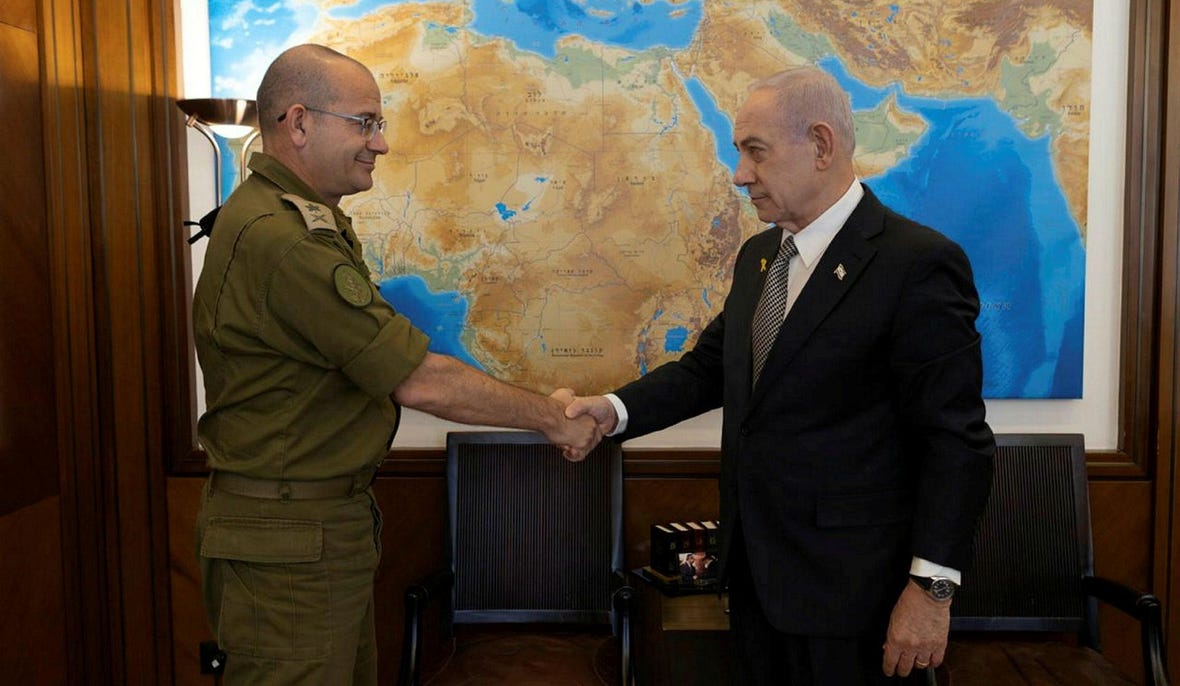
It was pushed by far-right National Security Minister Itamar Ben-Gvir as one of the main conditions of his Otzma Yehudit (Jewish Power) party’s coalition agreement with Netanyahu. Ben-Gvir was seen celebrating with champagne in the parliamentary chamber.
“This law targets Palestinians and entrenches Israel’s long-standing policy of extrajudicial execution under the guise of law, in clear violation of international human rights and humanitarian law,” the PCHR said in a social media post.
“For years, we have seen an alarming pattern of apparent extrajudicial executions and other unlawful killings of Palestinians – with the perpetrators also enjoying near-total impunity. This new law which allows for state-sanctioned executions is a culmination of such policies,” Erika Guevara-Rosas, Amnesty International’s senior director of research.
#FreePalHostages
Thousands of Palestinians and pro-Palestine advocates have taken part in the “Free Palestinian Hostages” campaign, both online and on the ground through protests.
At these demonstrations, participants wave Palestinian flags and wear red ribbons to symbolize detention without charge, while denouncing what they describe as Israel’s routine use of torture, sexual abuse, arbitrary arrest, and inhumane treatment against Palestinians.
They say Israel operates a system rooted in apartheid and genocide, and call for an immediate end to mass incarceration.
The campaign has spread across Europe, with cities like Paris and Athens witnessing large-scale demonstrations as tens of thousands of people filled the streets in support of Palestine.
https://x.com/gazabehindscens/status/2041893992099373299?s=46&t=t_-JFgpXqgMIkVsuBfWELw
Online, supporters have used the hashtag #FreePalHostages to highlight the suffering of Palestinian detainees and call for their immediate release
https://x.com/onlinepaleng/status/2045029271521947845?s=46&t=t_-JFgpXqgMIkVsuBfWELw