Paris (QNN)- France’s parliament is preparing to vote on a sweeping bill that would criminalize broad forms of speech related to Israel and silence pro-Palestine expression, with penalties of up to five years in prison, as activists warn it threatens free speech.
The legislation is due for its first reading in the National Assembly on 16 April. It has secured broad backing across the political spectrum, including support from the far right.
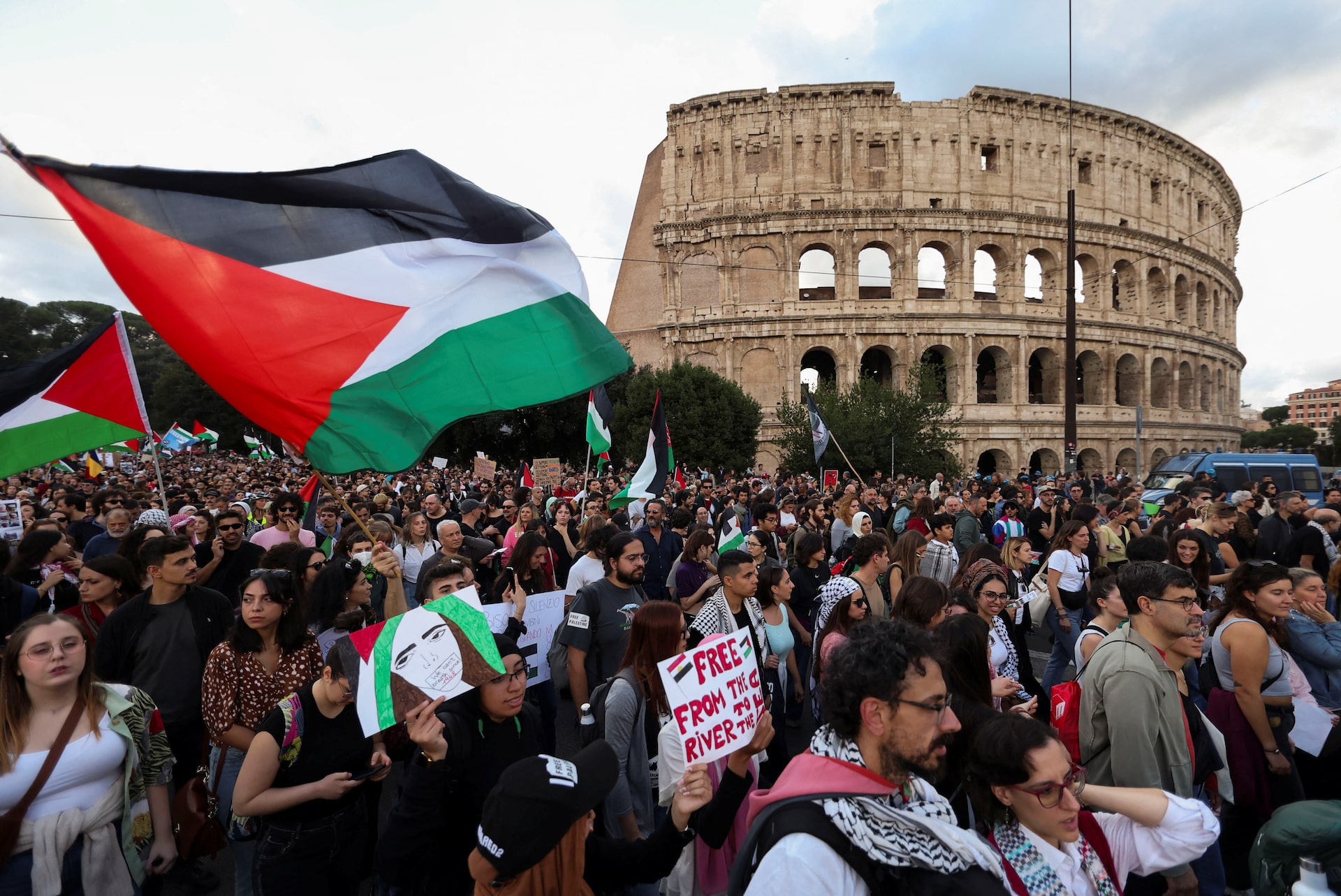
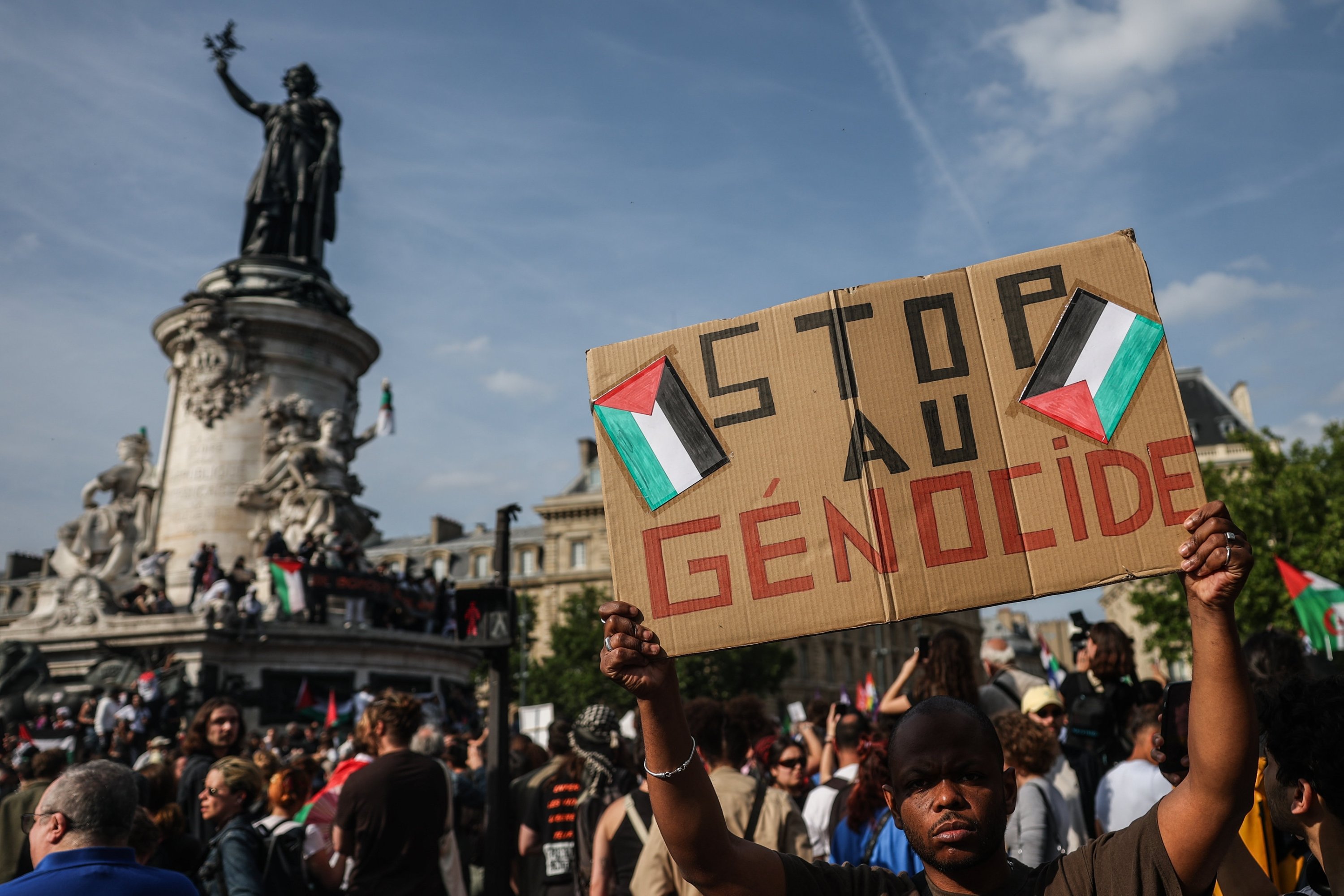
However, nearly 700,000 people have signed a petition calling for the law to be blocked, and protests have spread across the country in opposition to the bill.
https://x.com/revpermanente/status/2040475865213964324?s=46&t=t_-JFgpXqgMIkVsuBfWELw
The proposal is spearheaded by French MP Caroline Yadan, a leading figure among lawmakers who openly describe themselves as “unconditional” supporters of Israel.
Yadan, who is herself Jewish, represents the 8th constituency for French citizens abroad, where Israel accounts for a significant share of voters, and has made defence of Israel central to her political agenda.
Yadan has defended the bill by claiming without evidence that “for 15 years, Jews have been killed in France 'in the name of Gaza'”.
Yadan has broken with President Emmanuel Macron over his recognition of the right of a Palestinian state to exist. She also lashed out at Macron in October 2024 after he called for halting weapons deliveries to Israel during its genocise in Gaza.
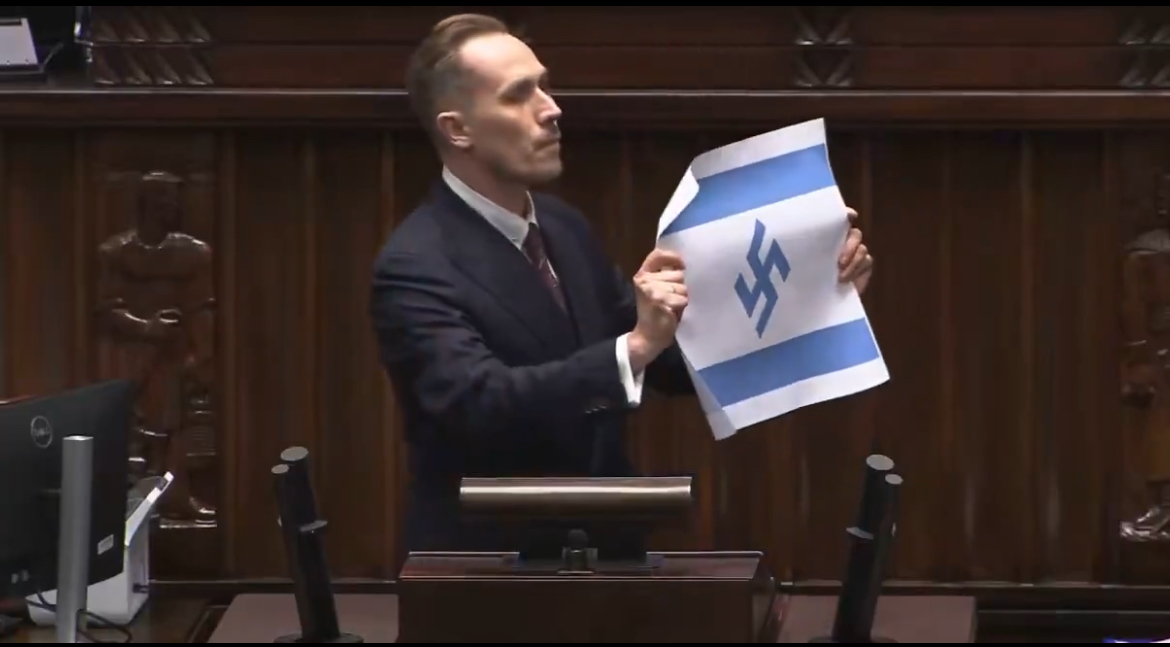
The bill introduces sweeping new offences. It criminalizes denying Israel’s existence, while no law criminalizes denying France's right to exist, and outlaws comparisons between Israel and Nazi Germany.
It also expands terrorism-related offences to include what the text defines as “implicit” provocation.
Under Article 1, individuals could face up to five years in prison and heavy fines for speech interpreted as justifying or reframing acts labelled as terrorism. That could include describing such acts as “resistance” or providing context deemed insufficiently condemnatory.
France’s former anti-terrorism judge Marc Trevidic issued a stark warning about the implications.
"I'd never seen anything like it, the notion of implicit incitement to terrorism. Do you realise what that means? Becoming a censor of other people's thoughts, trying to guess what a person really meant."
The bill also broadens the offence of “apology for terrorism” to include the “minimising or trivialising” of attacks. Under the new wording, courts could interpret attempts to explain root causes or political context as criminal acts.
Another provision expands laws on crimes against humanity. The text explicitly states that comparing Israel to Nazi Germany would amount to “outrageous trivialisation” of the Holocaust, making such comparisons punishable.
Lawmakers behind the bill state that equating Israel with the Nazi regime should be treated as a criminal offence, effectively shielding Israel from one of the most charged forms of political criticism.
This legislation builds upon existing French laws that already restrict freedom of expression, notably the Gayssot Act which criminalizes the denial of crimes against humanity, including the Holocaust. The new measures go further by extending criminal liability into broader political expression.
Legal experts have raised serious objections. In a statement inviting lawmakers to reject the bill, the Syndicate of French lawyers (SAF) said it "remains dangerous both for freedom of expression and for the fight against antisemitism".
They warned of the implications of criminalizing "implicit" incitement. "By seeking to regulate what is implicit, the criminal courts would in effect be tasked with a hazardous form of thought policing," it wrote.
Opponents of the bill say that its real-world effect would be to suppress legitimate debate about Israeli policy and the genocide in Gaza .
"People are going to be very afraid to talk about Palestinian rights and Israeli crimes if this law is adopted," said Cecile Marquerie, advocacy coordinator for an alliance of pro-Palestinian French NGOs.
She told RFI the proposed law would allow defenders of Israel "to throw lawsuits at journalists, academics, human rights organisations and lawyers who are denouncing Israeli crimes".
A phrase such as "the Israeli apartheid regime must be dismantled" – language used by major human rights organizations including Amnesty International and Human Rights Watch, "could very much fall within this new offence of a call for the destruction of a state", she noted.
Critics also challenge the bill’s premise: that anti-Zionism is necessarily a form of antisemitism.
"The foundation of this bill is that hatred against Jews is inseparable from hatred against Israel. That's identity labelling," Marquerie said. "It's imposing a constrained solidarity with Israel on Jewish French citizens.”
"Linking them to Israel is not protecting them, it's exposing them."