US President Donald Trump launched an unprecedented military assault on Venezuela and kidnapped President Nicolás Maduro and his wife. He said US forces carried out the operation successfully and flew the couple out of the country.
Beyond the battlefield, the attack triggered a political storm inside the United States. Lawmakers from both parties questioned the legal basis of the operation. Many pointed to a deeper motive: oil, power, and regime change.
A Military Strike Framed as Law Enforcement
Trump presented the attack as a legal action, not a war. He claimed US forces enforced the law by 'arresting' Maduro under US charges. That framing quickly faced criticism.
Republican Congressman Thomas Massie said the operation lacked constitutional grounding. He argued that if the action were lawful, the US attorney general would not announce the arrest of a sitting foreign president under a 1934 US firearms law. His statement raised serious doubts about Washington’s legal justification.
https://x.com/repthomasmassie/status/2007469970364539092?s=46
Critics say the contradiction is obvious. The US cannot claim it only executed an arrest warrant while also launching air strikes and declaring control over a sovereign country’s leadership.
“It’s Not About Drugs”
For years, Washington accused Maduro of leading a global drug trafficking network. Trump repeated that claim during his presidency. Yet critics now say the drug narrative collapsed under scrutiny.
Representative Alexandria Ocasio-Cortez rejected the justification outright. She said the attack had nothing to do with drugs. She pointed to Trump’s recent pardon of one of the world’s largest drug traffickers as proof. According to her, the real objectives were oil and regime change.
https://x.com/aoc/status/2007472955882692798?s=46
She also argued that Washington now needs a trial to hide those motives. She said the move helps distract from domestic crises, including the Epstein scandal and rising healthcare costs.
Senator Chris Van Hollen described the assault as an illegal act of war. He said Trump and his allies tried to dress it up, but the goal was clear: remove Maduro and seize Venezuela’s oil for US billionaires.
Van Hollen warned against public deception. He said the administration cannot claim the operation was only an arrest while also admitting it now “runs” Venezuela and controls its oil resources.
https://x.com/chrisvanhollen/status/2007515431012327520?s=46
Venezuela’s Oil: The Central Prize
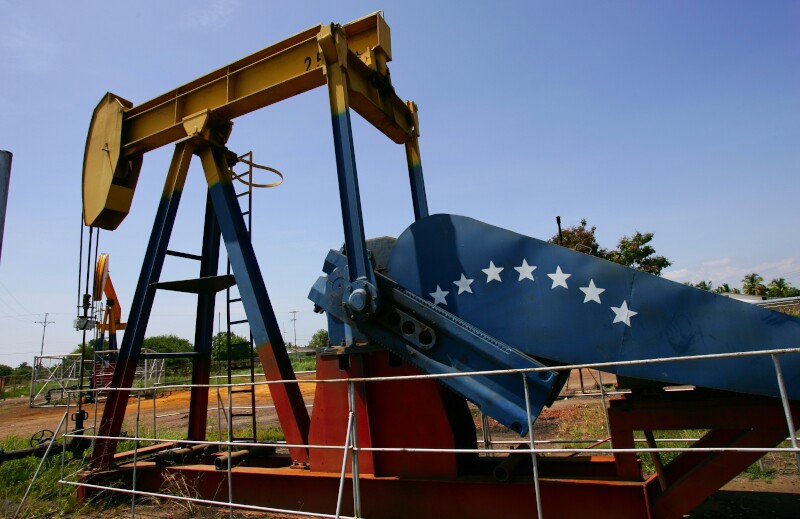
Venezuela holds the world’s largest proven oil reserves. They total about 303 billion barrels. The country also has major gas reserves and vast agricultural land. Venezuelan officials say these assets explain the US obsession.
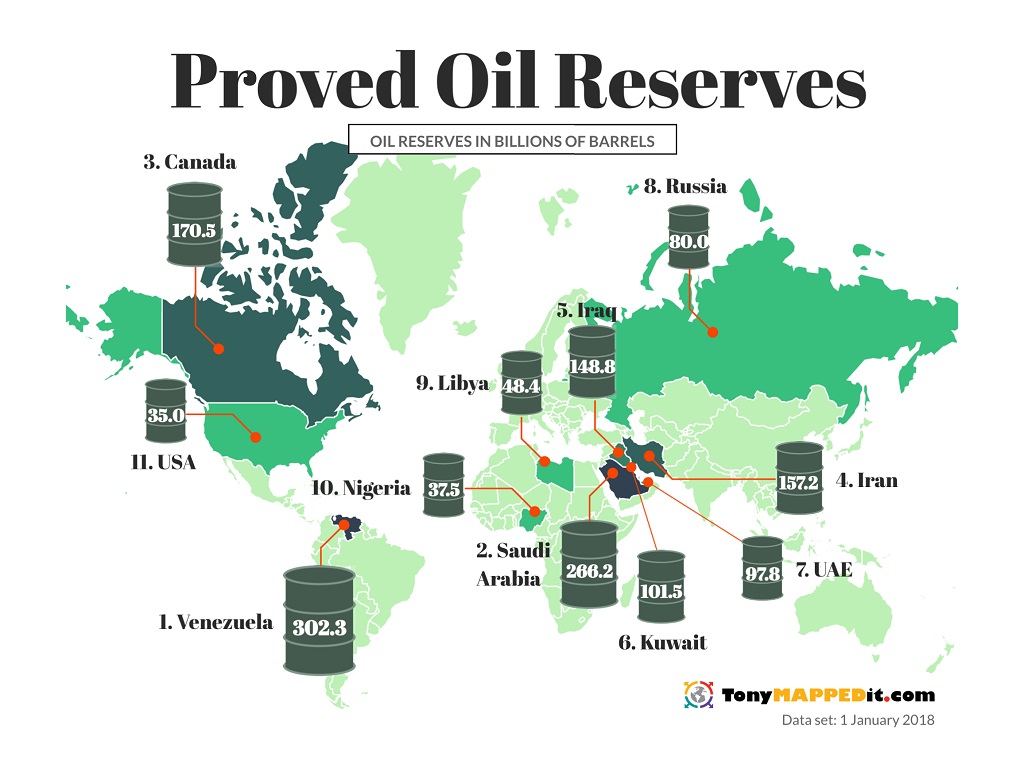
Maduro said in November that Venezuela would not face such attacks without its resources. He said the country’s oil, gas, and strategic location made it a target.
Despite its massive reserves, Venezuela produces far less oil than its potential. Sanctions imposed since 2015 cut the country off from investment, technology, and spare parts. That gap between reserves and production keeps Venezuela at the center of US interest.
Rising Production, Rising Tensions
Oil production in Venezuela rebounded in 2024 and 2025. Output peaked at about 940,000 barrels per day in February 2025. Average production reached around 960,000 barrels per day in 2024.
Exports also rose. Reuters reported shipments hit 1.09 million barrels per day in September 2025, the highest level since 2020. The recovery alarmed Washington.
China remains Venezuela’s top oil buyer, importing more than 600,000 barrels per day. The United States ranked second with about 222,000 barrels per day in 2024. Europe and India followed.
Analysts say Trump’s attack aimed to disrupt that flow and reassert US control over Venezuelan energy routes.
Blockade, Sanctions, and Market Impact
Before the strikes, Trump imposed a naval blockade on sanctioned Venezuelan oil ships. He also labeled the Venezuelan government a foreign terrorist organization. The military attack followed that pressure.
The impact reached global markets. Oil prices jumped more than 2 percent after Trump announced the blockade. Brent crude rose to $60.3 per barrel. US crude climbed to $56.4.
Oil dominates Venezuela’s economy. It accounts for over 80 percent of exports and about 17 percent of GDP. High prices once fueled growth and regional influence. When prices fell and sanctions tightened, the economy collapsed.
By May 2024, more than 7.7 million Venezuelans had left the country.