Vienna (QNN)-
The Austrian public broadcaster ORF, which will host the 2026 Eurovision Song Contest, has announced that it will not ban Palestinian flags in the audience and will not censor any booing directed at Israel’s performance. The decision follows the withdrawal of five countries from the competition over Israel’s participation, amid international calls for Israel to be barred from the event in response to its genocide in Gaza.
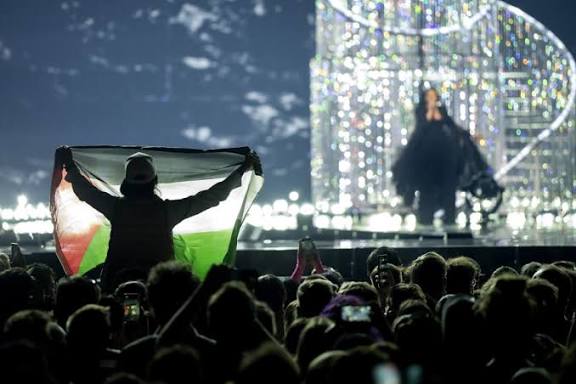
Stefanie Groiss-Horowitz, ORF’s director of programming, said on Tuesday that the sound of any booing from the crowd would not be drowned out - a practice observed during Israel's performance in this year's semi-final performance by Yuval Raphael which came amid the genocide in Gaza.
"We won't play artificial applause over it at any point," she said.
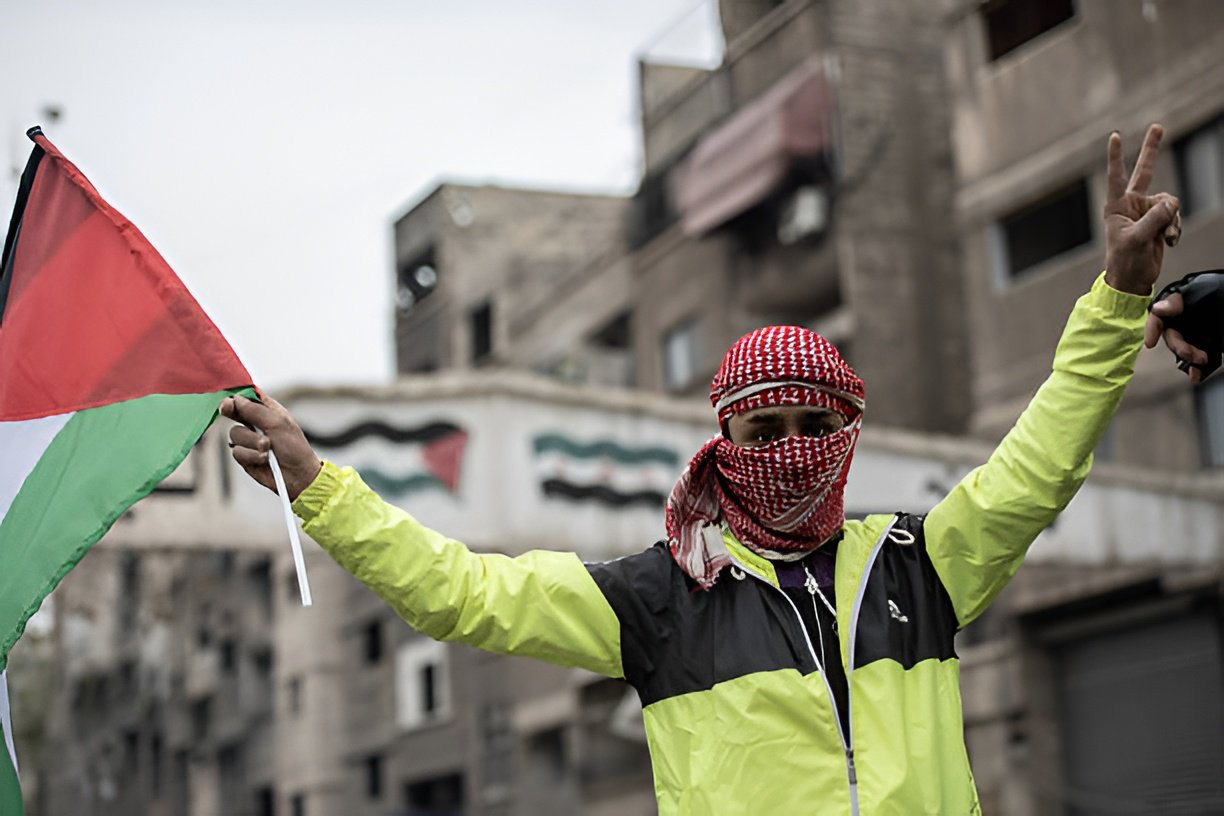
The ORF also said that it will allow the audience to wave "all official flags" so long as they comply with security parameters, widely interpreted to mean the Palestinian flag would not be banned - a continuation of the policy from this year.
The competition's organisers received fierce backlash in 2024 for banning Palestinians flags in the audience.
The decision came after Spain, Ireland, Slovenia, Netherlands and most recently Iceland withdrew from next year’s contest.
The five countries had threatened to boycott next year’s edition of the glitzy music contest, due to be held in Vienna in May, if Israel took part, citing its genocidal war on Palestinians in Gaza – as well as confirmations that it unfairly intervened in the most recent competition to the benefit of its entrant in what reportedly was an attempt to politicise Eurovision.
The issue was initially supposed to be resolved with a vote in November. But a few days after the announcement of a ceasefire agreement in Gaza on October 10, which Israel has violated repeatedly and killed about 400 Palestinians, the EBU postponed the decision until its ordinary general assembly in Geneva.
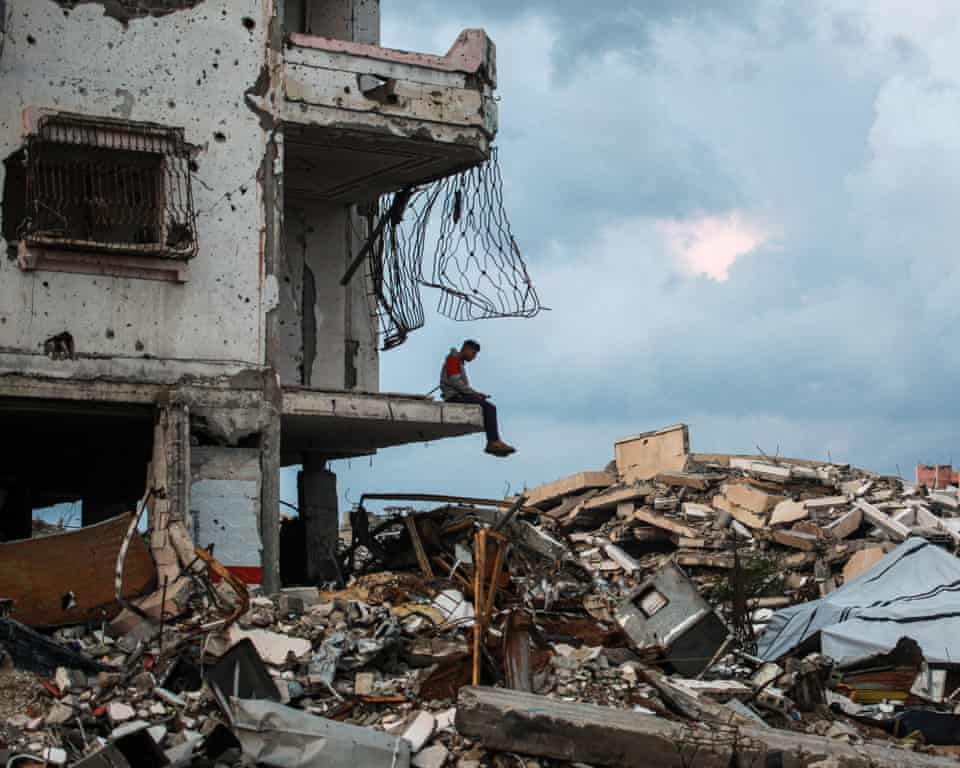
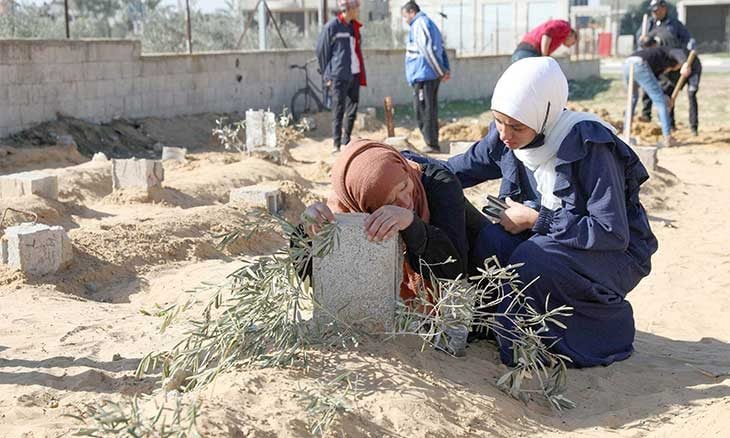
Earlier this month, the contest’s organising body declined to expel Israel over its genocide in Gaza where Israel has killed more than 70,000 Palestinians since October 7, 2023 and imposed a blockade on aid with human rights groups confirming it uses stavation as a weapon of war.
It said that it would instead introduce new rules “to reinforce trust and protect [the] neutrality” of the contest that would discourage governments from influencing the outcome.
That prompted the five countries to swiftly announce they would boycott the competition.
Russia was banned from competing in 2022 due to “the unprecedented crisis in Ukraine.” Critics and broadcasters, however, pointed to the ongoing genocide in Gaza and the West Bank under Israeli occupation.
The president of Slovenian broadcaster RTV noted that while the EBU banned Russia from Eurovision almost immediately after it invaded Ukraine in 2022, it "does not dare reject Israel".
In May that year, the EBU formally suspended its Russian members, indefinitely revoking their broadcasting and participation rights for future editions of Eurovision. Russia has not competed since.
RTÉ, the Irish broadcaster, said participation was “unconscionable given the appalling loss of lives in Gaza and the humanitarian crisis there” while RTVE in Spain said participating would engender “distrust” in the organisation given the depth of feeling over Gaza.
The Spanish broadcaster RTVE also said it would not broadcast the contest or the semi-finals in Vienna next year, describing the process of decision-making as “insufficient” and engendering “distrust”.
Spain’s Culture Minister, Ernest Urtasun, backed the boycott. He said: “You can’t whitewash Israel given the genocide in Gaza. Culture should be on the side of peace and justice. I’m proud of an RTVE that puts human rights before any economic interest.”
The Slovenian national broadcaster, RTVSLO – the first to threaten a boycott this summer – said participation “would conflict with its values of peace, equality and respect”. It said it was “on behalf of the 20,000 children who died” in Israel’s genocidal war on Palestinian people in Gaza.
Stefan Eiriksson, director-general of Icelandic national broadcaster RÚV, said: "There is no peace or joy connected to this contest as things stand now. On that basis, first and foremost, we are stepping back while the situation is as it is."
RÚV said Israel's participation had "created disunity among both members of the European Broadcasting Union (EBU) and the general public".
If the EBU fails to act, it risks a major split within Europe’s most-watched cultural event. For many broadcasters, the contest is no longer just about music, but about taking a stand on Gaza.
The decision by the five countries means they will neither participate in nor broadcast the event, which is scheduled to take place in Vienna.
Over the last two years, Israel has faced objections to its participation in Eurovision not only by EBU members but also by contestants themselves.
Nemo, the Swiss singer who won 2024's contest, said earlier this year that they backed calls for Israel to be excluded, saying the country's actions in Gaza were "fundamentally at odds with the values that Eurovision claims to uphold, peace, unity, and respect for human rights".
Last week, they announced they would return their trophy, saying Israel's continued participation in Eurovision demonstrated a "clear conflict" between the EBU's actions and its values.
“When entire countries withdraw, it should be clear that something is deeply wrong,” Nemo said on Thursday.
“This is not about individuals or artists. It’s about the fact that the contest was repeatedly used to soften the image of a state accused of severe wrongdoing, all while the EBU insists that this contest is non-political,” said Nemo.
“Live what you claim. If the values we celebrate on stage aren’t lived off stage, then even the most beautiful songs become meaningless,” they added.
In solidarity with Nemo, Irish artist Charlie McGettigan who won the 1994 Eurovision contest said he also plans to return his winning trophy.
McGettigan noted in a video that he can’t find his trophy but will return it whenever he does.
“Following on from 2024 winner Nemo doing the same yesterday, this is great solidarity with the Palestinian people,” the Ireland-Palestine Solidarity Campaign wrote on social media of McGettigan’s announcement.
Ireland's three-time Eurovision song contest winner Johnny Logan also praised his country's public broadcaster for withdrawing from the competition over Israel.
Speaking with Ireland's RTÉ, Logan said he doesn't think "Israel should be allowed to hide under the umbrella of the Eurovision," adding that he was "proud" of the broadcaster making the "right decision."
Logan said of his position that "I'm not antisemitic and I'm not pro-Hamas at all. I believe two things can be wrong at the same time." He added that he believes most Irish people agree with him: "When you have someone like Donald Trump describe Gaza as real estate ... it's appalling."
Israel's participation in next year's song competition, Logan said, is "almost like a tacit … we turn a blind eye ... sort of 'yes, everything is normal,' you know, we can forgive everything ... I think there has to be a point where a voice is heard. It's not okay."
Logan compared Israel's situation to that of Russia, which the EBU banned from the contest in 2022 when it invaded Ukraine. A similar decision should've been made in Israel's case, he said.
"They say that the Eurovision is nonpolitical, but the reality of it is that when it is necessary, it becomes political," Logan said. "The EBU should've made a decision regarding Israel, a decision removing them from the show, and taken that decision away from individual countries."
"Certainly at the moment, [Israel] should be removed."
Austrian singer JJ, who won this year's contest in Switzerland, was quoted by Spanish newspaper El País shortly afterwards as saying it was "disappointing" to see Israel's continued involvement, and that he would like the 2026 edition to be held without Israel.
In May, more than 70 past Eurovision contestants released an open letter calling for the EBU to ban Israel from participating.
Embroiled in diplomatic tension, the contest’s organisers announced on Monday the contest will have 35 participants, the lowest ever participation since 2003.