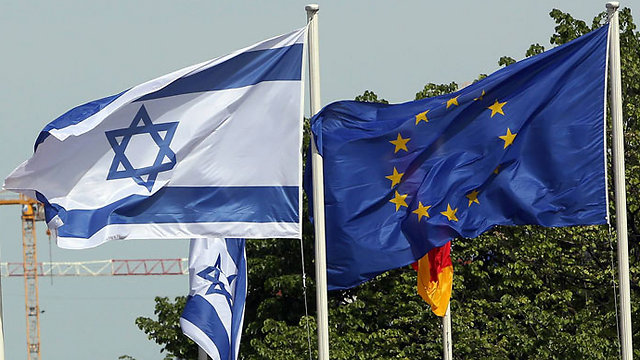
Luxembourg (QNN)- The European Union has agreed to expand sanctions on Iran over measures that it took following the US-Israeli war. At the same time, EU foreign ministers failed to secure enough support to suspend the EU-Israel Association Agreement, despite growing political and popular pressure from several member states.
Spain, Slovenia, and Ireland formally demanded a suspension. They argued that the situation in Gaza and rising Israeli assaults in the occupied West Bank require urgent action. Belgium also backed stronger measures. Foreign Minister Maxime Prévôt called Israel’s conduct “unacceptable” and pushed for at least a partial suspension.
The proposed suspension would affect Israel’s preferential access to the EU market, its largest trading partner, worth €42.6 billion in annual trade.
However, Germany and Italy blocked the proposal, preventing the EU from moving forward.
EU foreign policy chief Kaja Kallas confirmed that discussions will continue but said member states remain divided. “We didn’t see that today, but these discussions will continue,” she told reporters after Tuesday’s meeting.
Kallas rejected remarks that the EU applies double standards toward Israel. She also claimed that sanctions would not change conditions on the ground in Palestine.
The debate has intensified across Europe. Officials refused the suspension although one million EU citizens have signed a petition calling for suspension of the agreement. UN experts have also said suspension is a “minimum requirement” under international law.
Amnesty International sharply criticized the EU’s decision. The organization called it “a moral failure” and said it shows “brazen contempt for civilian lives,” especially in Gaza and the occupied Palestinian territories.
The EU-Israel Association Agreement gives Israel privileged trade access to the European market. It can only be fully suspended with unanimous approval from all 27 member states. A partial suspension would require a weighted majority.
José Manuel Albares, Spain’s foreign minister, said Europe cannot maintain normal relations with Israel while the genocide continues in Gaza. Spanish Prime Minister Pedro Sánchez has also urged the EU to suspend the agreement entirely.
Maxime Prévôt of Belgium warned that the escalation of settler violence in the West Bank and recent Israeli political moves raise serious concerns about EU values and human rights obligations.
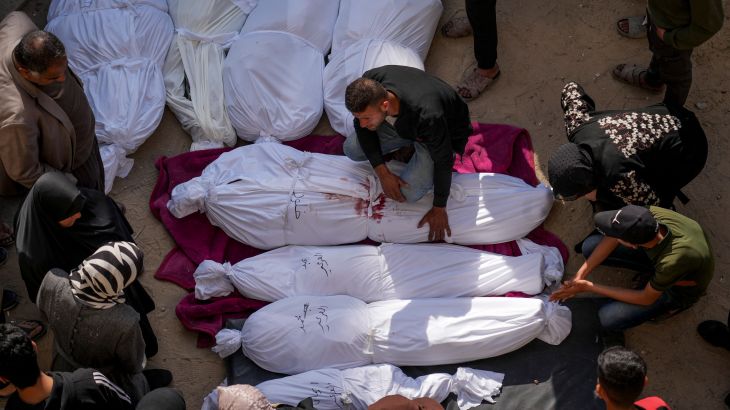
Ireland, Spain, and Slovenia also warned in a joint letter that Gaza faces “unbearable” conditions, including repeated ceasefire violations and restricted humanitarian aid.
Germany defended its position. Foreign Minister Johann Wadephul said dialogue with Israel must continue in a “critical and constructive” way.
Alongside the Israel debate, the EU swiftly confirmed new sanctions on Iran linked to navigation in key maritime routes. Officials said the measures will be finalized in May.
Pressure is also growing inside EU institutions. Nearly 400 senior diplomats and officials, along with more than one million citizens, have called for suspension of the Israel agreement.
France and Sweden have also pushed the EU to consider tariffs on goods from Israeli settlements in the occupied West Bank. The European Commission said products from settlements are not eligible for preferential trade benefits under existing rules.
Norway’s foreign minister Espen Barth Eide said illegal settlements and restrictions on Palestinian revenues are worsening the humanitarian and political crisis. He urged Israel to release Palestinian tax funds it has withheld since May 2025.