As the US-backed Israeli aggression on Lebanon exceeds its 40th day, a clearer picture begins to emerge; not of a rapid invasion or decisive victory, but of a calculated, slow-moving strategy built on encirclement, destruction, and long-term pressure.
Across South Lebanon, Israeli forces appear to advance geographically, yet repeatedly fail to secure or hold territory. At the same time, resistance forces allow limited movement while inflicting steady losses. This paradox has transformed the battlefield into a prolonged war of attrition, where endurance, not speed, determines the outcome.
So what exactly is Israel trying to achieve in Lebanon?
A Strategy Without Occupation—Yet
Rather than invading and holding towns, Israeli forces have relied on bypass tactics, encircling villages and isolating them instead of entering them directly. This reflects a deliberate attempt to avoid the heavy losses associated with urban warfare.
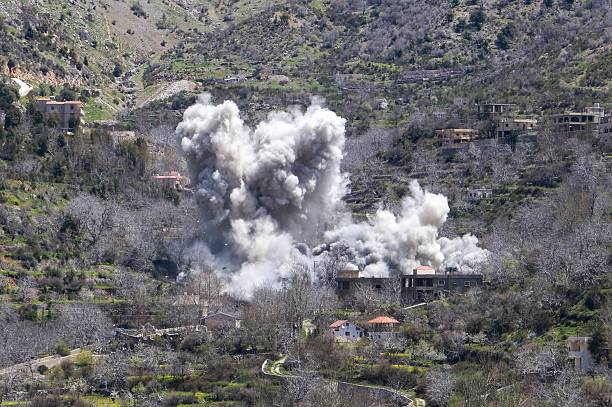
Retired Brigadier General and military analyst Dayfallah Al-Daboubi describes this approach as a “turtle crawl”; a slow, incremental advance designed to establish presence without full control. Israeli forces are attempting to clear areas step by step while avoiding densely populated zones that could inflict high casualties.
This strategy, described as a “turtle crawl,” meaning a slow, gradual progression step by step draws directly from lessons learned in Gaza, where Israeli forces entered cities like Jabalia, Deir al-Balah, and Khan Younis, only to face renewed resistance later.
Instead, Israel now aims to encircle cities rather than invade them, expecting resistance forces to eventually weaken or surrender.
"Following the war launched on Iran by Israel and the United States, and the subsequent entry of Hezbollah into the confrontation, it became clear that much of Israel’s current operational behavior reflects lessons learned from the Gaza war", Al-Daboubi says. "While Hezbollah has also drawn its own lessons from Gaza, which is reflected in the effectiveness and frequency of its missile operations and its focus on high-value targets according to military doctrine."
The resistance also has significantly adjusted its military tactics, learning from previous operational mistakes during the 66-day ground confrontation in southern Lebanon, according to military analyst Mohammad Al-Sakani.
"The resistance is combining guerrilla warfare with hybrid warfare, including the use of FPV suicide drones, loitering munitions, and guided missiles, while abandoning the idea of holding fixed territorial positions", he explains, adding that the resistance depends now on luring Israeli armored forces into pre-prepared ambushes, after creating controlled gaps and safe movement corridors that Israeli tanks and infantry may attempt to use in southern Lebanon.
This turns Israeli soldiers and vehicles into exposed, easy targets, like a “duck hunting field”, driving up losses and deepening exhaustion, especially after two years of ground attacks in Gaza, where Israel lost thousands of troops and armored vehicles.
The Real Objective: A “Security Belt” and Pre-Litani Control
According to multiple analysts, Israel’s broader plan revolves around reshaping southern Lebanon into a controlled military zone.
Expert in Israeli affairs, Alaa Al-Rimawy, explains that Israel is working to create a “pre-Litani environment”; a primary theater of operations south of the Litani River. This includes:
- Establishing fixed military positions to facilitate movement
- Conducting infiltration operations aimed at “clearing” the south of Hezbollah presence
- Relying on a prolonged attrition strategy in both time and space
The goal is not just military control, but geographic and demographic transformation.
According to Al-Rimawy, the Israeli security establishment is working to create burned-out zones and depopulated villages through systematic destruction, in order to enable easier military control over territory. However, he noted that Israel faces a strategic dilemma, as any prolonged ground presence in the south risks recreating a high-intensity attrition scenario similar to the period before the Israeli withdrawal from Lebanon in 2024.
"The core of the current confrontation lies in Hezbollah’s ability to impose costly attrition on Israeli forces," Al-Rimawy says. "
"So far, Hezbollah’s resilience and operational cohesion have exceeded Israeli expectations, particularly in terms of maneuverability and sustained engagement capability."
Encirclement Instead of Invasion: How It Plays Out on the Ground
Western Sector
Israeli forces maneuvered around the towns of Shamaa, Tayr Harfa, Al-Jibbayn, and Shihin without entering them, advancing instead toward Al-Bayyada through the Iskandarouna route.
This movement appears aimed at projecting an image of progress while isolating villages located behind Al-Bayyada and cutting their supply routes, in addition to securing elevated ground overlooking the city of Tyre and its surrounding plains. Despite this maneuver, Israeli forces have not established actual control inside these towns, continuing to rely on bypass tactics rather than direct confrontation.
At the same time, resistance operations have continued in Naqoura and Al-Bayyada, where Israeli positions and movements have been subjected to intensified targeting, preventing any stable consolidation on the ground.
"Avoiding urban combat is a tactical choice aimed at reducing casualties", Al-Daboubi explains. "Urban warfare is among the most complex forms of combat, and therefore Israeli forces rely heavily on armored units, tanks, artillery, and air support while operating outside dense population centers."
He further explains that encirclement strategies extend Israeli supply lines but reduce exposure to ambushes, which are more common in built-up areas than in open terrain.
"The geography of southern Lebanon strongly favors the defender (Hezbollah) due to its mountainous terrain", he says. "The demographic environment also plays a role, with a significant portion of the population remaining supportive of Hezbollah despite large-scale displacement from the south, leaving approximately twenty percent still present and influencing the operational environment."
Central Sector
Israeli forces advanced from Qouzah toward Beit Lif without attempting to invade the town, instead bypassing it toward Wadi al-Oyoun, which separates Beit Lif from Srebbine.
A similar approach was taken with Srebbine, as Israeli forces avoided entering it and pushed toward Rshaf, where they faced fierce resistance at its outskirts, forcing them to retreat back to Wadi al-Oyoun.
As of now, Israeli forces remain positioned there without entering Beit Lif, Srebbine, or Rshaf. The broader objective remains the encirclement of Bint Jbeil by cutting supply lines from multiple directions, including through Hadatha and from the Aitaroun axis via Wadi al-Skikiyah toward Wadi al-Slouqi. Despite recent Israeli claims of controlling Bint Jbeil, field reports indicate that Israeli forces remain engaged in back-and-forth (hit-and-run) confrontations with resistance fighters on the outskirts of the city.
Repeated ambushes have disrupted Israel's plans, most notably in Beit Lif where resistance fighters carried out a complex operation involving explosive devices, direct fire, rockets, artillery, and guided missiles, resulting in confirmed Israeli casualties after hours of fighting.
Strategic-Geopolitical analysis, Yasser Manaa, says Israel's isolation and avoidance tactics are driven not only by military considerations but also by political needs to produce quick, marketable images of success amid rising domestic pressure.
"Operational calculations are increasingly intertwined with political survival, as the continuation of the war is partly linked to the stability of the Israeli government and the position of Prime Minister Benjamin Netanyahu, who is seeking to accumulate a series of limited achievements," he says.
The Ainata front also witnessed one of the most intense days of combat, as Israeli forces attempted to advance from the hills of Friz and Ghadmatha toward the Al-Sadr area, facing direct and sustained strikes.
An additional attempt to push through Aitaroun toward Ainata resulted in heavy losses due to close-range combat, explosive devices, and rocket fire. Israeli forces have continued efforts to advance around Bint Jbeil through areas such as Debel and Rshaf, aiming to reach Barakat al-Hajar near Tiri while avoiding urban combat, and attempting to secure the zone linking Bint Jbeil, Aitaroun, Ainata, and Maroun al-Ras. Despite these efforts, they have failed to complete the encirclement of Bint Jbeil, facing continuous resistance strikes, difficult terrain, and growing operational exhaustion.
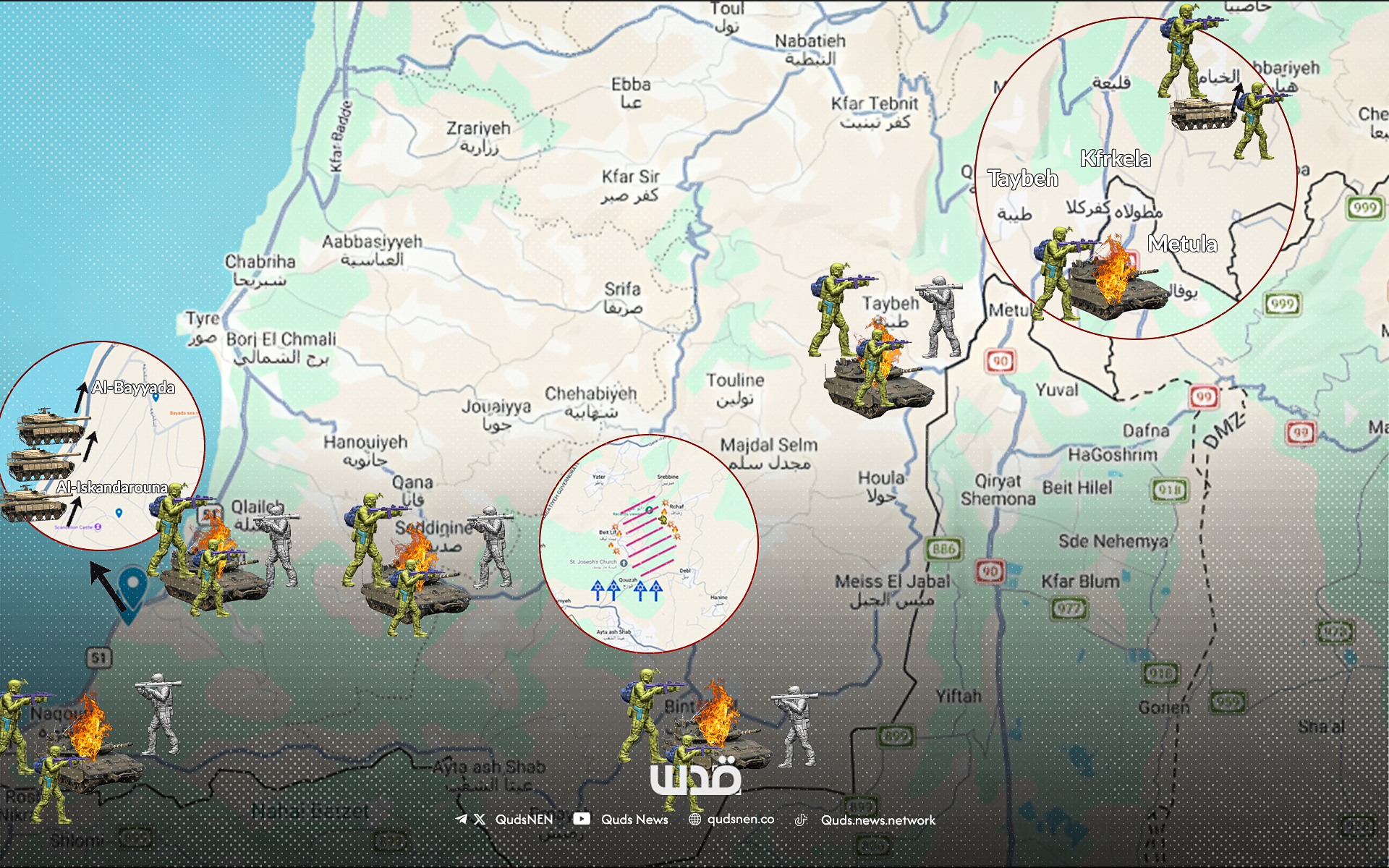
A map highlighting the locations of clashes and resistance that are blocking the Israeli army’s advance toward the north. It also reveals the Israeli military’s strategy of bypassing villages to limit potential losses.
Eastern Sector
The situation reflects a clear operational deadlock. In Khiam, Israeli forces are deployed in its southern outskirts from both eastern and western directions and attempted to open a central axis but failed to maintain their positions. Northern areas remain inaccessible, with resistance supply lines still active and intact.
In Taybeh, Israeli forces attempted to infiltrate and establish control but failed, suffering heavy losses during attempts to advance through the Bidar al-Faqa’ani area and later through Adshit al-Qusayr, Deir Siryan, and Qantara toward Al-Mahisbat, where their vehicles and tanks were caught in well-prepared ambushes while attempting to descend toward Wadi al-Hujeir.
Israeli forces have sought to create a geographical separation across South Lebanon by splitting frontline and secondary villages, but this objective remains unachieved. They have also refrained from advancing from Metula toward Kfarkela, Deir Mimas, and the Khardali axis despite their presence nearby.
Resistance operations have continued across the sector, including tracking and targeting Israeli vehicles and carrying out precision strikes on key movements.
Al-Sakani explains that when Israeli forces position themselves inside a town or village, the resistance transitions from ambush and defensive tactics to direct raids against Israeli deployments, disrupting operational planning. When Israeli forces attempt to advance into villages in both eastern and western sectors, Hezbollah relies on ambush-based attrition tactics against advancing units.
In Khiam itself, Israeli forces reached near the town center but failed to establish control, as resistance fighters continue to target their positions with rockets, artillery, guided missiles, and drones, alongside intermittent direct clashes. No significant ground incursion has been recorded in Wadi al-Hujeir, further highlighting the inability of Israeli forces to secure a decisive breakthrough in this sector.
Isolation as a Weapon: Cutting the South Off
A key part of Israel’s plan involves geographic fragmentation.
Israeli forces aim to separate frontline villages from secondary ones, cut crossings, and destroy bridges, especially across the Litani River, to isolate resistance groups and restrict movement.
However, Al-Sakani stressed that such measures will not stop Hezbollah, which relies on alternative underground tunnel networks that allow fighters to move securely away from Israeli air surveillance and drones.
Hezbollah had been also increasingly depending on drones and missiles to bypass Israeli tactics. Al-Sakani describes drones as “the eye that never sleeps,” while precision missiles represent “the long arm of the battlefield." He stresses that Hezbollah’s integration of both systems has created a “surveillance versus surveillance” equation, where both sides now attempt to monitor and strike each other’s movements.
"Hezbollah’s heavy reliance on drones makes all Israeli activity continuously exposed and vulnerable to immediate targeting", he adds.
However, Al-Daboubi warns that if Israeli forces advance toward Tyre and Sidon, they aim to create a containment pocket that would trap resistance forces between advancing units from the east and maritime axes, effectively forming a pincer movement involving divisions advancing from the coastal direction.
https://t.me/mmirleb/13472
Avoiding Urban Warfare, Expanding Firepower
Israel’s military doctrine now favors:
- Encirclement over invasion
- Long-range firepower over direct combat
- Drones, precision strikes, and engineering operations
Strategic analyst Yasser Manaa explains that Israel is redefining “victory” as a gradual dismantling of capabilities, rather than a decisive battlefield moment.
This approach also serves political needs. Prime Minister Benjamin Netanyahu seeks quick, visible achievements, such as assassinations and infrastructure destruction, to maintain a narrative of success without high casualties.
"Public sensitivity to casualties has increased compared to previous stages, prompting the security establishment to carefully manage information flow through Israeli military censorship mechanisms in order to limit psychological and political impact," Manaa adds.
For the same reason, Israel has carried out massacres across Lebanon with no clear military objectives. Restoring deterrence is increasingly taking precedence in public perception over achieving immediate, tangible security. Deterrence can be projected through media narratives, images of destruction and death, and high-impact strikes, while real security depends on far more complex, ground-level change.
A War to Exhaust, Not to Win Quickly
Across all analyses, one theme dominates: this is not a war designed for rapid victory.
Israel is pursuing a long-term attrition strategy, combining slow territorial pressure, continuous strikes, infrastructure destruction, and psychological warfare.
At the same time, Hezbollah has adapted its tactics, shifting toward hybrid warfare, including FPV suicide droneS, guided missiles, mobile ambush units, and controlled rocket fire.
Al-Sakami says Hezbollah has shifted to a controlled-fire doctrine, carefully pacing operations for a prolonged war. Instead of large, simultaneous barrages, it now launches calibrated rocket salvos (around 400 to 500 per day). This approach sustains pressure over months or even years while steadily deepening Israeli exhaustion and psychological strain.
He adds that the strategy fuels constant fear and confusion within Israeli ranks, creating ongoing operational uncertainty and forcing commanders to repeatedly reassess their offensive plans.
Hezbollah's tactics aim to deny Israeli stability, increase losses, and prolong the war.
https://t.me/mmirleb/14215
In this regard, Lebanese analyst, Ahmad Yassine, says that Hezbollah does not withdraw randomly, but imposes a clear equation: advancement will not be free.
"Every Israeli soldier falling in the south is a message to Israeli public opinion asking: in whose interest are we fighting? This is not merely rhythm management, but a calculated attrition strategy against an army that is technologically superior but morally and psychologically eroding", he adds.
A Disguised Occupation Project?
According to Yassine, what is unfolding goes beyond military tactics.
He argues that Israel is redrawing the map of southern Lebanon; gradually imposing a buffer zone, displacing civilians, and establishing control over high ground.
“This is not security,” he says. “This is occupation.”
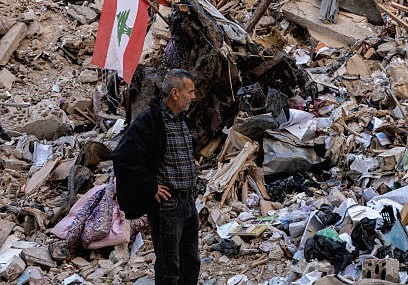
He describes the south as turning into a “systematic burn zone,” where destruction, displacement, and isolation serve as tools of war.
"Today strategic positions, tomorrow a “buffer zone,” and the day after a security belt", he adds.
Political Blackmail and Negotiation Leverage
Another key objective emerges: shaping future negotiations through destruction.
Israel is not seeking immediate military victory. Instead, it aims to destroy infrastructure, in addition to weakening resistance capabilities and improve its position before any ceasefire.
As Yassine puts it:
“Bomb first, negotiate second.”
Every destroyed village and displaced community becomes leverage at the negotiating table.
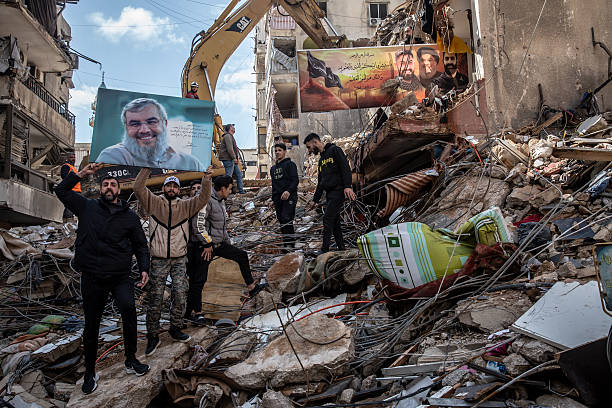
The Bigger Picture: A War Without an End
The overall battlefield presents a clear paradox: Israeli forces appear to advance geographically but fail to secure or hold territory, while resistance forces allow limited movement yet continue to inflict steady losses. This has transformed the confrontation into a prolonged war of attrition, where the outcome is determined not by rapid advances, but by endurance, sustained pressure, and the ability to impose continuous losses on invading forces.
The Lebanese state remains largely sidelined, condemning the war but unable to influence it.
"The Lebanese state has a diplomatic voice but no deterrent power, and this is exactly what Israel wants: for the victim to remain a witness, not an actor", Yassine says.
Meanwhile, Israeli society faces growing psychological strain, as casualties rise and the war drags on without a clear endpoint.
What Is Israel Planning?
All evidence points to a multi-layered strategy, not a single objective:
- Create a buffer zone south of the Litani
- Encircle and isolate resistance areas
- Avoid costly urban warfare
- Destroy infrastructure to reshape geography
- Pressure Lebanon into political concessions during the ongoing US mediated talks
- Prolong the war to exhaust the opponent
Ultimately, these overlapping goals point less to a clear endgame than to a strategy of controlled escalation, where military pressure is used to steadily reshape realities on the ground while keeping the conflict open-ended, with Israel using Lebanese civilians to make them bear the heaviest cost through displacement, destruction, and prolonged suffering.