In a fragile tent built over the ruins of her family’s destroyed home in Beit Lahia, northern Gaza, a mother’s cries cut through the heavy air. “Bring back Retaj,” repeats Ola Rayhan, her voice trembling as grief overwhelms her. Around her, women weep in silence. Their tears echo a tragedy that has become all too common in Gaza.
Retaj Rayhan was only nine years old. She had just returned to school.
Last Thursday morning began with a sense of hope. Retaj’s father, Abdul Raouf Rayhan, walked his daughter to a makeshift classroom. Volunteers had set up the tent only five days earlier on the rubble of the destroyed Abu Ubaida ibn al-Jarrah School in Beit Lahia.
For Retaj, this moment meant everything. Since the genocide in Gaza began on October 7, 2023, she had not attended school. That morning marked her first step back into learning, into routine, into life beyond a genocide.
“She was so happy,” her father recalls, his voice breaking. “I thought school would give her back what the war had taken.”
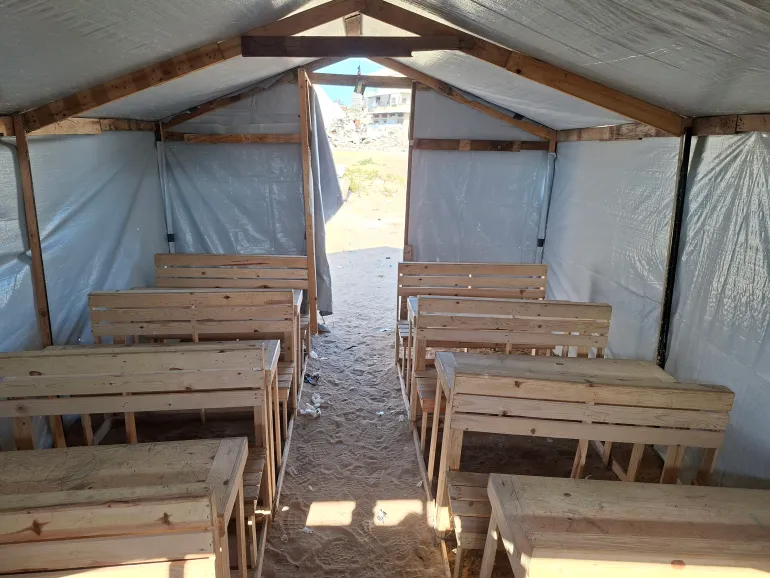
Inside the tent, children sat on simple wooden benches. Nylon sheets replaced walls. Yet the space carried a powerful purpose: to restore education in a place where nearly everything else had collapsed.
A Sniper’s Bullet in a Child's Mouth
Moments later, that fragile hope shattered.
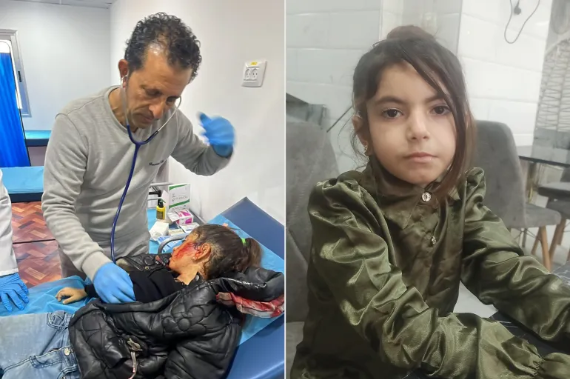
Retaj stood at the front of the class, waiting for her teacher to correct her notebook. Without warning, a single bullet tore through the tent. It struck her in the mouth. Blood poured out as she collapsed in front of her classmates.
Children who witnessed the scene later described the shock. One moment, she stood smiling. The next, she lay motionless on the ground.
An Israeli sniper, positioned along the northern “yellow line” boundary, fired the shot that killed her.
There was no time to react. No time to save her.
A Desperate Race Without Hospitals
Teachers rushed to help. With no ambulances available, they placed Retaj on a cart pulled by an animal and headed toward the nearest medical point. Israeli forces had destroyed hospitals across Gaza’s northern governorate, leaving families and educators with almost no access to emergency care.
The journey offered no hope.
“She was directly hit,” her father says. “There was no chance for her to live.”
The phone call reached him soon after. A teacher delivered the news no parent should ever hear: Retaj was gone.
Blood on a School Notebook
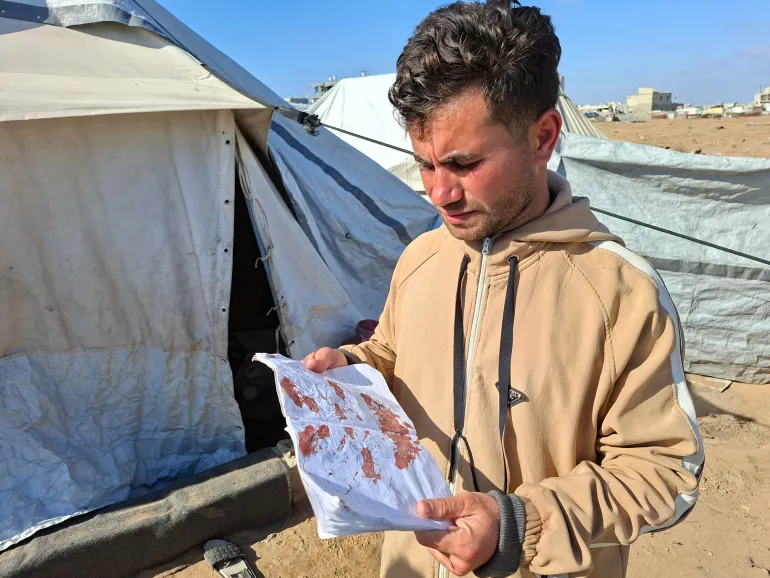
Back in the family’s tent, Abdul Raouf holds his daughter’s notebook. Its pages carry the final traces of her life. Blood stains mix with her handwriting, preserving the last moment before the bullet struck.
Her final sentence remains visible: “Our village is clean.”
It is a simple line. A child’s sentence. A reflection of innocence in a place surrounded by destruction. The bullet tore through those words, ending both the sentence and the life behind it.
“I walked her to school with her own feet,” her father says. “She came back as a body.”
He pauses, unable to continue.
A Family’s Long Wait, A Sudden Loss
Retaj was not just another child in a war zone. Her parents had waited years for her. After five years of medical treatment, they finally conceived her through IVF. She became the center of their lives.
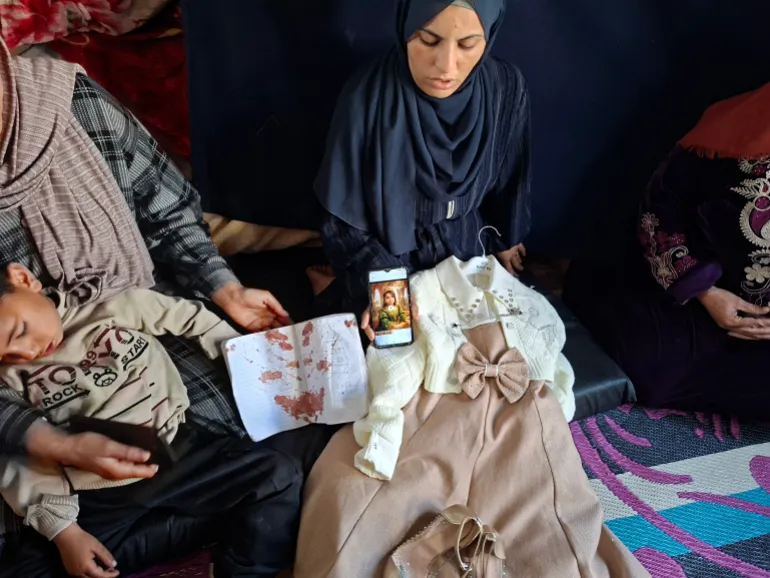
Her uncle, Alaa Rayhan, recalls how she had recently bought new clothes. She planned to wear them to his upcoming wedding.
“That joy turned into mourning,” he says quietly.
Now, those clothes remain untouched. Her mother clutches them in silence, unable to speak through her grief.
Nearby, Retaj’s five-year-old brother cries. He does not understand death. He only knows his sister is gone.
A Community Silenced by Fear
A few hundred meters away, the school tent stands empty.
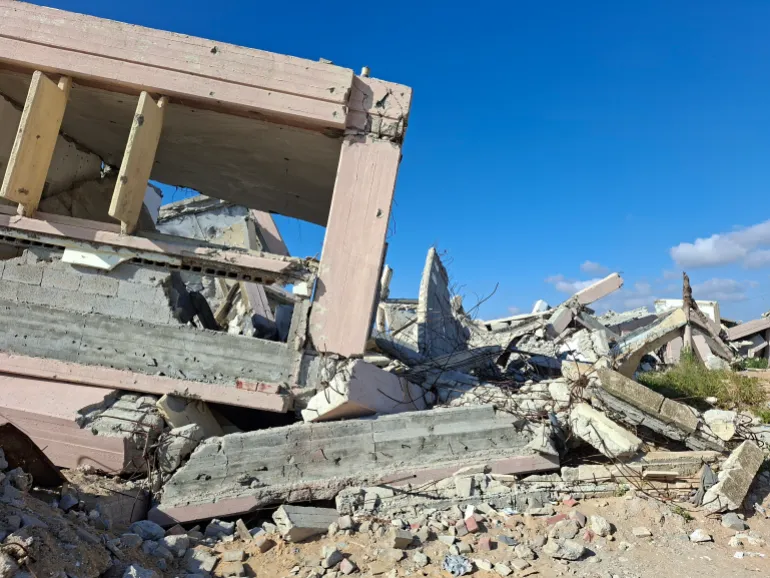
After the shooting, terrified students fled. The space that once carried laughter and determination now sits in silence. The destroyed walls of the original school loom in the background, bearing witness to repeated attacks on Gaza’s education system.
Inside the tent, traces of the bullet remain visible. Blood still marks the ground where Retaj fell. The scene tells a story words can barely capture.
Despite efforts to revive education, even the simplest attempts face deadly risks.
“It seems the occupation does not want any attempt at life,” her father says, pointing to the destruction surrounding them.
According to the Ministry of Health, Israeli forces have killed 21,510 children since the start of the genocide, as of April 5. The figure came in a statement marking Palestinian Child Day.
Education has suffered devastating losses. Gaza’s Ministry of Education reports that 785,000 students have lost access to schooling over the past two years. Israeli attacks have killed 88 teachers and 45 academics. Around 95 percent of schools across the Gaza Strip now lie damaged or destroyed. More than 30 higher education institutions have also been hit.
These numbers reveal a systematic collapse of the education system. Schools, universities, and even temporary classrooms have become unsafe.
Retaj’s journey with education lasted only a few minutes.
Her story began with a father walking his daughter to class, hoping to rebuild a sense of normal life. It ended with a bullet that turned a school tent into a site of death.
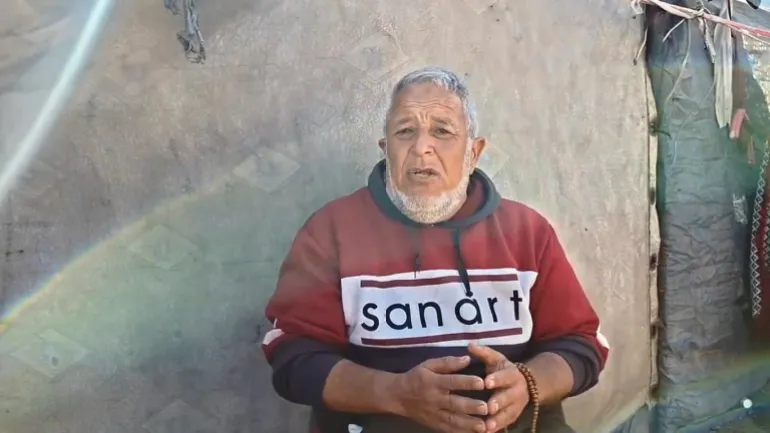
Her grandfather, Raed Rayhan, holds his prayer beads and tries to comfort the family. He speaks of a deeper fear that Gaza’s children are being denied not only safety, but also dignity and a future.
Retaj now joins thousands of children whose lives ended before they could truly begin.
In Gaza, even a school notebook, a wooden bench, or a nylon tent can become a target. And for families like the Rayhans, the line between hope and loss grows thinner with each passing day.
This report is adapted and translated from an article originally published by Al Jazeera.