Italian Union Calls for Boycott of Eurovision Over Israel’s Inclusion
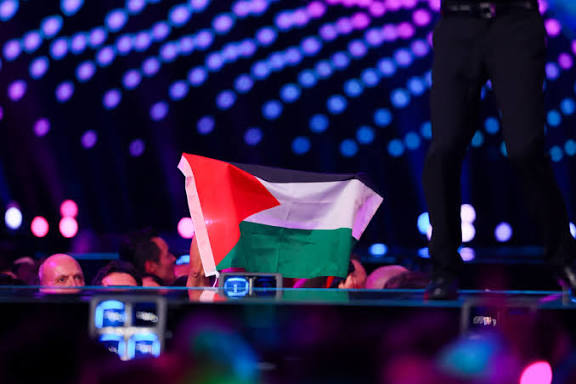
Rome (QNN)- The USB union at Italy's state broadcaster RAI has begun a petition calling for Italy to boycott Eurovision 2026 over Israel’s participation. This follows the withdrawal of five countries from the competition over Israel’s inclusion, amid international calls for Israel to be barred from the song contest in response to its genocide in Gaza.
The union is seeking 3,000 signatures and urging RAI to "join the other countries that have distanced themselves".
The USB is a young union branch founded two years ago with currently around 50 members at the state broadcaster.
"By withdrawing Italy from Eurovision and deciding not to broadcast the event, RAI would not only be taking an ethically and empathetically justifiable position, it would also be setting an example as a moral leader on the international stage,” the petition reads.
Such a move," it continues, "would show how deeply Italy cares about the values of human dignity, equality and justice for all peoples. Our voice would resonate globally, demonstrating that we do not turn a blind eye to injustice."
Claudio Ciccone of USB - RAI coordination explains that the goal is to go well beyond the roughly 3,000 signatures collected so far and, in the longer term, to involve prominent figures in the campaign who can give the petition greater resonance.
"I'm not drawing the comparison with Russia to say yes to this one and no to that one," Ciccone says, "but if there is a general line for applying an exclusion where violations at the level of international politics are found, the same must apply in all situations, otherwise we are faced with a case of double standards."
"The Israeli prime minister," the trade unionist continues, "lodged an appeal with the International Court of Justice; the appeal was rejected and so, according to the Court itself, we are faced with a government that has committed genocide."
Ciccone has no doubts: "The street protests of recent months and the polls have made it quite clear which side Italy is on with regard to the genocide of the Palestinian people," he says.
Speaking about the company's position, he concludes: "By withdrawing Italy from Eurovision it would probably lose quite a lot of money. Record labels also have every interest in taking part and being seen at one of the biggest events in the world".
What We Know
Spain, Ireland, Slovenia, Netherlands and most recently Iceland withdrew from next year’s contest.
The five countries had threatened to boycott next year’s edition of the glitzy music contest, due to be held in Vienna in May, if Israel took part, citing its genocidal war on Palestinians in Gaza – as well as confirmations that it unfairly intervened in the most recent competition to the benefit of its entrant in what reportedly was an attempt to politicise Eurovision.
The issue was initially supposed to be resolved with a vote in November. But a few days after the announcement of a ceasefire agreement in Gaza on October 10, which Israel has violated repeatedly and killed about 400 Palestinians, the EBU postponed the decision until its ordinary general assembly in Geneva.
Earlier this month, the contest’s organising body declined to expel Israel over its genocide in Gaza where Israel has killed more than 70,000 Palestinians since October 7, 2023 and imposed a blockade on aid with human rights groups confirming it uses stavation as a weapon of war.
It said that it would instead introduce new rules “to reinforce trust and protect [the] neutrality” of the contest that would discourage governments from influencing the outcome.
That prompted the five countries to swiftly announce they would boycott the competition.
Russia was banned from competing in 2022 due to “the unprecedented crisis in Ukraine.” Critics and broadcasters, however, pointed to the ongoing genocide in Gaza and the West Bank under Israeli occupation.
The president of Slovenian broadcaster RTV noted that while the EBU banned Russia from Eurovision almost immediately after it invaded Ukraine in 2022, it "does not dare reject Israel".
In May that year, the EBU formally suspended its Russian members, indefinitely revoking their broadcasting and participation rights for future editions of Eurovision. Russia has not competed since.
RTÉ, the Irish broadcaster, said participation was “unconscionable given the appalling loss of lives in Gaza and the humanitarian crisis there” while RTVE in Spain said participating would engender “distrust” in the organisation given the depth of feeling over Gaza.
The Spanish broadcaster RTVE also said it would not broadcast the contest or the semi-finals in Vienna next year, describing the process of decision-making as “insufficient” and engendering “distrust”.
Spain’s Culture Minister, Ernest Urtasun, backed the boycott. He said: “You can’t whitewash Israel given the genocide in Gaza. Culture should be on the side of peace and justice. I’m proud of an RTVE that puts human rights before any economic interest.”
The Slovenian national broadcaster, RTVSLO – the first to threaten a boycott this summer – said participation “would conflict with its values of peace, equality and respect”. It said it was “on behalf of the 20,000 children who died” in Israel’s genocidal war on Palestinian people in Gaza.
Stefan Eiriksson, director-general of Icelandic national broadcaster RÚV, said: "There is no peace or joy connected to this contest as things stand now. On that basis, first and foremost, we are stepping back while the situation is as it is."
RÚV said Israel's participation had "created disunity among both members of the European Broadcasting Union (EBU) and the general public".
If the EBU fails to act, it risks a major split within Europe’s most-watched cultural event. For many broadcasters, the contest is no longer just about music, but about taking a stand on Gaza.
The decision by the five countries means they will neither participate in nor broadcast the event, which is scheduled to take place in Vienna.
Over the last two years, Israel has faced objections to its participation in Eurovision not only by EBU members but also by contestants themselves.
Nemo, the Swiss singer who won 2024's contest, said earlier this year that they backed calls for Israel to be excluded, saying the country's actions in Gaza were "fundamentally at odds with the values that Eurovision claims to uphold, peace, unity, and respect for human rights".
In May, more than 70 past Eurovision contestants released an open letter calling for the EBU to ban Israel from participating.
Embroiled in diplomatic tension, the contest’s organisers announced the contest will have 35 participants, the lowest ever participation since 2003.