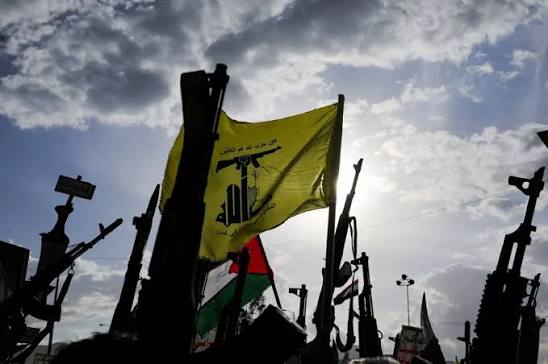
Amid rising Lebanese and regional controversy over the fate of Hezbollah’s weapons, and mounting Israeli-American pressure, manifested by Israel’s occupation of at least seven positions along the Lebanese-Palestinian border and its insistence that Hezbollah disarm in exchange for withdrawal, the central question resurfaces: what if Hezbollah surrendered its arms? Would disarmament help build a functioning Lebanese state, or would it undermine the deterrent balance, redraw regional power dynamics with Israel, and affect the Palestinian cause?
This report examines these questions through in-depth analysis, drawing on expert perspectives to go beyond rhetoric and explore realistic scenarios. It does not provide definitive answers but seeks to illuminate what Hezbollah’s disarmament could mean for Lebanon, Palestine, and the wider region.
Five Perspectives on Hezbollah’s Weapons
Security Analysis: Jad Melki
Jad Melki, Director of the Institute of Media Research, described the idea of Hezbollah disarming as “suicidal.” He noted that history shows every state, group, or resistance movement that surrendered its weapons ended humiliated, crushed, or even fully eradicated. From this standpoint, he argued, the same would apply to Hezbollah: its role in resisting Israel, defending Lebanon, and influencing internal politics would be erased, turning Lebanon into “easy prey” for Israeli expansionist ambitions.
Melki warned that the Lebanese army alone would be unable to resist external pressures, paving the way for full Israeli occupation. He rejected the idea that this would trigger a conventional war; instead, he foresaw gradual collapse, with incremental territorial seizures mirroring the West Bank.
He also highlighted Israel’s long-term, cross-border strategy, noting it would immediately seek to occupy the region as a whole, not just the so-called “buffer zones.” In this scenario, Lebanese sovereignty would collapse, and the country’s deterrent power would vanish.
Yet, Melki emphasized that such occupation would likely spark the formation of new resistance forces from local populations. Drawing on historical precedent and the teachings of Hassan Nasrallah and Anton Saadeh, he argued that regional consciousness would awaken, compelling peoples across the Middle East to resist Israeli expansion and protect their lands.
Strategic-Geopolitical Analysis: Yasser Manaa
Researcher and expert in israeli affairs, Yasser Manaa outlined the immediate security implications of Hezbollah disarming as dual. On one hand, Lebanon’s deterrence against Israel would weaken. On the other, border tensions could temporarily ease if disarmament occurred alongside clear security agreements and expanded Lebanese Army authority south of the Litani River.
Domestically, a security vacuum could emerge due to the dismantling of Hezbollah’s military structure or its partial integration into state institutions. This could allow armed groups or extremist organizations to exploit weaknesses if reforms were not accompanied by deep security and economic restructuring.
Manaa noted that Israel would remain the primary military threat due to its capability and willingness to wage war, likely employing a mix of military, intelligence, and political pressure. Direct involvement by other states would likely be limited to indirect support via partnerships, logistical aid, or hybrid warfare.
Disarming Hezbollah would radically reshape the Lebanese state and its security apparatus. The Lebanese army and internal security forces would expand, but structural dependence on foreign donors could increase, giving external actors more influence than domestic decision-makers.
Regionally, Lebanon would shift from a frontline resistance state to a marginalized actor within a broader Arab-West-Israeli framework. Israel would benefit from the removal of the northern front threat, advancing energy and gas projects in the Eastern Mediterranean, while reinforcing its narrative that armed resistance is no longer a viable regional option.
For Palestinian factions and Lebanese refugee camps, disarmament would reduce military and logistical support, potentially leaving camps vulnerable to political and security pressure. Gaza and the West Bank would face increased Israeli operational freedom, forcing Palestinian resistance movements to rely more on internal strategies or alternative support networks.
Manaa concluded that Hezbollah disarmament would be both a security and structural transformation, weakening the resistance axis, reshaping Lebanon, and granting Israel strategic advantages, though he emphasized the near-term likelihood of this scenario as extremely low.
Palestinian Regional Analysis: Alaa Al‑Reemawi
Expert in Israeli affairs, Alaa Al‑Reemawi, described Hezbollah’s current phase in Lebanon as one of the harshest it has faced. Internal Lebanese opponents, the United States, European allies, and Israel are pressing Hezbollah to relocate north of the Litani River and dismantle its weapons, redefining the party’s military presence and political role.
Washington and its European partners are pursuing a three-pronged strategy:
- Deepening Lebanon’s economic siege through policies aimed at forcing Hezbollah to surrender arms.
- Withholding international aid to apply pressure.
- Enabling expanded Israeli attacks, including assassinations and targeted strikes.
Arab involvement, particularly from Gulf states, largely plays a functional economic role, reinforcing the siege while aligning with American objectives.
Hezbollah’s response is unfolding along three interconnected tracks:
- Sectarian consolidation: preserving its base by framing resistance and arms as essential for communal survival amid Lebanon’s sectarian dynamics.
- Axis coordination: working with Iran to prevent collapse while accounting for Israeli military escalation.
- Strategic restraint: adjusting capabilities in light of constraints in Syria that limit the rebuilding of military strength.
Disarmament scenarios include:
- Partial redeployment south of the Litani River as a concession.
- Limited handover of selected weapons and positions under state guarantees.
- Political repositioning following the erosion of Hezbollah’s strengths and the advance of adversaries.
Al‑Reemawi warned that weakening Hezbollah would leave Palestinian refugee camps vulnerable to disarmament. Israel would escalate pressure via US-led political and economic measures, targeted assassinations, territorial incursions, and the activation of international guarantor states. This could also heighten the risk of intra-Lebanese armed confrontation.
He concluded that the coming phase is delicate, marked by escalating internal tensions, Israeli military entrenchment, and Hezbollah’s careful recalibration to sustain its role under growing pressure.
Lebanese Internal and Arab Political Analysis: Ahmad Yassin
Lebanese political analyst for domestic and Arab affairs, Ahmad Yassin, outlined three levels of impact from Hezbollah disarmament:
- Southern Border: Israel could redraw rules of engagement by force, implementing arrangements that undermine Lebanese sovereignty and reproduce the “border strip” model.
- Internal Lebanon: Hezbollah’s weapons stabilize internal power balances. Sudden disarmament could reignite sectarian tensions and competition among forces vying to fill the vacuum.
- Palestinian Camps and Armed Factions: Hezbollah has acted as a “hidden balancer” in fragile areas. Its removal would weaken control and leave camps exposed to internal and external pressures.
He emphasized that disarmament would be largely driven by external pressures, including US aid conditions, European influence, and selective Arab intervention. Lebanon could emerge politically and militarily weakened, constrained by foreign oversight while appearing strong on paper.
Over the long term, disarmament could trigger structural shifts in governance and constitutional mechanisms, affecting Shiite influence, power-sharing among presidencies, and the essence of the Taif Accord. Hezbollah-affiliated institutions, such as Al-Qard Al-Hasan, would face legal and financial pressures, risking social and economic vacuums if alternatives are not provided.
Yassin concluded that external tutelage could dominate Lebanese military and political life, aligning Lebanon with Western and Israeli strategic interests and controlling borders while limiting national sovereignty.
Regional-Strategic Analysis: Adel Shadid
Researcher and expert in Israeli affairs, Adel Shadid, warned that Hezbollah disarmament would embolden Israeli aggression and signal regional tolerance for weapons only in allied groups. Lebanese airspace, land, and maritime borders would become fully accessible to Israel, while Palestinian refugees could face disarmament and restrictions on political activity.
He argued that Israel’s broader regional vision seeks to transform neighboring countries into strategic platforms and military bases. Disarmament could accelerate the creation of “buffer zones” across Lebanon, Syria, Jordan, Iraq, and Egypt, extending Israeli influence into central areas of these states.
Shadid concluded that removing armed resistance would allow Israel to operate with impunity, reshaping the regional balance of power and advancing the so-called “New Middle East.”
What All Perspectives Agree On
Across all five perspectives, experts agree that disarming Hezbollah would:
- Undermine Lebanon’s deterrence against Israel.
- Destabilize internal security and political balance.
- Shift Lebanon into a precarious position domestically and regionally.
- Expose Palestinian refugee camps to pressure and potential disarmament.
- Enable broader Israeli expansion and influence.
- Increase foreign control over Lebanese sovereignty via financial, political, and security oversight.
Hezbollah’s weapons are not mere tactical tools; they are central to Lebanon’s balance of power, political stability, and the regional resistance axis. Removing them risks leaving Lebanon vulnerable to external domination and internal fragmentation, with wide-reaching regional implications.
The question of Hezbollah’s weapons is far more complex than the slogan “A Hezbollah without arms.” Experts agree that the arsenal underpins Lebanon’s internal stability, military deterrence, and the broader Palestinian and regional balance. Disarmament would weaken Lebanon’s capacity to resist Israeli expansion, destabilize domestic politics, and reduce strategic support for Palestinian factions.
The analyses reveal a multilayered equation: Lebanon’s resistance capability directly affects Palestinian resilience. Any attempt to strip Hezbollah of its weapons would ripple across borders, empowering Israel and external actors while limiting Lebanese and Palestinian autonomy.
The stakes are far greater than slogans suggest, touching on the potential for a “greater Israel” and reshaping the regional order.