How “everybody became involved”
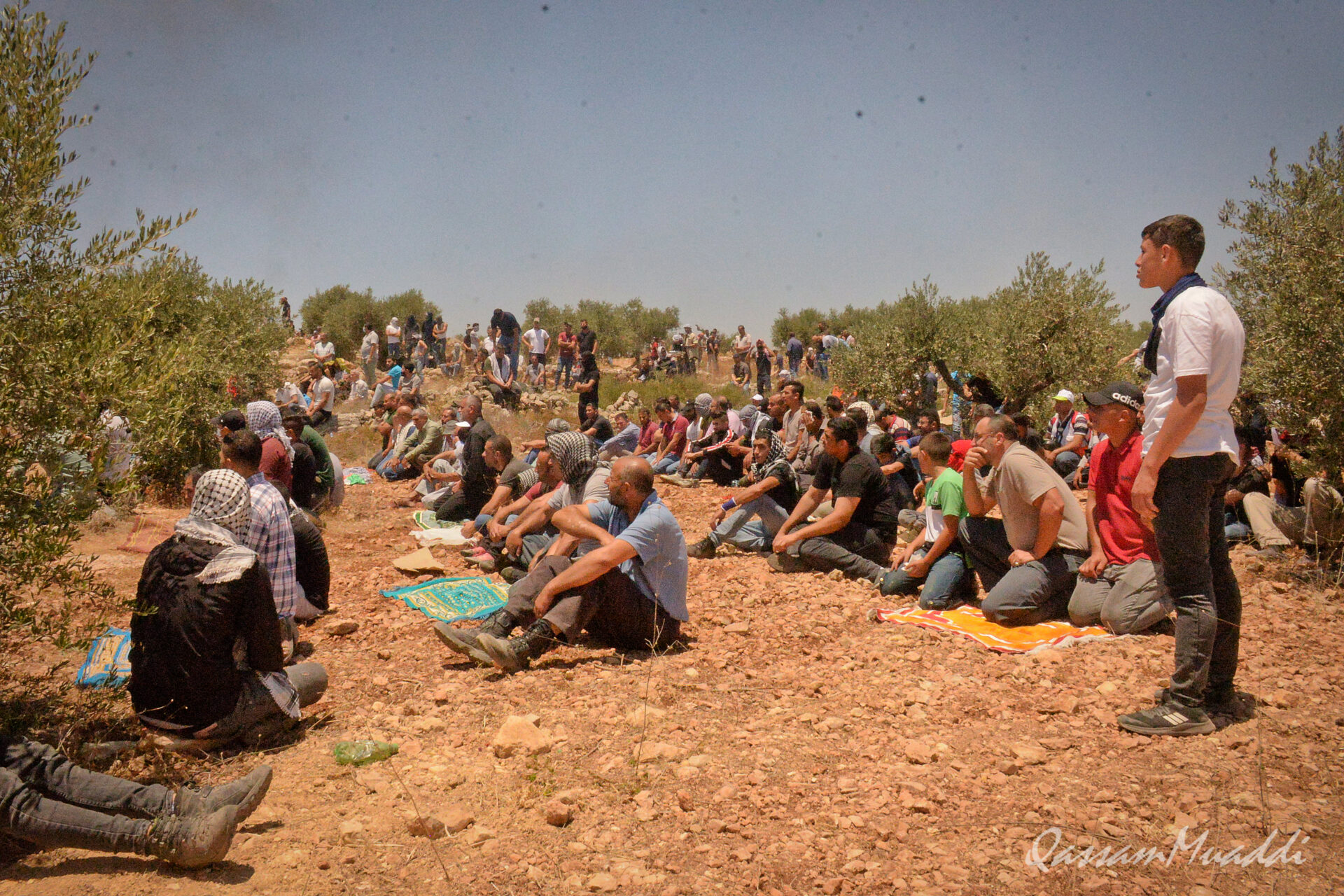
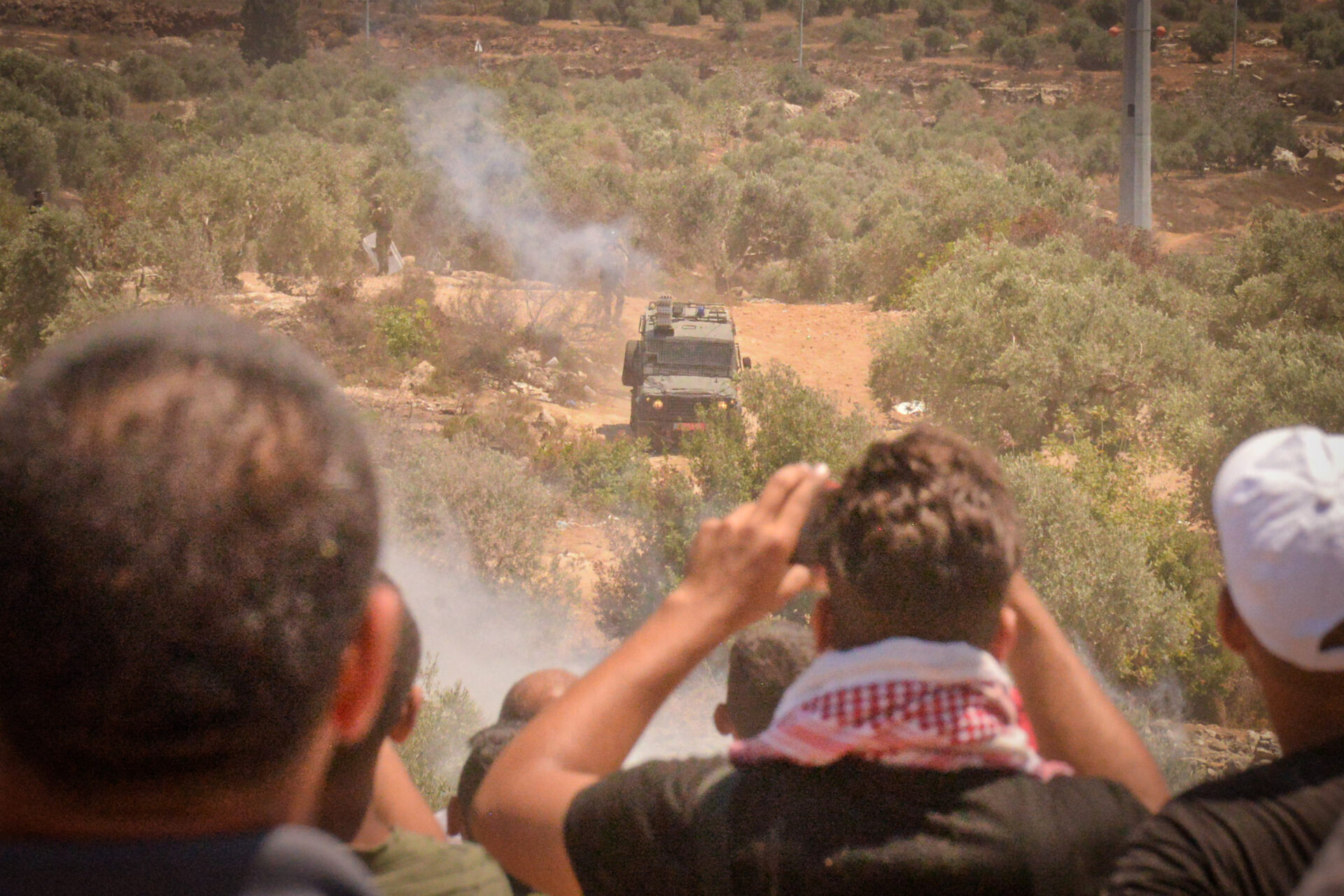
One week to the evacuation of settlers, it’s time for Friday prayer in Beita. The narrow dirt road between olive groves is filled on its both sides with old dusty cars that Palestinian villagers use for agricultural work. In a field overlooking a deep valley, hundreds of worshipers form lines for prayer, as the Imam of the village urges the participants through a loudspeaker: “leave some space between the lines, we are about to start”. More people continue to arrive, while the media crews with their cameras take their positions on the road, between the worshipers and the hilltop across the valley, where the concrete houses of the Avitar settlement stand. After a long breath, the Imam begins his sermon: “In the name of God, the most clement, the most merciful…” A few phrases into the ritual speech, a tear-gas canister flies across the dirt-road and falls near the Imam. Worshipers cough and begin to move back into the olive grove, while the Imam interrupts his eloquent classic-Arabic sermon, yelling in a Palestinian peasant accent at Israeli soldiers, stationed nearby in the valley: “you bastards, let us finish the prayer and then we’ll deal with you!”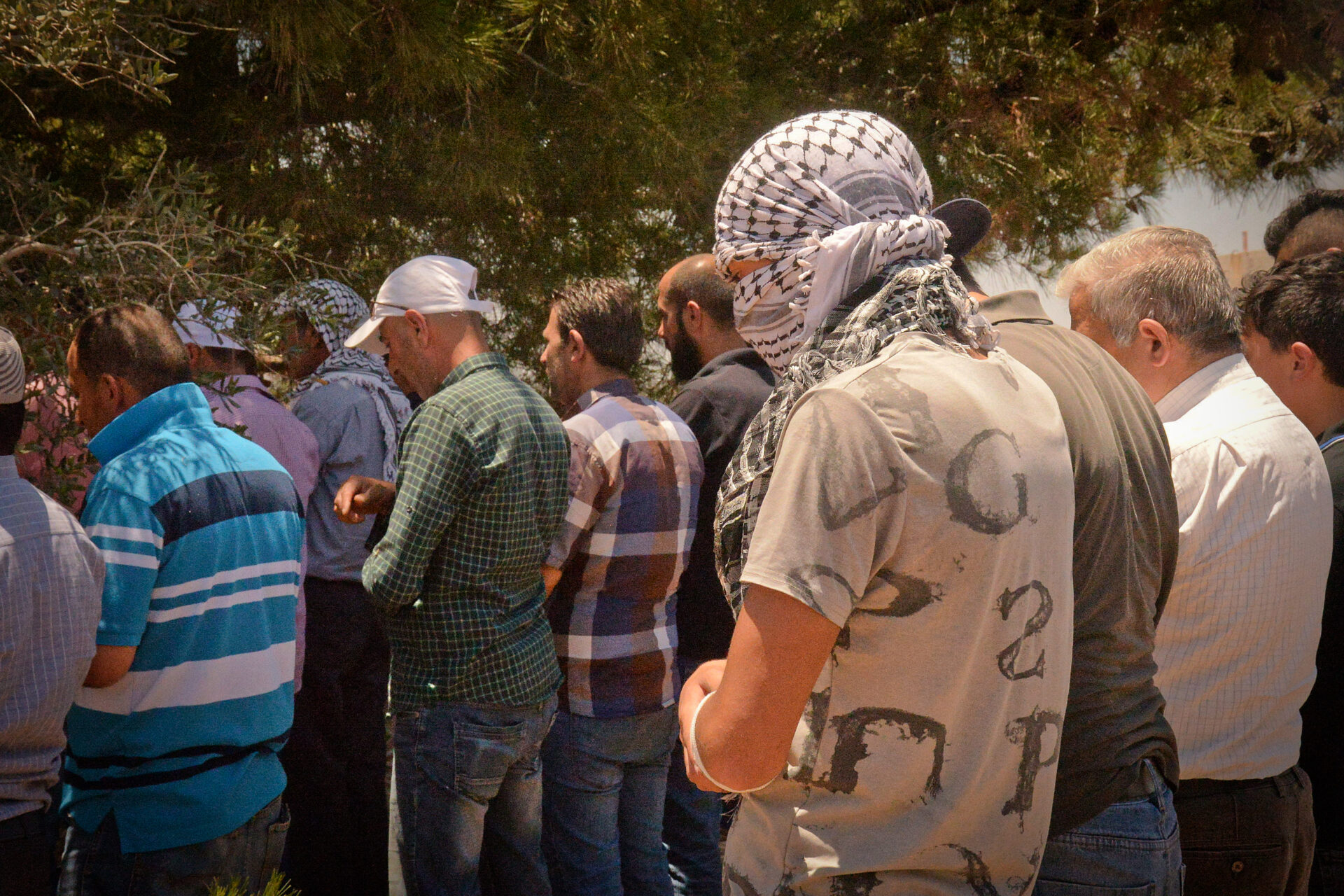
Resistance, the only show in town
Two more Palestinians were killed in the weeks that followed. The latest, Mohammad Hamayel, was only 15. His posters hang in every street of Beita and even inside buildings. Traces of burned tires mark the entrance to the town, not far from a junction where the Israeli army watches closely all movement In and Out of the town. Especially on Thursday afternoons, when protesters, journalists and curious people of all kinds arrive at Beita's weekly mass-protest event. Mahmoud Hamad, a 30-year-old agricultural worker drives two visitors directly to one of the clashing points near Mount Sabih. “Friday protests start on Thursday”, he points out, “If you’re visiting Beita you must be here for the resistance. It’s the only thing happening on weekends”.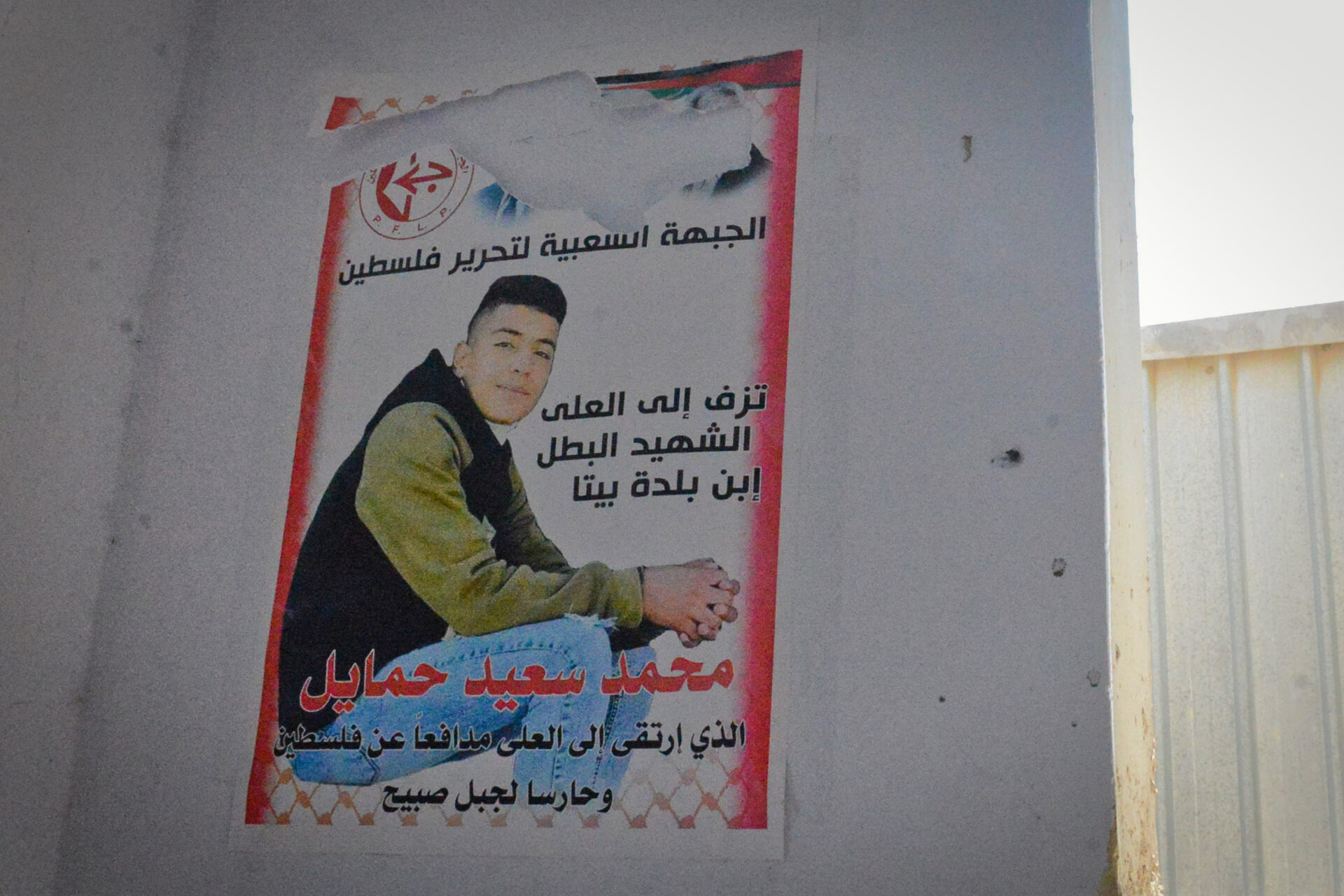
Night disturbance
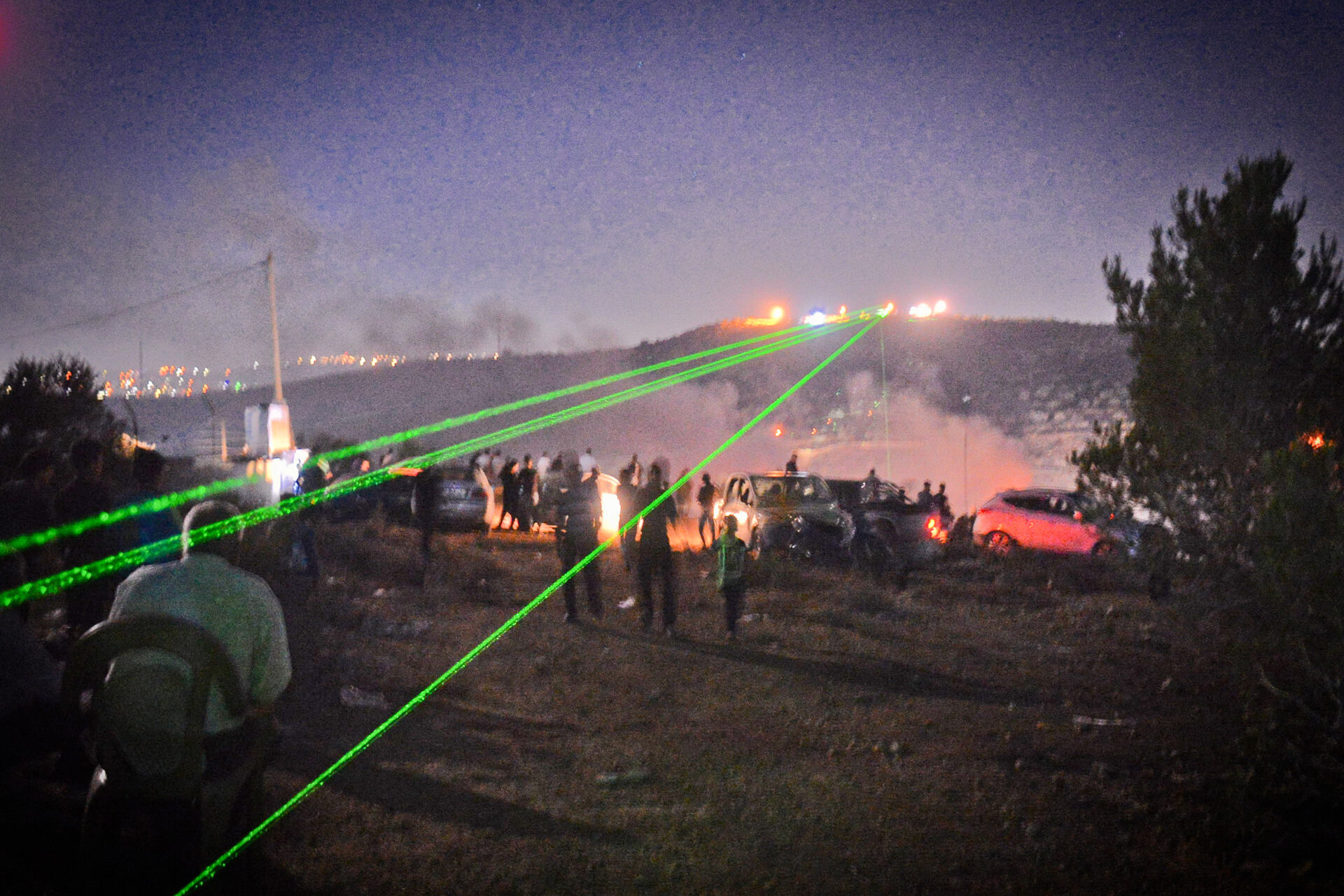
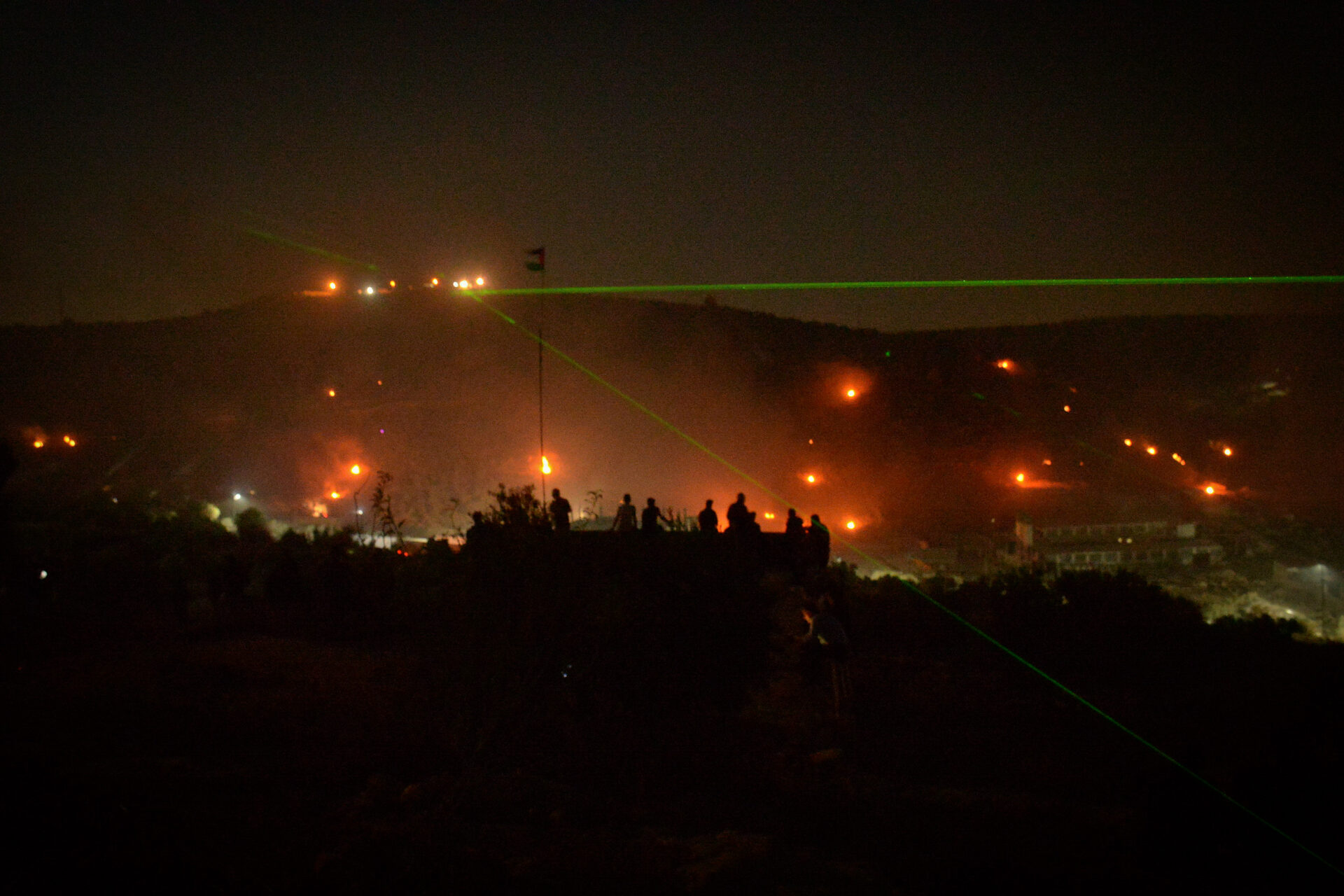
After night-fall, the most iconic event of Beita’s resistance begins. At the same location of the next day’s prayer, hundreds of Palestinians from all ages gather in separate groups to take part in the “night disturbance” actions. “The idea is to make settlers so uncomfortable that they can’t sleep”, says 39-year-old Ali Hamayel. “We want to remind them that they are strangers and that their presence is not welcome”. Ali holds a laser-light that he points at the settlement houses, moving it in circles. Tens of laser-lights point at the settlement across the valley, some held by men as old as 60, some by children as young as 10. “A wealthy merchant from the village saw some children pointing laser-lights at the settlement, in the early days of the protests”, recalls Ali, “then he looked for the best quality of laser-lights in the market, bought hundreds of them and distributed them for free on protesters, to disturb the settlers at night”.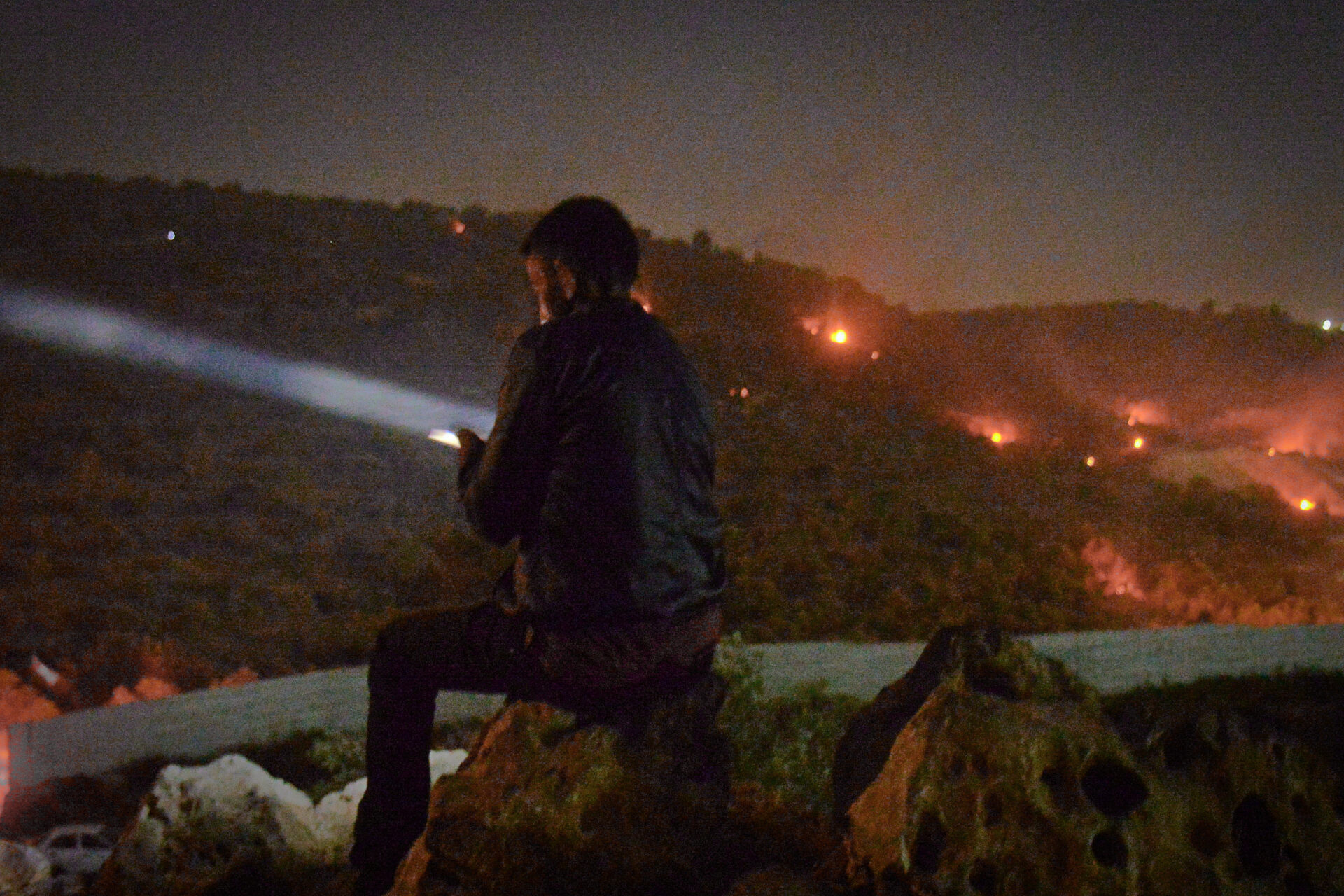
The “culture of resistance”
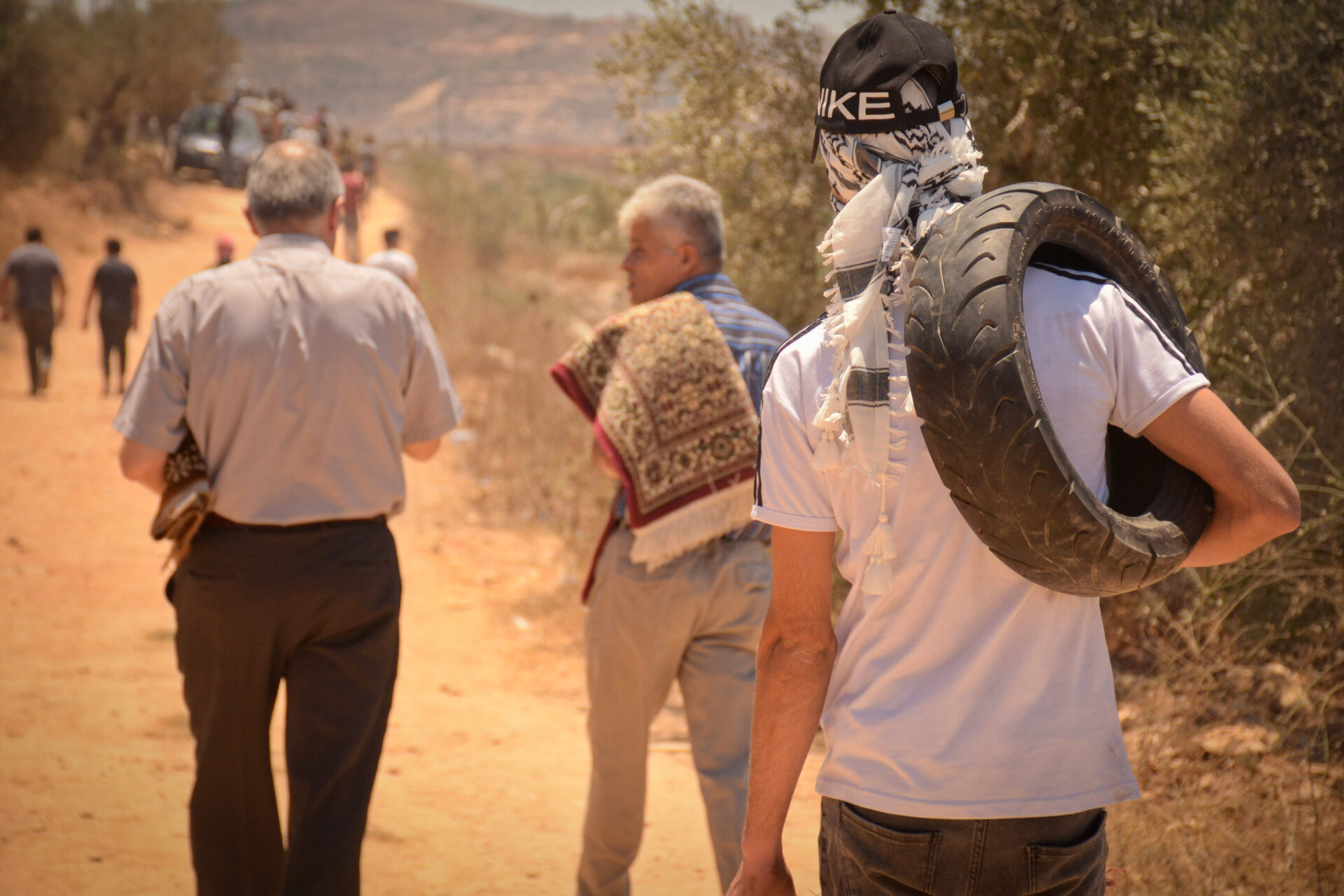
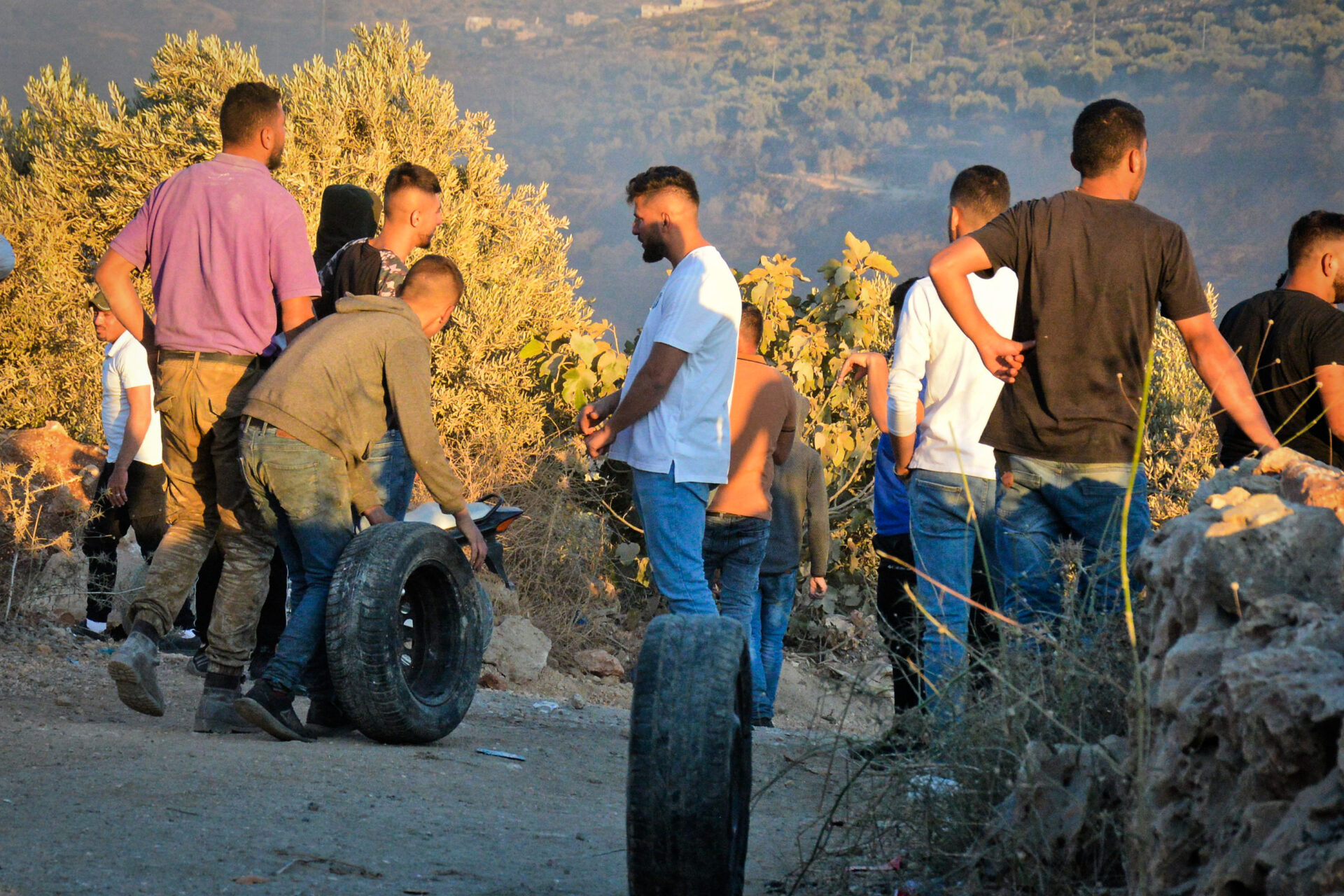
The night disturbance continues until 3am. Next morning, three young men gather in a closed coffee-shop, in the center of Beita, to share breakfast and talk about the events. “This coffee-shop is my business”, says 23-year-old Malek Hamad. “It has been closed since the beginning of protests in Beita. Especially after the Israeli army closed the entrances to the town, two weeks ago”. The occupation forces imposed a closure on Beita in early June. It was only lifted for the visit of Palestinian Prime minister, Mohammad Ishtayah, on June 24, when the municipal council of Beita and elders of the town presented to him a list of demands, including the building of a hospital. “That’s the most important demand right now”, insists Malek, “all the wounded in the clashes are taken to the Rafidia hospital in Nablus, and they don’t receive proper treatment because the hospital is always full”. Malek points to what he calls “a culture of resistance in Beita”. According to him, “families have integrated the idea that resistance is everybody’s business, and they don’t try to hold their young back from participation”. This culture of resistance, as Malek affirms, “includes self-organization. No political parties lead anything. It’s the people, collectively, with our own means”. Self organization translates into different groups of people taking care of different parts of the resistance process. “Women take care of the logistics, especially food on Fridays”, details Malek, “Some of us prepare the car tires for the night, and there’s a special group that checks every person who comes to the town, for security”. After a short, tense silence he confirms: “yes, also journalists. We checked you out too”.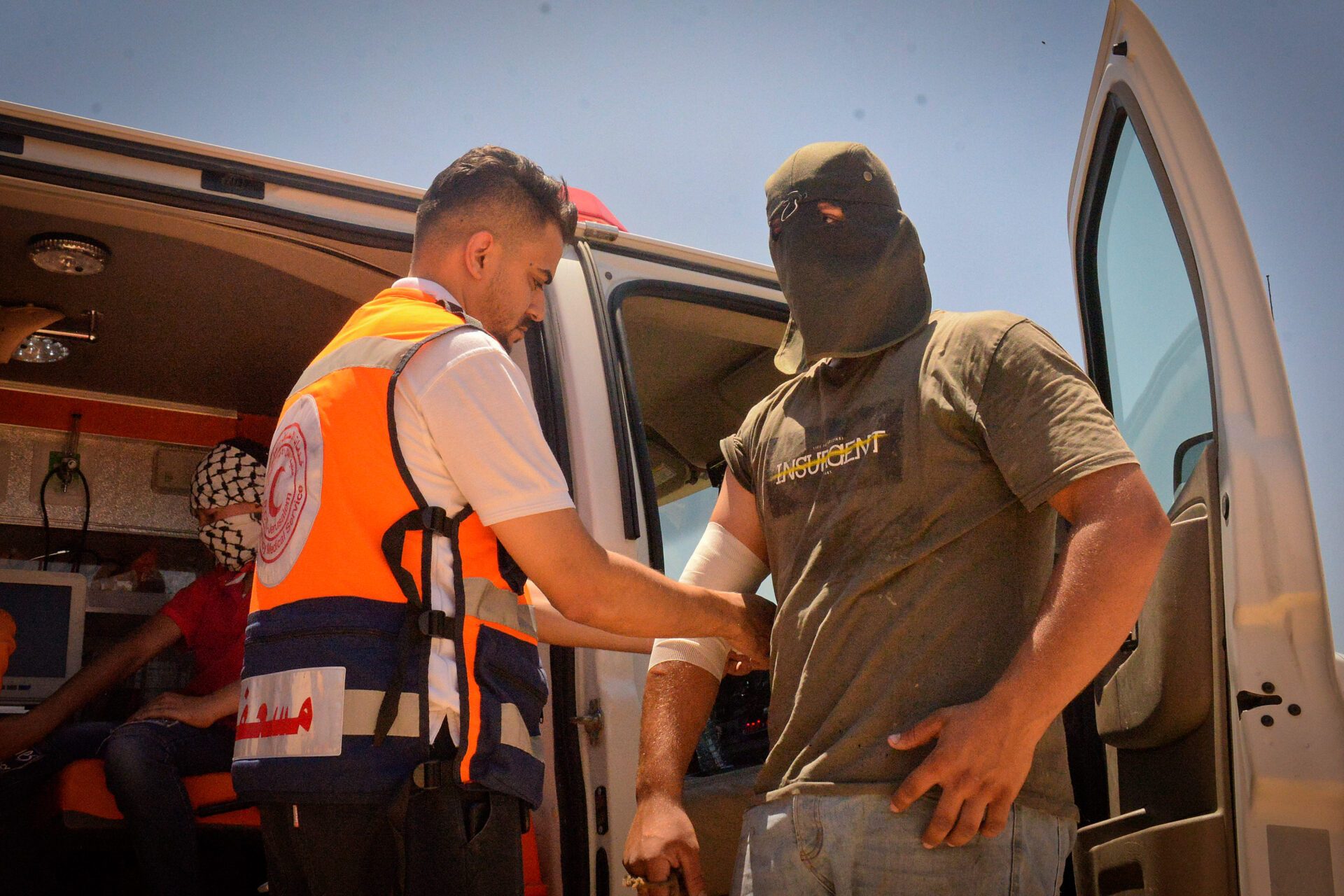
“We have roots”
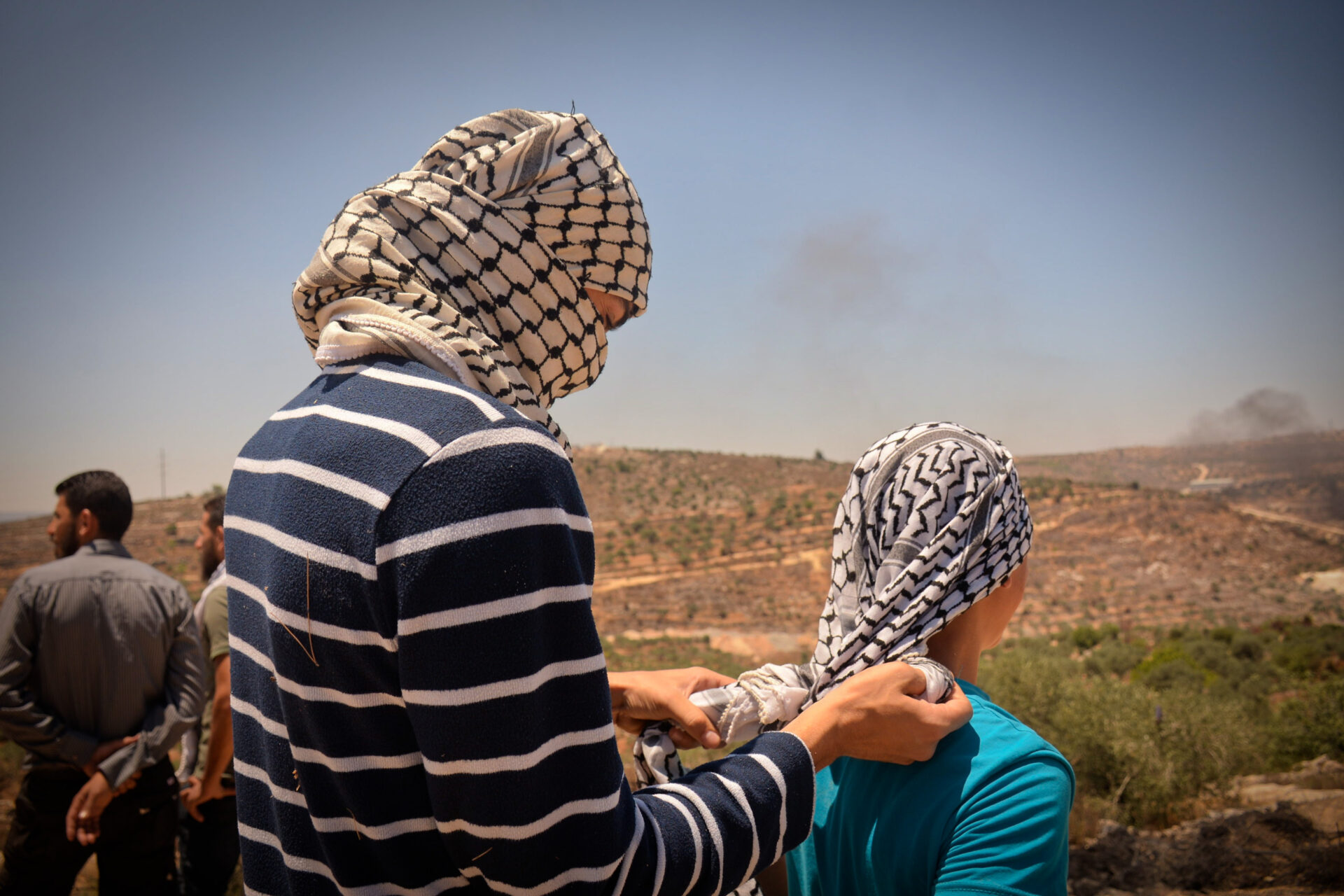
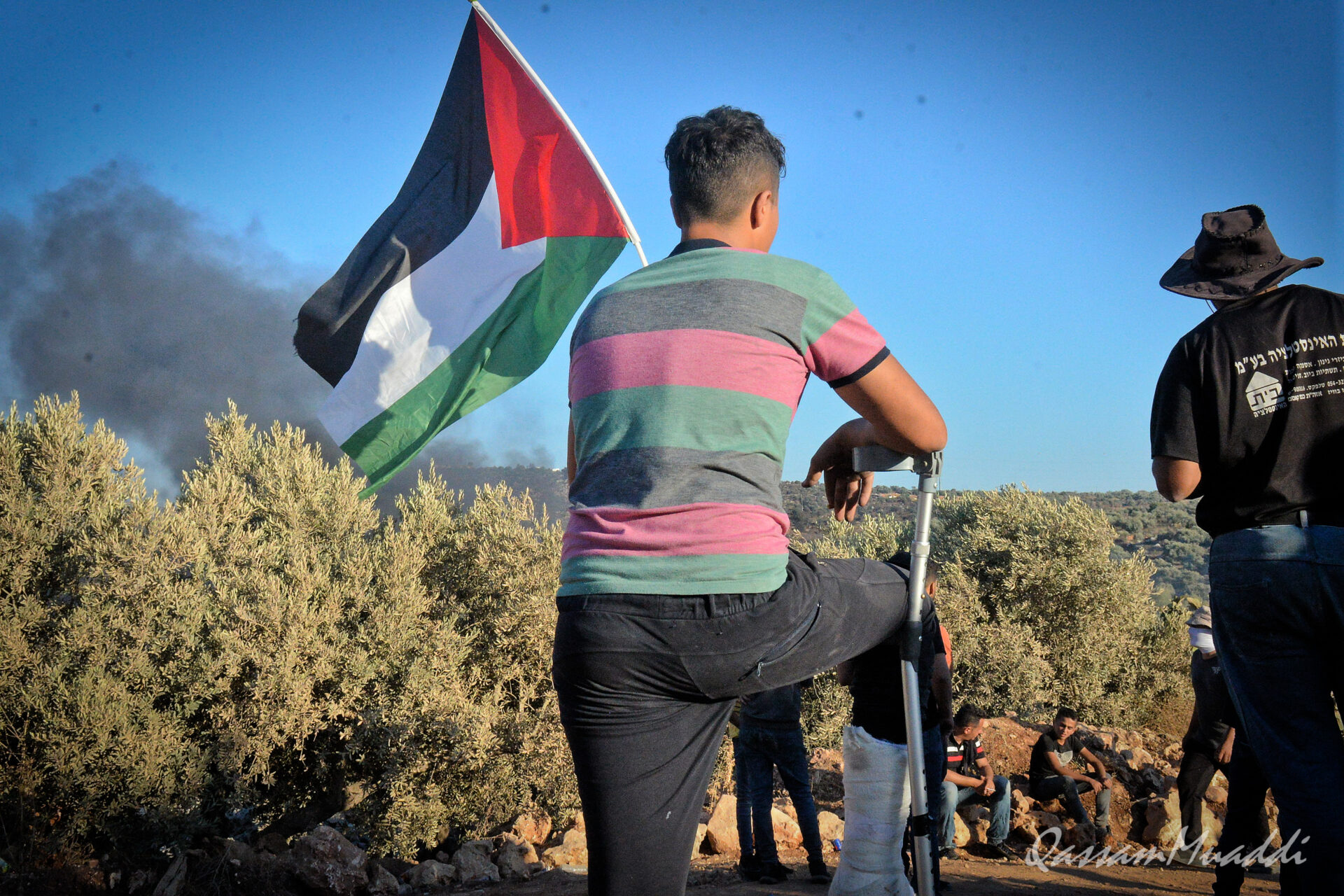
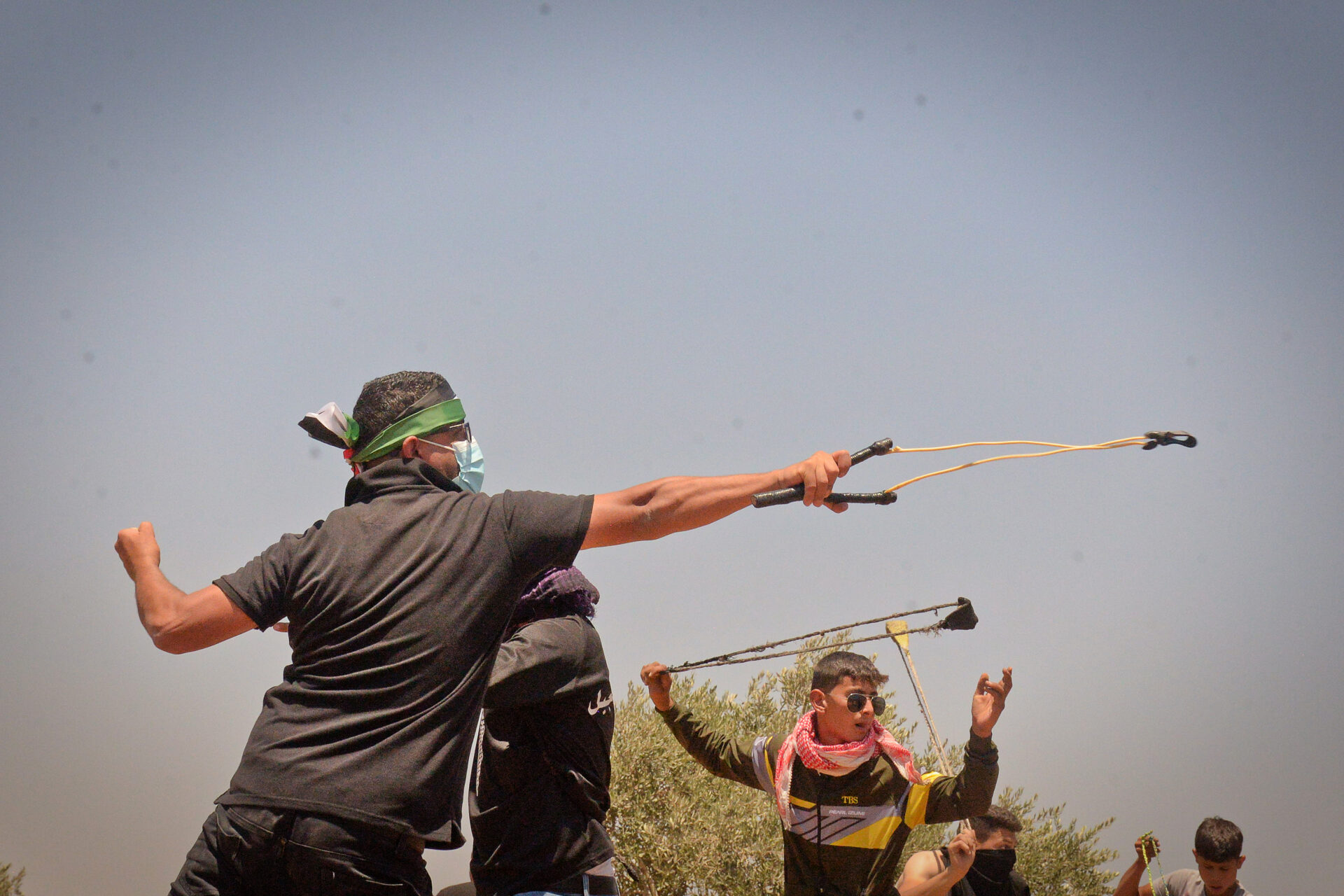
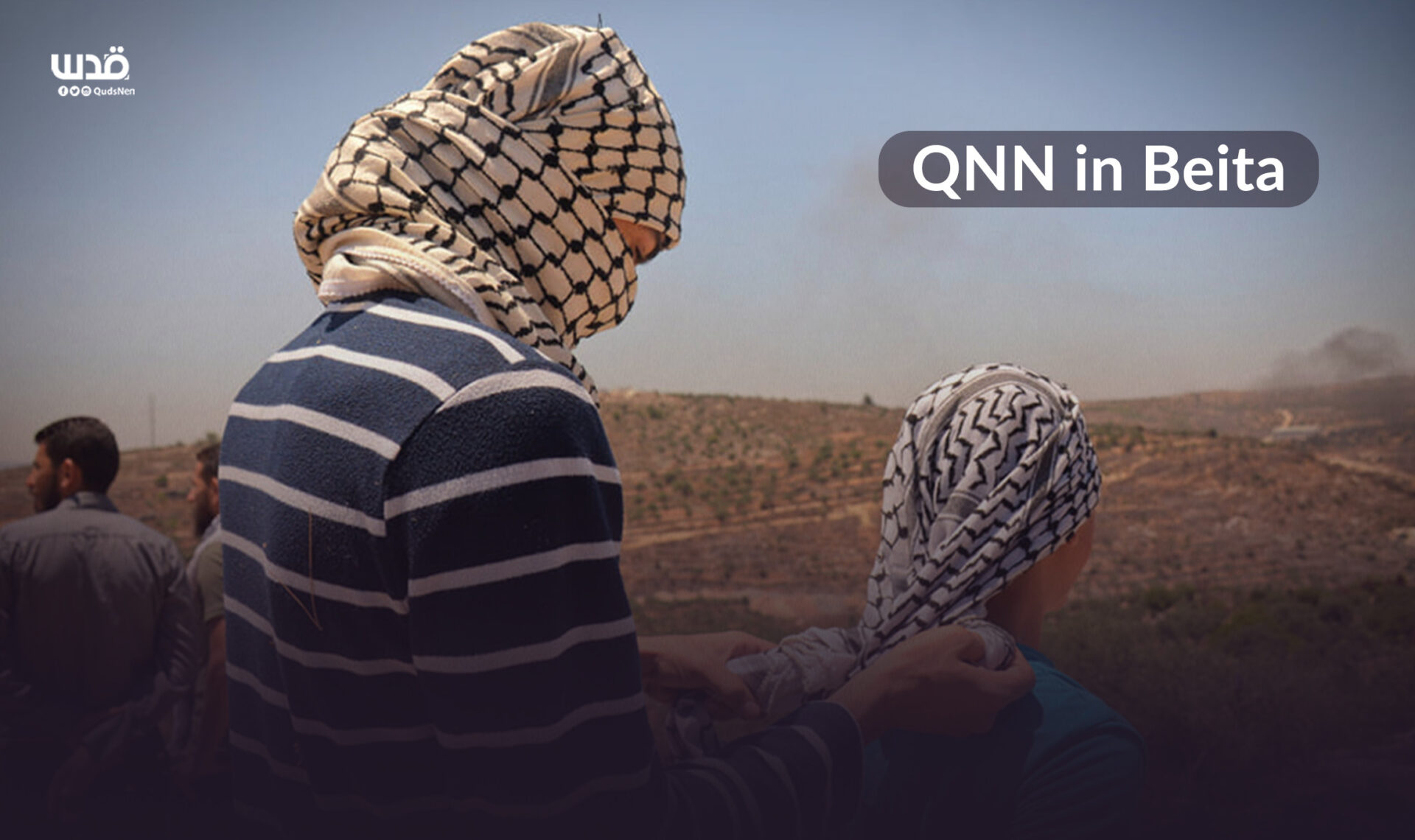
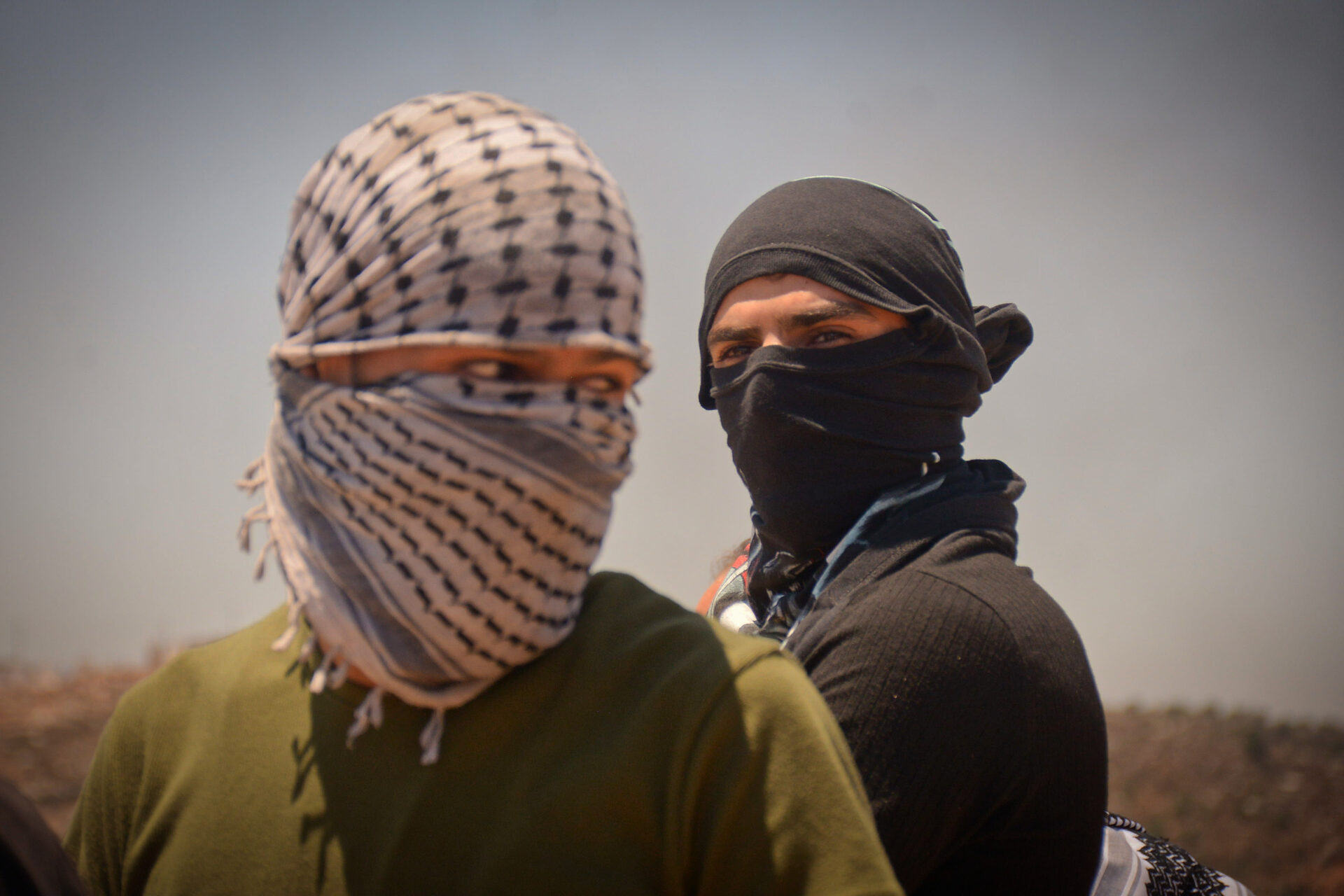
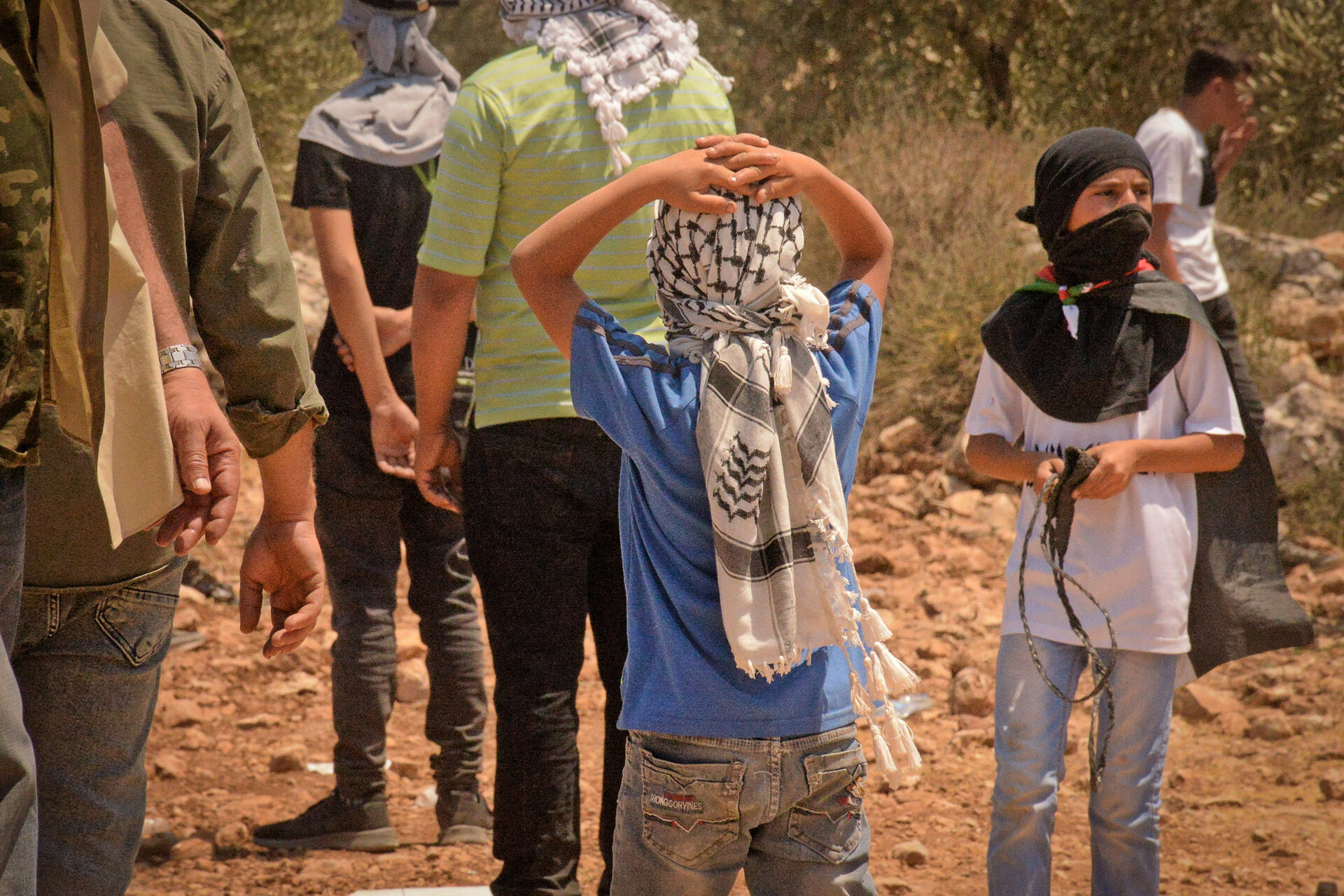
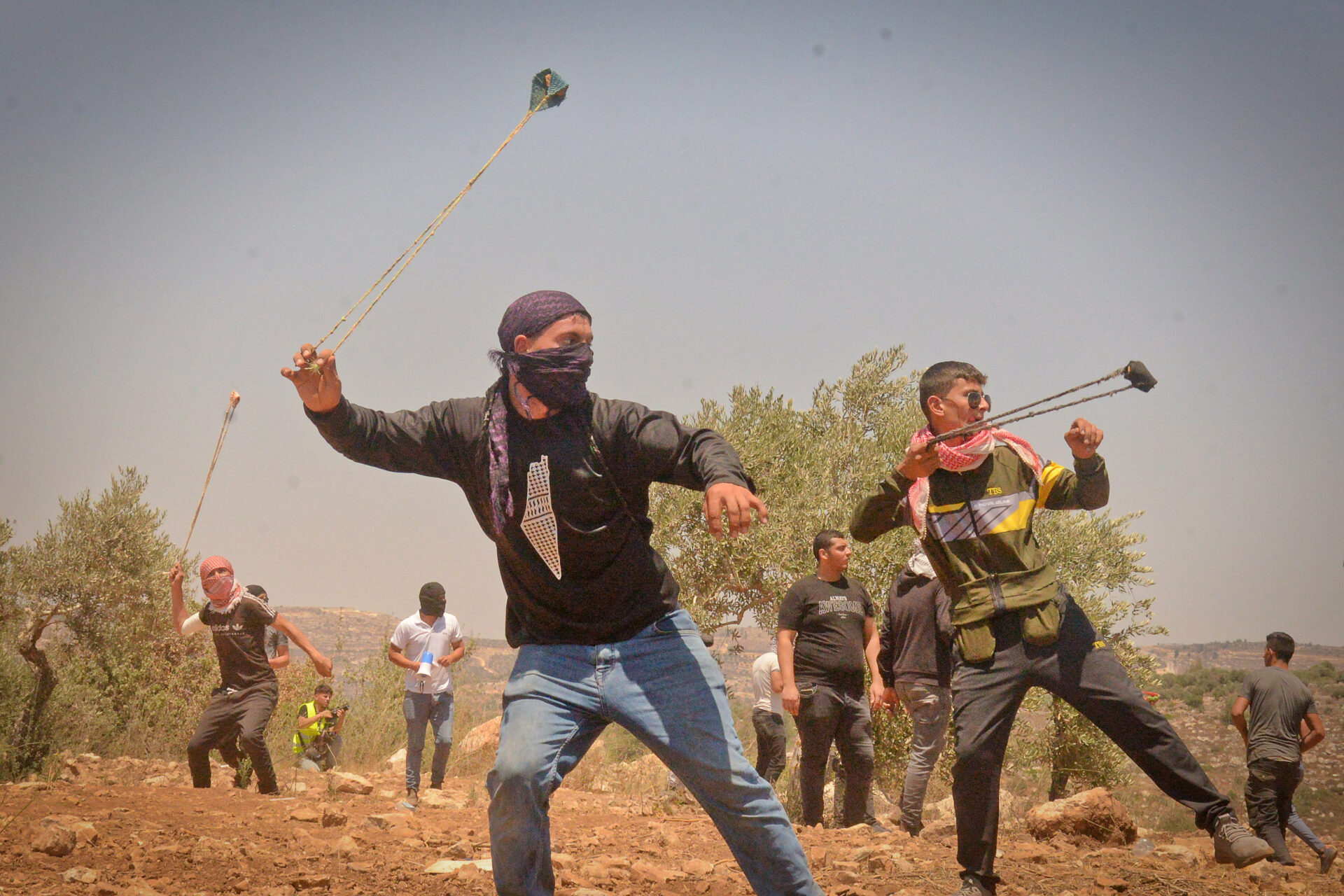
After breakfast, Malek and his friends drive an old car towards Mount Sabih. Hundreds of people begin to arrive and form lines for Friday prayer. Some of them come on crutches, while the young wrap the Palestinian koufiyehs around their faces for each other. The Imam opens his sermon and tear-gas canisters begin to fly. Half an hour later, the prayer is unofficially concluded, as the occupation forces shoot even more tear-gas and rubber-coated and real bullets. Protesters scattered in groups escape gas, chant slogans and throw stones from slings towards the soldiers. Under an olive tree, Malek uncovers his face and takes a drink from a water-bottle. “Did you make good pictures?” he asks, laughing. He stares across the valley at the houses of Avitar and exclaims “they’re already half empty! I’m sure in a few weeks they’ll give up and leave”, then he concludes with a smile: “We, on the contrary, have roots here. No army can fight against that”.