“I Just Want to Know What Happened to Abdul Rahim”: A Palestinian Mother’s Agony After American Contractor Reveals Son’s Last Moments
By Enas Wajeeh
Sana Jarab’a wants one thing.
Not justice.
Not revenge.
Just the truth.
She wants to know what happened to her 10-year-old son, Abdul Rahim.
A former US Marine, who went to Gaza with the so-called Gaza Humanitarian Foundation, claimed in a video that a barefoot boy named “Amir” was killed by Israeli soldiers after receiving a handful of food. The boy kissed his hand and thanked him, the contractor said, just before Israeli forces opened fire on the crowd.
The boy, the American said, was shot and killed right there.
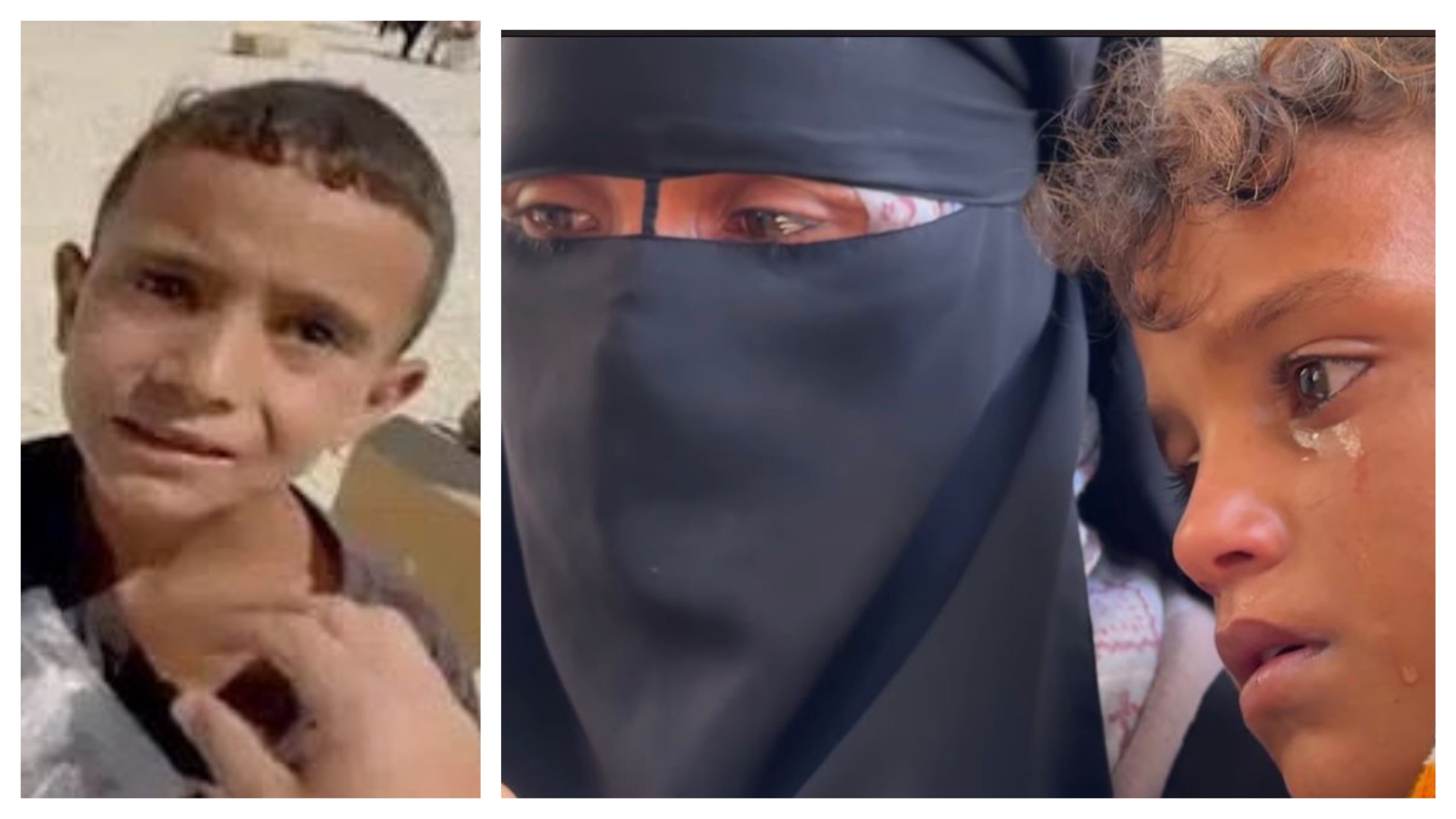
But Sana Jarab’a says that boy was her son, Abdul Rahim.
And she still doesn’t know where his body is.
“The first time I saw the photo, I was shocked,” she told Quds News Network. “I don’t want to remember it again. I’m exhausted. My heart is breaking from the pain. I’m sick. This is the trauma of a lifetime.”
Sana had just lost her husband weeks earlier. Now, she fears she’s lost her son too.
“This is a bigger shock than losing my husband. I don’t know what to tell you. I recognized him in the photo… May God give me strength. He’s my baby.”
Abdul Rahim, she said, was full of life. He loved to eat, play, and run. He had a strong personality and would get upset if a man tried to talk to his mother.
He was not like his brothers Wael, Ahmad, and Raed. He was special.
And he wanted to make her happy.
On the day he disappeared, he went alone to a food aid center in the Shakoush area. He wanted to surprise her by bringing home flour and some food.
“He wanted to surprise me with two kilos of flour and some food. He wanted to make me happy,” Sana said. “Usually, I split tasks between my sons; getting water, collecting firewood. That day, Ahmad had a fever. I asked, ‘Who got the water instead of Ahmad?’ They said Abdul Rahim did.”
She remembers that moment. He left and never came back.
“When Abdul Rahim disappears, I always know something is wrong. He vanished. I’ve been walking the streets ever since.”
Her voice breaks when she speaks of the American soldier’s story.
“I just want him to tell me: Where is Abdul Rahim’s body? One day he says he saw him get shot. Another time he says maybe he wasn’t shot. I need to know my son’s fate. Is he alive and detained? Or dead? Or did the dogs eat him?”
She has searched hospitals and clinics. She has nothing.
Not even his body.
“No mother should live this nightmare,” she said. “We barely have enough food. Each person gets one piece of bread. Abdul Rahim’s piece is still here. My daughter told me, ‘Mama, it will dry out.’ I said, let it dry. His bread must stay.”
Abdul Rahim’s dream was simple. He wanted to grow up, to live a good life, to take care of his mother.
“He used to say, ‘Mama, I’ll grow up and take care of you.’”
His father was killed by Israeli forces on December 29, 2024. Now, his mother clings to memories and a fading hope that maybe her son is still alive.
“At night, I imagine him calling for water,” she said. “Now as I’m speaking to you, I keep thinking that he may suddenly appear running to me.”
The US contractor, Anthony Aguilar, described seeing Abdul Rahim, mistakenly calling him Amir, walk 12 kilometers barefoot under the sun to reach a food distribution center.
All he got was scraps of rice and lentils picked from the dirt.
He thanked Aguilar by kissing his hand.
Then he died under Israeli gunfire.
“Amir walked 12 kilometers to get food, got nothing but scraps, thanked us for it, and died,” Aguilar said.
But for Sana, this version of the story is incomplete.
“I just want to know if my son is alive. I want to see him again. Or if he’s dead, let me know. Maybe the American saw another child. Maybe my Abdul Rahim is somewhere out there.”
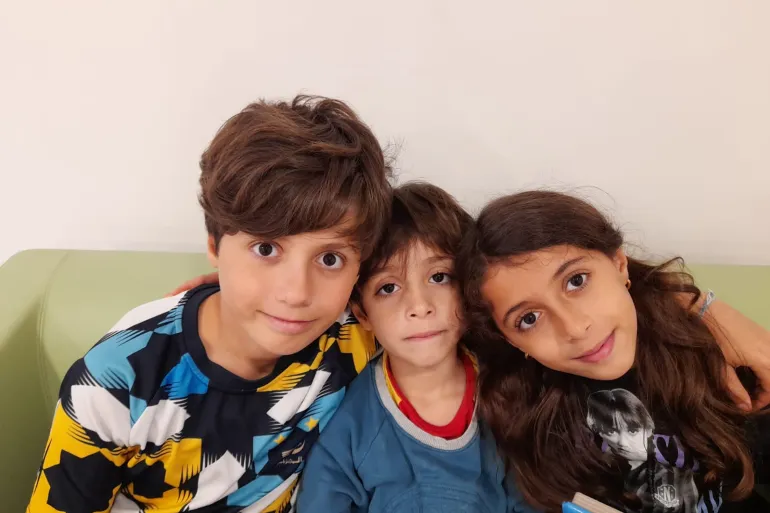
Sana has four daughters and four sons. Her youngest is just eight months old. She can’t even afford diapers.
And yet, the only thing she asks for is an answer.
Not from a government. Not from a military.
Just from the man who held her son’s hand before the world went dark.
“Just tell me what happened to Abdul Rahim.”