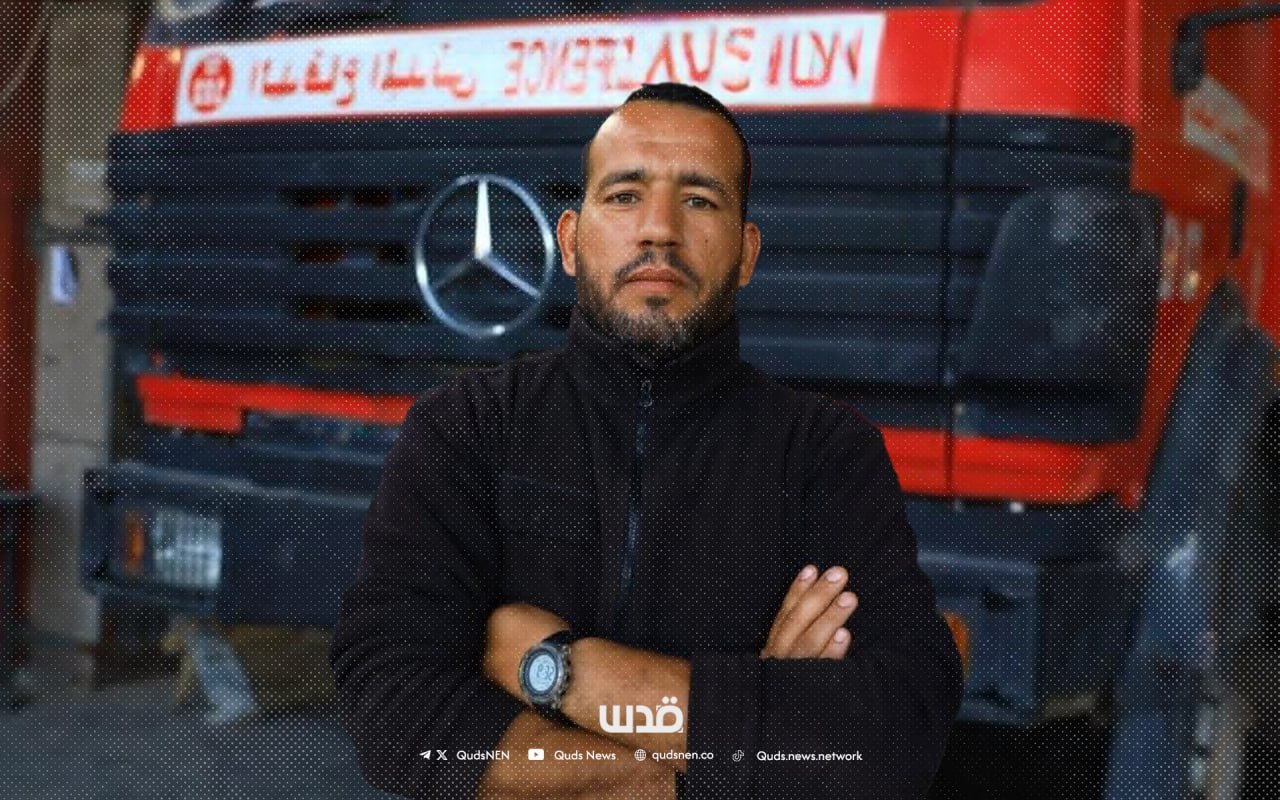
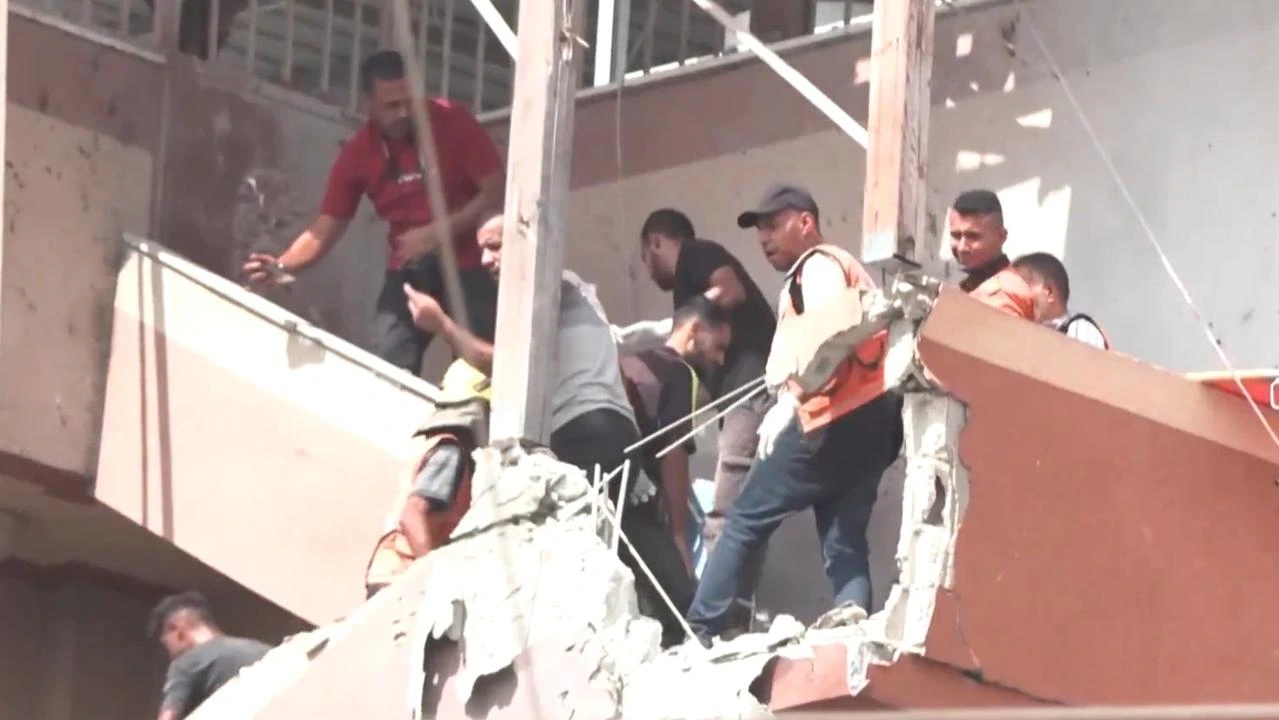
Imad handed the food to his young son and told him to go ahead. “I will follow,” he said. Instead of returning home, he rushed to the site of the blast to rescue others. He was not on duty. He was a civil defense firefighter, but in Gaza, duty never ends. When the second strike hit, shrapnel pierced his heart. He died instantly.
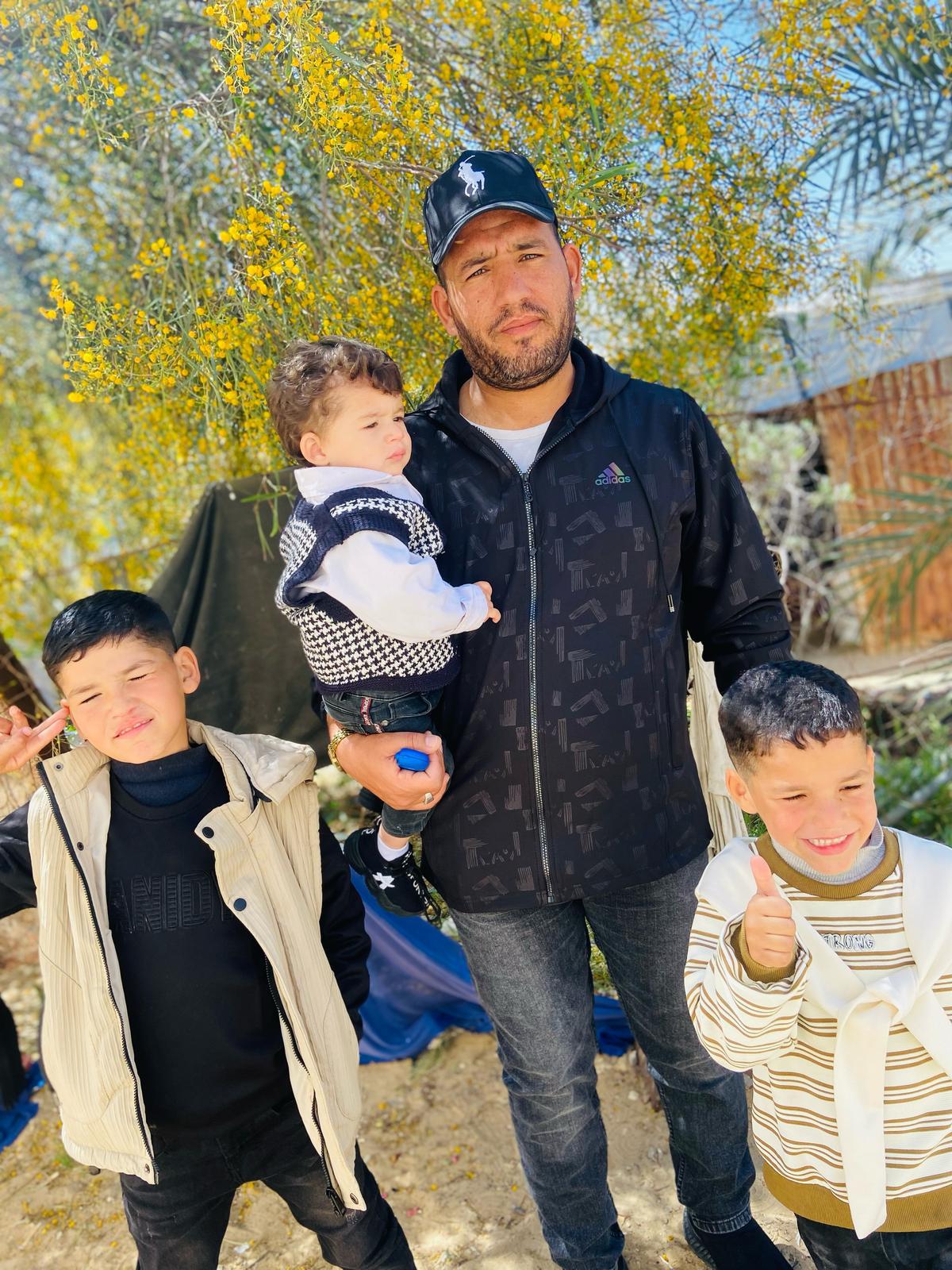
Imad left behind his wife Aida, three children, and a grieving family who could not even reach his funeral in time. Under siege, it was Aida herself who prepared his body and buried him.
A Husband, a Father, a Friend
When asked to describe her husband, Aida’s voice breaks. “He treated me like his daughter, like his friend, before being my husband,” she said. “He deprived himself of things he loved to give them to us. He was the best husband.”
Inside the home, he was tender and warm. “If he upset anyone, he would come back quickly to make peace,” Aida recalled. “He could not sit while someone was angry with him.”
Neighbors and friends remembered the same quality. Imad never refused a request for help. He carried burdens that were not his own.
At home, he made time despite war and long shifts. “Most mornings he went out to bring what we needed for the house,” Aida said. “He would light the fire, cook lunch, and we would sit together, drink tea, and talk.”
The Last Morning
The last words Aida heard from her husband were simple. “Good morning, my soul,” he told her. “God give you strength.” She was making dough when he spoke. He went out for breakfast and never came back.
“The soldier who fired that shell is my enemy on Judgment Day,” she said through tears. “May God punish him with double the suffering.”
Imad loved his work as a firefighter. He told Aida many times that he could never leave it. “He said he would die if he left his job,” she said.
But the work weighed heavily on him. In the first days of the genocide, he came home exhausted and broken. He once told Aida about pulling a young boy, the same age as his son, from under the rubble. The boy begged him, “Please take me out, uncle.” But the child died in his arms from internal bleeding.
“That scene destroyed him,” Aida said.
When her brother-in-law Hamza was killed, Imad could no longer look at shattered bodies without imagining Hamza’s face. His colleagues sometimes had to pull him away from scenes to ease his pain.
Still, he returned to work. “He believed his job was a trust on his shoulders,” Aida explained. “He saw it as a duty to his country and his people.”
Witnessing His Death
Aida was just meters away when the attack struck near Nasser Hospital. “I saw it with my own eyes,” she said. “I don’t even remember what I did in the shock. Every day I remember something new. May God curse them. They took from me the breath I live on.”
For her, nothing in Gaza is safe. “Everyone is a target for the occupation. Even me. Even my children. My beloved Imad is not the first martyr from civil defense. Many before him were targeted.”
Life ended for Aida the day her husband was killed. “I died with him,” she said. “Imad was everything to me. Everything, literally.”
She lost her safety, her support, her peace. “With him, nothing mattered,” she said. “Not hunger, not fear, not losing our home. He once asked me, ‘Don’t you miss the house we lost?’ I told him, ‘As long as I have you, I want nothing else.’”
Now, she says, she lives without her soul.
“This Is Genocide”
For Aida, there is no explanation for Israel’s attacks on civil defense teams, journalists, and medics. “This is genocide,” she said firmly. “There is no clearer explanation.”
She has no message for the world. “What will any message do? Will it bring him back to me?”
But she wants people to remember her husband’s name. “Remember Imad, the firefighter who was martyred while serving his people, even outside his shift,” she said. “He was a husband who loved his wife, a father who adored his children, and a son who honored his mother.”
Imad often spoke of martyrdom. After months of witnessing horror, he prayed that if he was killed, his body would remain whole. He did not want to be torn into pieces or suffer before death.
That prayer was answered. Shrapnel went directly to his heart, ending his life at once. His sister-in-law reminded Aida: “Thank God you said goodbye to him with his body complete. I could not even say farewell to my husband. He was only pieces.”
When asked what she lost with Imad’s death, Aida replied with one sentence: “I lost my life.”
In the ruins of Gaza, one family carries an unbearable absence. Imad Al-Shaer is gone, but his story remains. A husband, a father, a rescuer. A man who left his home to save lives and never returned.