On Thursday, July 31, 2025, Israeli forces raided the Palestinian Seed Bank in Hebron, demolishing critical parts of its operations. The soldiers targeted the Seed Multiplication Unit, the core facility responsible for preserving and producing native seeds adapted to local conditions. They destroyed the central control room, cut electricity lines, and severed the main water supply. The irrigation system and technical monitoring equipment were disabled. Staff were forced to evacuate under threat of violence.
The attack sent shockwaves through the Palestinian agricultural community and intensified fears of a wider Israeli campaign to dismantle food sovereignty across the West Bank.
A Direct Blow to Palestinian Food Sovereignty
The Hebron Seed Bank stands as the only facility of its kind in the West Bank. It protects indigenous plant varieties and supplies local farmers with seeds suited to the environment. The targeted Seed Multiplication Unit was the heart of this effort, where plants are cultivated and multiplied to provide seeds for upcoming planting seasons.
The Hebron Seed Bank explained to Quds News Network, “The unit housed vital climate-control and irrigation systems. Without them, organized agricultural production becomes impossible. This attack is not just about destroying buildings. It strikes at the core of local seed production.”
The unit did not serve as a seed storage warehouse. Instead, it nurtured live plants, maintained technical equipment, and archived detailed records documenting plant growth and seed performance. The destruction of these resources represents a significant setback for crop development and climate adaptation.
No prior warning or legal notice was given before the raid. Staff confirm they received no opportunity to contest the action or protect critical materials. Despite international laws safeguarding civilian agricultural institutions, Israel ignored these protections.
بيان صادر عن بنك البذور الفسطيني حول هدم وحدة إكثار في جنوب الخليل بيان صادر عن بنك البذور الفلسطيني حول هدم وحدة إكثار في جنوب الخليل الخليل – الأربعاء، 31 يوليو 2025 اقتحمت قوات الاحتلال الإسرائيلي صباح اليوم وحدة إكثار تابعة لبنك البذور الفلسطيني، في جنوب محافظة الخليل، وقامت بهدم بعض المنشآت الرئيسية التابع للوحدة بشكل كامل باستخدام الجرافات والآليات الثقيلة. وتُستخدم هذه المنشآت كمخازن للمواد والمعدات الخاصة بوحدة الإكثار، التي تُعد جزءًا جوهريًا من عمل بنك البذور في حفظ وإكثار البذور البلدية، كرافعة أساسية لتعزيز السيادة الفلسطينية على الغذاء والموارد الزراعية. إن بنك البذور الفلسطيني يُدين هذا الاعتداء الخطير، ويعتبره استهدافًا مباشرًا لمحاولات الشعب الفلسطيني في استعادة قراره الزراعي والغذائي، وتقويضًا متعمدًا للجهود المجتمعية الهادفة إلى حماية التنوع البيولوجي والمحاصيل البلدية الأصيلة. كما يؤكد البنك أن هذه الممارسات تمثل انتهاكًا صارخًا لحقوق الشعوب في الوصول إلى مواردها والسيطرة عليها، وفي بناء أنظمة زراعية محلية عادلة ومستقلة. ويُطالب البنك الجهات المحلية والدولية، لا سيما الحركات الزراعية ومنظمات المجتمع المدني، بالتحرك العاجل لوقف هذه الانتهاكات المتكررة، ودعم نضال الفلاحين الفلسطينيين من أجل السيادة على الأرض والبذور والغذاء. Statement by the Palestinian Seed Bank on the Demolition of a Seed Multiplication Unit in Southern Hebron Hebron, Wednesday, 31 July 2025 This morning, Israeli occupation forces raided a seed multiplication unit belonging to the Palestinian Seed Bank, located in the southern Hebron governorate, and completely demolished its main structure using bulldozers and heavy machinery. The demolished structure served as the main storage facility for the unit's materials and equipment, which are essential for the Seed Bank’s work in preserving and multiplying heirloom seeds, a critical pillar in the struggle for food sovereignty and agricultural autonomy in Palestine. The Palestinian Seed Bank strongly condemns this attack, considering it a deliberate attempt to undermine the Palestinian people’s efforts to reclaim control over their agricultural systems and to protect their traditional seeds and biodiversity. These actions represent a clear violation of the Palestinian people’s right to access and govern their natural resources, and to build just, local, and self-sufficient food systems. The Seed Bank calls on local and international institutions, particularly agricultural movements and civil society organizations, to take urgent action to stop these ongoing violations and to support the steadfastness of Palestinian farmers in their fight for land, seeds, and food sovereignty. Posted by بنك البذور البلدية - Local Seed Bank on Thursday, July 31, 2025
Severe Losses for Farmers and Environment
The damage threatens the entire coming season’s seed supply, wiping out a full cycle of original Palestinian seeds intended for farmers. Environmentally, the destruction eradicated rare genetic diversity, including varieties classified as endangered.
Financially, years of investment in infrastructure, equipment, and research vanished in hours. The Hebron Seed Bank told Quds News Network, “We lose more than seeds. We lose the ability to stand on our own.”
Food security faces a serious blow. With Israeli controls tightening access to land and water, the capacity to produce local seeds remains essential. Without it, farmers are forced to rely on imported seeds that often fail to thrive in local conditions. This dependence weakens Palestinian food independence and sovereignty.
While some seed samples remain in other locations, the seed bank confirms that several genetic lines are now permanently lost. This loss impacts not only current farmers but future generations who may never see these crops again.
Fuad Abu Saif, Director-General of the Union of Agricultural Work Committees, said:
“What happened is a direct attack on the Palestinian people’s right to determine what they grow and eat. It deliberately undermines community efforts to protect biodiversity and traditional crops.”
Abu Saif emphasized that the Seed Bank is both a cultural and environmental heritage initiative vital for food sovereignty. Since its establishment in 2010, it has preserved over 70 native seed varieties, many of which no longer exist elsewhere in the West Bank.
Vineyards of Control: Settlement Agriculture Expands
The destruction of Palestinian agricultural projects goes hand in hand with the expansion of Israeli settlement farming. In southern and eastern Hebron, vast new settlement vineyards have appeared in recent years.
“These vineyards are another invasion,” says Rajeh Al-Talahmeh, a field researcher at the Land Research Center. “They steal our water, undercut our markets, and rewrite the agricultural identity of the region.”
According to the Palestinian Grape Council, the West Bank produces about 50,000 tons of grapes annually, with Hebron contributing nearly half. Israeli settlement farms compete directly with this production while blocking Palestinian farmers from developing their own land.
Settlers also enjoy unrestricted access to water resources, while Palestinians face severe water cuts. The pattern is clear: Palestinian agriculture is being squeezed from all sides.
A Pattern of Destruction
Since October 7, 2023, the West Bank’s agricultural sector has suffered massive losses. The Palestinian Ministry of Agriculture reports that 8,218 farmers have been directly affected, with damages worth $76 million.
The destruction includes burned, cut, and uprooted olive trees; stolen olive harvests; blocked access to farmland; and targeted attacks on water sources. Agricultural machinery has been seized, and fields have been bulldozed. Sheep have been killed or stolen.
The Palestinian Wall and Settlement Commission says that during the first year of the genocide, Israel seized 52,000 dunams of land, established 12 buffer zones around settlements, and uprooted 14,280 trees.
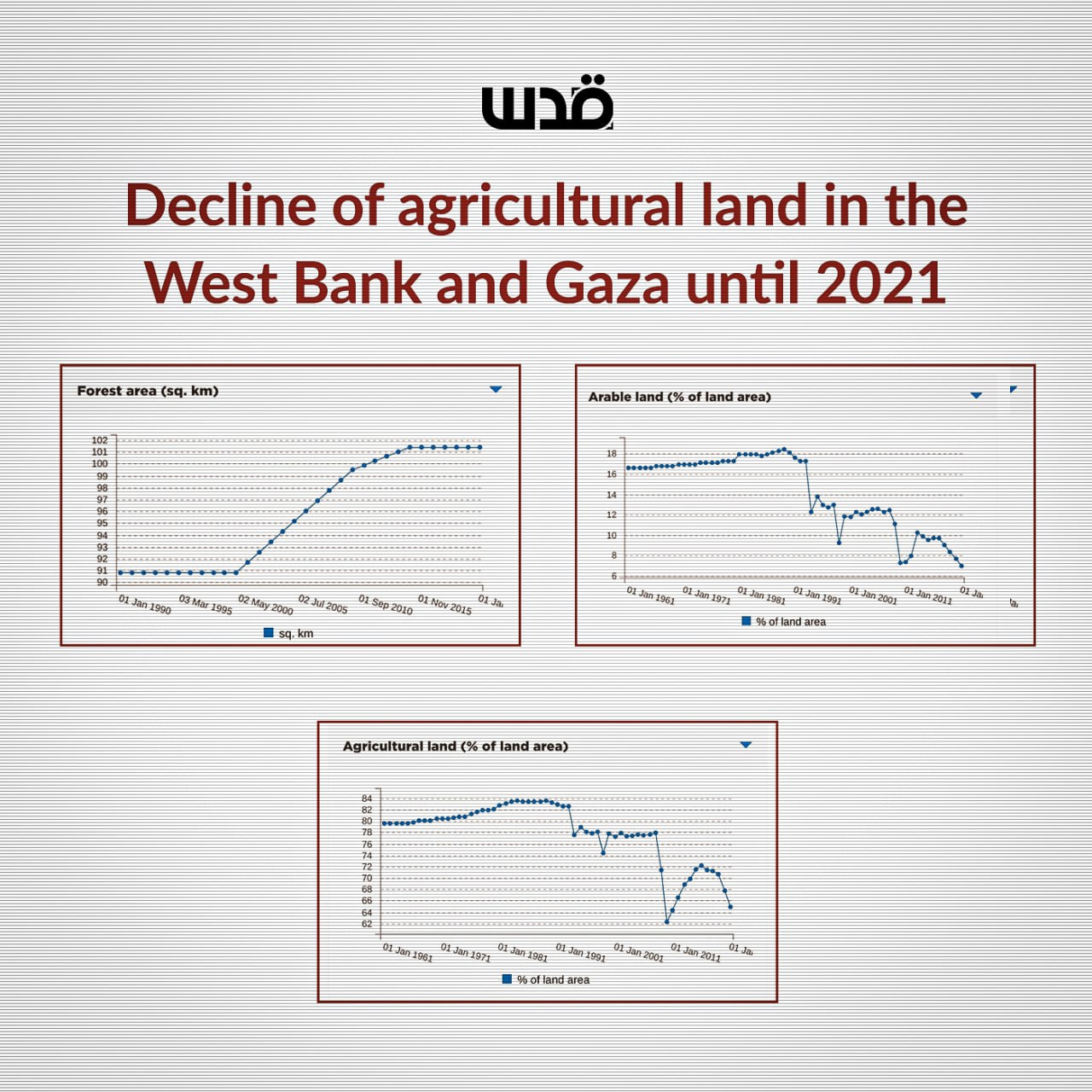
Israeli policies target not only farmland, but also the soil and water itself. For years, Israel has been dumping hazardous waste into the West Bank. This includes sewage sludge, medical waste, industrial solvents, and toxic batteries.
The Palestinian Environment Quality Authority documented 51 cases of hazardous waste smuggling from Israel into the West Bank between 2021 and 2022. Officials say this is only a fraction of the real volume.
These materials poison the soil and contaminate crops, posing long-term health risks to Palestinians. The United Nations classifies such dumping as an environmental crime. Yet, with no enforcement mechanism, Israel continues the practice.
Structural Obstacles to Palestinian Agriculture
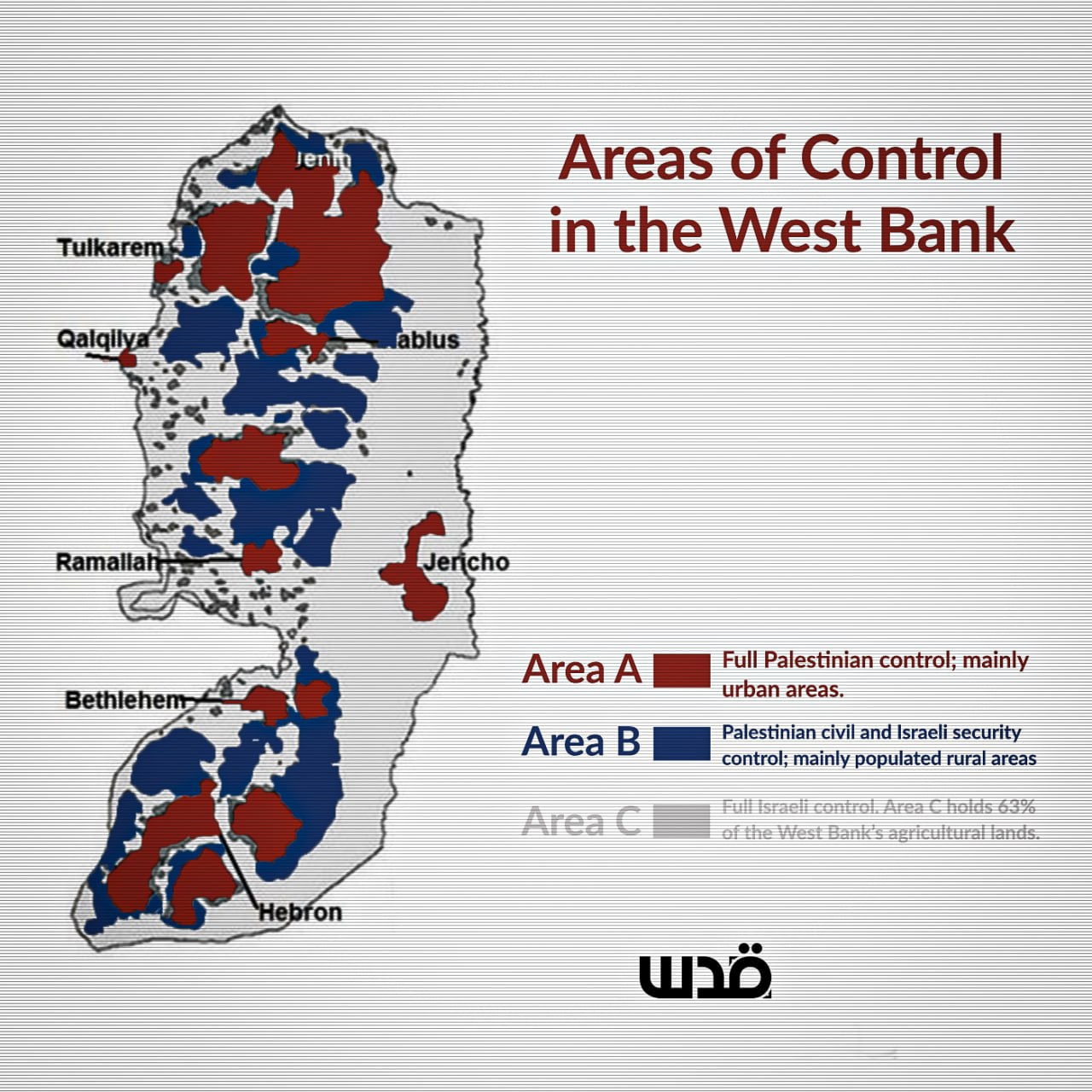
Israeli occupation policies form a wall of barriers against Palestinian farming. Land confiscations, settlement expansion, and military training zones remove vast areas from Palestinian use. Areas declared as “nature reserves” are often later turned over to settlements.
The separation wall isolates fertile land. Water resources are diverted to settlements, leaving Palestinian farms dry. Hundreds of checkpoints and roadblocks restrict the movement of goods and workers.
Israeli forces regularly destroy crops, seize livestock, and flood Palestinian markets with cheap produce from settlements. Farmers are left with shrinking land, high production costs, and limited market access.
Data from Israeli media shows that settlement expansion has surged by 40% under the current Netanyahu government. The number of settlements in the West Bank rose from 128 to 178.
More than 41,700 new settlement units have been approved since early 2025, breaking all previous records. By the end of 2024, there were 214 illegal outposts, many of them agricultural. These settlement farms now cover about 787 square kilometers, mostly in central and eastern West Bank areas.
In addition, Israel has established around 900 military checkpoints and gates, choking Palestinian movement. It has issued 939 demolition orders for Palestinian homes and facilities.
International Silence and the Fight to Rebuild
The Hebron Seed Bank has reached out to international partners for help in rebuilding. They hope to restore the destroyed unit and recover as many plant varieties as possible.
“We believe in the importance of global solidarity to protect agricultural diversity,” the Hebron Seed Bank told Quds News Network. “This project serves hundreds of farmers and protects our environmental heritage.”
But rebuilding under occupation is a slow and dangerous process. Without protection from further attacks, any reconstruction could be undone overnight.
The pattern is undeniable. Palestinian agriculture is being dismantled through targeted destruction, land theft, environmental damage, and market control. These actions weaken Palestinian food sovereignty and force dependence on Israeli imports.
For many Palestinians, the destruction of the Hebron Seed Bank is more than an attack on a facility. It is a strike at the heart of their connection to the land, their history, and their future.
As Fuad Abu Saif warns, “When we lose our seeds, we lose our right to feed ourselves. And when we lose that, we lose a part of our freedom.”