Entire Population in Gaza at Critical Risk of Famine, with Half a Million Palestinians Facing Starvation: IPC
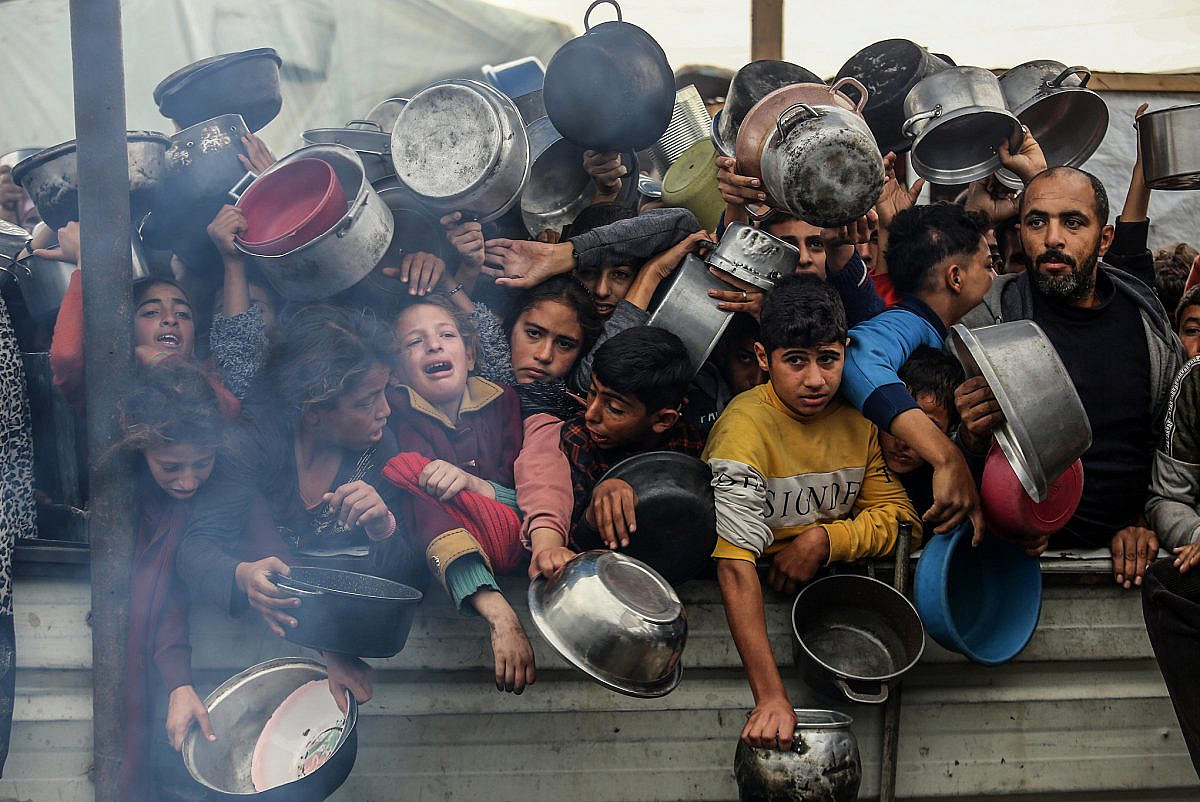
Gaza (Quds News Network)- Gaza’s entire population continues to face a critical risk of famine, with half a million people facing starvation, according to a global hunger monitoring system, as Israel’s total blockade enters its third month amid relentless bombardment.
Since March 2, Israel has closed Gaza’s main crossings, halting the flow of food, medical aid, fuel, and other critical humanitarian supplies. This blockade has resulted in a severe and unprecedented decline in living conditions. Human rights organizations have accused Israel of using starvation as a weapon of war against the Palestinians.
The United Nations has repeatedly warned of humanitarian catastrophe, with the enclave on the brink of “full-scale famine conditions.”
In a new assessment published on Monday, the Integrated Food Security Phase (IPC) Classification described the findings as major deterioration since its last assessment in October.
The latest report analysed a period from April 1 to May 10 this year and gave projections of the situation until the end of September, according to a summary of its key findings.
According to the report, the entire population in Gaza is facing high levels of acute food insecurity, with half a million people (one in five) facing starvation.
From 11 May to the end of September 2025, the whole territory is classified in Emergency (IPC Phase 4), with the entire population expected to face Crisis or worse acute food insecurity (IPC Phase 3 or above).
This includes 470,000 people (22 percent of the population) in Catastrophe (IPC Phase 5), over a million people (54 percent) in Emergency (IPC Phase 4) and the remaining half million (24 percent) in Crisis (IPC Phase 3).
The report said that this marks a significant deterioration compared to the previous IPC analysis (released in October 2024) and the already dire conditions detected between 1 April - 10 May 2025. During this time, 1.95 million people (93 percent) were classified in Crisis or worse (IPC Phase 3 or above), including 244,000 people (12 percent) in IPC Phase 5 (Catastrophe) and 925,000 (44 percent) in IPC Phase 4 (Emergency).
Between 1 April and 10 May, acute malnutrition (AMN) was at Alert and Serious levels (IPC AMN Phase 2 and 3). However, experience has shown that acute malnutrition can worsen rapidly, and latest data indicate a deteriorating trend that is expected to persist. Consequently, acute malnutrition in North Gaza, Gaza and Rafah will likely reach Critical levels (IPC AMN Phase 4) between 11 May and end of September.
Between mid-January and mid-March 2025, the ceasefire allowed a temporary alleviation of acute food insecurity and malnutrition conditions in parts of the Gaza Strip, it noted. However, the ongoing blockade imposed in early March reversed the situation.
Israeli Prime Minister Benjamin Netanyahu and his war cabinet approved last week plans to expand the genocide in Gaza with officials suggesting that the plans include the “conquest” and full military occupation of the entire Gaza Strip.
The plans will also put the Israeli military in charge of food and other vital supplies to the 2.3 million people suffering under its blockade of the Palestinian territory. Israel reportedly plans to use US security contractors to control the flow of aid into Gaza.
The Humanitarian Country Team (HCT), a forum that includes United Nations agencies, said in response that Israeli officials were seeking its consent to deliver aid through what it described as “Israeli hubs under conditions set by the Israeli military, once the government agrees to re-open crossings”.
In a statement, the HCT said such a plan would be dangerous and would “contravene fundamental humanitarian principles and appears designed to reinforce control over life-sustaining items as a pressure tactic – as part of a military strategy”.
The new plan would dismantle the existing UN-run distribution system. It would give the Israeli military control over aid flows and create “militarized zones” where Palestinians would be forced to collect food and supplies.
According to the IPC report, the plan announced on 5 May for delivering aid is “estimated to be highly insufficient to meet the population’s essential needs for food, water, shelter and medicine.”
Moreover, the proposed distribution mechanisms are likely to “create significant access barriers for large segments of the population.”
In light of the announced Israeli plans, the IPC said there is a “high risk that Famine (IPC Phase 5) will occur in the projection period (11 May – 30 September). The latest announcements suggest that this worst-case scenario is becoming more likely.”