Clearing Gaza Rubble Could Release 90,000 Tonnes of Planet-Heating Emissions, Study Finds
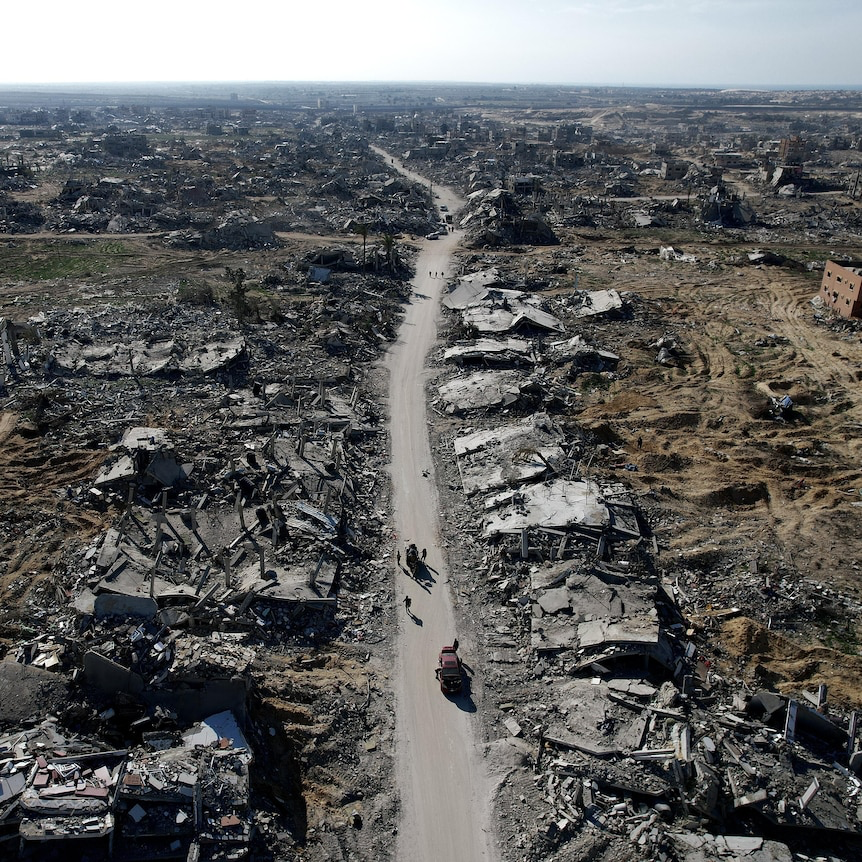
Gaza (Quds News Network)- Millions of tonnes of rubble left by Israel’s bombardment of Gaza could generate more than 90,000 tonnes of greenhouse gas emissions, a new study has found, adding it takes as long as four decades to remove and process.
The study, published in the journal Environmental Research: Infrastructure and Sustainability and reported by the Guardian, said Israel’s destruction of Palestinian homes, schools and hospitals in Gaza generated at least 39m tonnes of concrete debris between October 2023 and December 2024, which will require at least 2.1m dump trucks driving 18m miles (29.5m km) to transport to disposal sites.
Researchers at the universities of Edinburgh and Oxford found that just clearing the rubble is on par with driving 737 times the Earth’s circumference, and would generate almost 66,000 tons of carbon dioxide equivalent (CO2e).
The researchers used evolving open-source tools in remote sensing to detect and analyse conflict-related emissions. The study is part of a growing movement to account for the climate and environmental costs of war and occupation, including the long-term damage to land, food and water sources, as well as post-conflict cleanup and reconstruction.
Researchers looked at two scenarios to calculate the speed and climate impact of processing the uncontaminated debris, which could then be used to help reconstruct the razed Palestinian territory.
Assuming 80% of the debris is viable for crushing, a fleet of 50 industrial jaw crushers, which appear never to have been permitted in Gaza, would take just over six months and generate about 2,976 tonnes of CO2e, the study found.
But it would take a fleet of 50 smaller crushers, the type primarily used in Gaza, more than 37 years to process the rubble, generating about 25,149 tonnes of CO2e. In this scenario, the CO2 generated by moving and crushing the debris from Gaza’s destroyed buildings would be on a par with charging 7.3bn mobile phones.
The longer the contaminated debris remains in situ, the more damage it will do to the air, water and health of the 2 million Palestinians who have now been displaced, starved and bombarded for 21 months.
“The CO2 emissions from clearing and processing the rubble may seem small compared to the total climate cost of the destruction in Gaza, but our micro focus unpacks the labour and work required to even begin the process of reconstruction,” said Samer Abdelnour, lead author and senior lecturer in strategic management at the University of Edinburgh Business School.
“While filling the military emissions gap is important, our work can also support Palestinian policymakers, civil engineers, planners and other workers on the ground who are determined to reclaim what was lost, stay on the land and rebuild,” said Abdelnour, a Palestinian Canadian.
Commenting on the study, Ben Neimark, senior lecturer at Queen Mary University of London who leads a team researching the total climate cost of Israel’s recent conflicts, said: “The methodological focus on debris is cutting-edge work, highlighting often-missed environmental damage left by militaries after the war is over. It provides a fresh look at the daily images of bombed-out buildings and rubble from Gaza, rather than seeing them as longer-term climate impacts of war.”
Gaza is a 25-mile strip of land, only twice the size of Washington DC at 141 square miles (365 sq km). More than 90% of homes in Gaza have been damaged or destroyed, in addition to the vast majority of schools, clinics, mosques and infrastructure.
In June, a study led by Neimark found that the long-term climate cost of destroying, clearing and rebuilding Gaza could top 31m tonnes of CO2e. This is more than the combined 2023 annual greenhouse gases emitted by Costa Rica and Estonia – yet there is no obligation for states to report military emissions to the UN climate body.
Stuart Parkinson, executive director of Scientists for Global Responsibility, said: “Militaries and war are large and hidden contributors to the climate crisis … It is important to include the full range of activities from production of the military equipment to fuel use during war fighting, from the damage to carbon stores like forests to cleanup efforts and reconstruction following the end of the war. This study adds to this bigger picture of war-related emissions.”
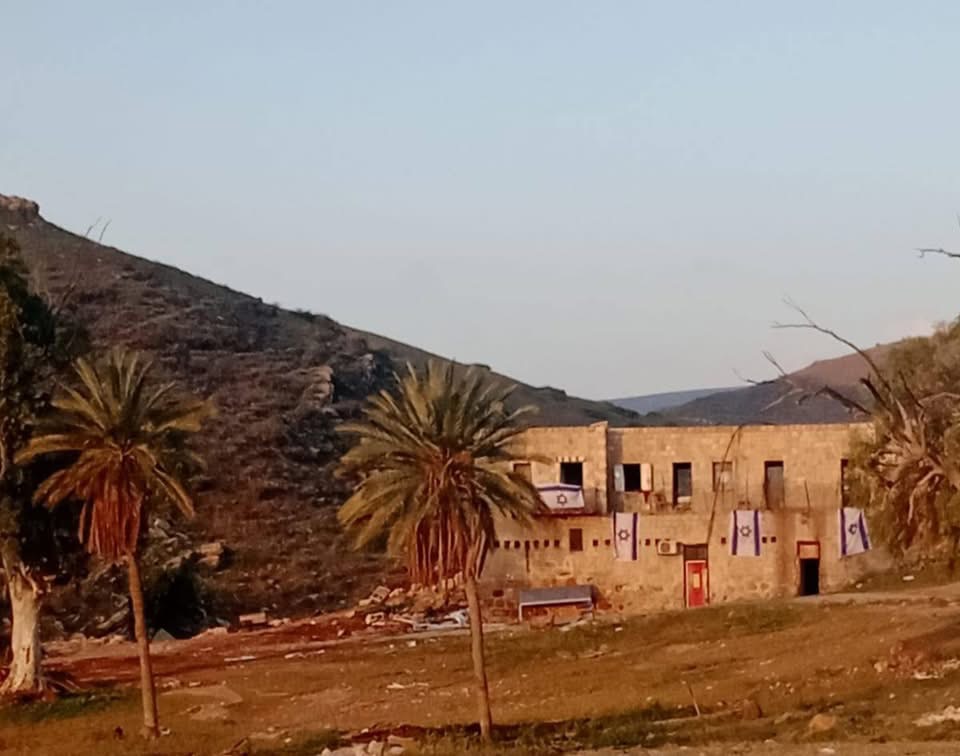
Under Israeli military protection, settlers demolished a Palestinian school and nearby homes in the northern Jordan Valley, intensifying displacement pressure on Bedouin communities in the occupied West Bank.
Two Palestinians, including a 14-year-old boy, were shot and killed by Israeli settlers on Tuesday in the village of Al-Mughayyir in the occupied West Bank. A total of three Palestinians have been killed so far today by Israeli settlers across the occupied territories, including two children, amid a spike in settler violence against Palestinians.
Belgian Foreign Minister Maxime Prévot has urged the EU to impose sanctions on Israel ahead of a meeting of EU foreign ministers in Luxembourg, joining seven EU countries, including France and Sweden, in the call. He also slammed the Israeli assault on Lebanon as “totally unacceptable.”